

Comcast shares jump 25% as it plans to split NBCUniversal and Sky
The tax-free spin-off could reshape focus, funding, and competition across media and tech for years.
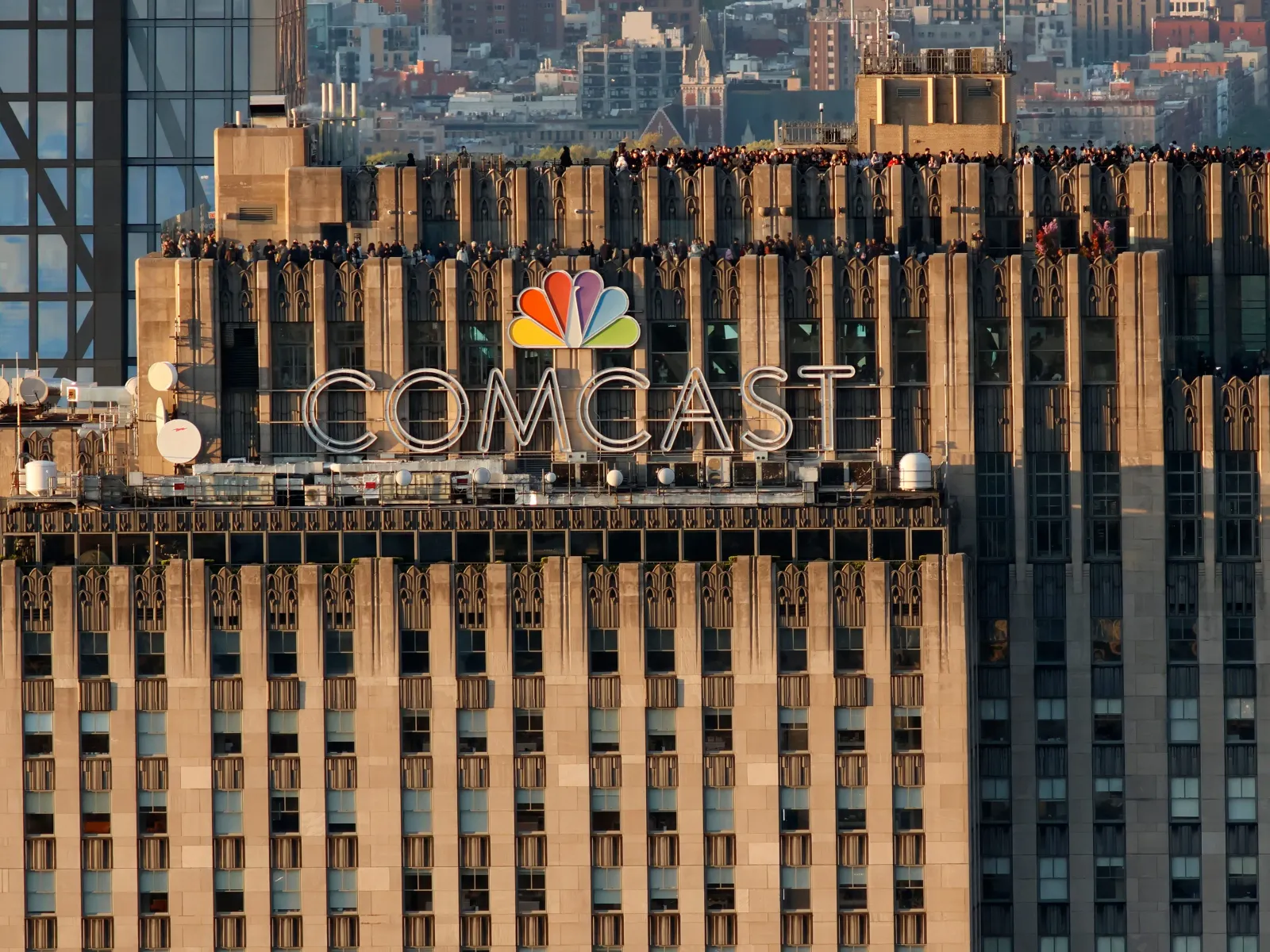
Comcast announced plans to separate its media and tech businesses into two publicly traded companies via a tax-free spin-off of NBCUniversal and Sky, targeting completion within a year. The move sent Comcast stock up more than 25% in premarket trading, and it follows a prior spin-off of most cable networks into Versant Media.
Comcast moved fast, and the market moved faster. Shares jumped more than 25% in premarket trading on Monday after the company said it plans to separate its media and tech businesses into two publicly traded companies. This is not just corporate housekeeping. It is a structural bet that reintroducing sharper focus can unlock valuation and growth, and the stock reaction is the market’s immediate vote.
Under Comcast’s plan, the split will be done through a tax-free spin-off of NBCUniversal and Sky. Comcast said it expects the transaction to be completed within a year. In other words, the company is drawing a hard line around “media” and “tech” rather than letting those priorities compete for management attention inside one conglomerate. Comcast co-CEO Brian Roberts framed it as an operational and cultural unlock, saying the transaction will “unlock a more entrepreneurial management approach and open up a multitude of new opportunities for each business.” That quote matters because it is the explicit thesis behind the corporate surgery: more entrepreneurial teams, more growth pathways, and less internal friction.
To understand why investors cared enough to bid the stock up more than 25% before the opening bell, you have to look at how investors typically value conglomerates. When a company spans businesses with different growth profiles and different capital needs, the market often applies a “conglomerate discount,” a reluctance to pay full price for complexity. By turning NBCUniversal and Sky into their own publicly traded entity, Comcast is betting that each piece becomes easier for investors to model, harder for the market to discount, and more likely to receive targeted capital for its own strategy.
The company also argues that separation improves how each business invests and pursues growth. Comcast said the separation would allow both businesses to invest more effectively and pursue their own growth opportunities. That is a subtle but meaningful distinction. Instead of forcing one set of corporate priorities to steer both media programming and technology-driven initiatives, each company can optimize for its own operating reality. For decision-makers, this is essentially a governance and resource allocation problem, solved by structure. Boards often want management to be accountable to the right metrics. Separating into two companies can make that accountability tighter.
Regulatory and tax structure are another reason this announcement lands with extra weight. Comcast’s plan is described as a “tax-free spin-off.” In simple terms, that matters because it changes the financial impact on shareholders and avoids certain tax costs that can make reorganizations less attractive. Comcast is also explicitly signaling confidence in execution by tying the timeline to an expected completion within a year. For markets, timelines are not trivia. They determine how much uncertainty is baked into the stock price, and they set expectations for when the benefits, including investment freedom and strategic clarity, should start showing up in results.
Comcast’s move also has a clear internal storyline: it is continuing a broader portfolio reshaping effort. Earlier this year, Comcast officially completed the spin-off of the majority of its cable networks, including CNBC and MSNBC, into a separate company called Versant Media. That prior action helps explain the logic of today’s announcement. The company is not inventing a new strategy out of thin air. It is continuing to separate businesses that likely want different competitive positions and different investment horizons. For an executive team, a sequence like this is also a test of operational capability. Spinning off parts of a business is messy, and doing it once builds a template for doing it again.
Second-order implications will show up in capital markets and in competitive positioning. Separate publicly traded companies tend to pursue different partnership models, different investor constituencies, and different strategic narratives. NBCUniversal and Sky will likely operate with a sharper media identity, while the other side will have more room to define how its tech initiatives fit into growth plans. The market reaction suggests investors expect that sharper identities can translate into better performance, or at least better expectations. That is why the premarket surge is so significant. Even if the details take time, investors are reacting to the direction of travel.
For peers, the strategic stakes are obvious. Comcast’s announcement raises the question every large media or telecom platform is wrestling with: does the conglomerate model still pay off, or has the market’s tolerance for complexity run out? If two-company focus truly “unlocks” more entrepreneurial management and investment effectiveness as Roberts suggests, boards at similar firms will feel pressure to evaluate whether they are holding back growth by blending too many priorities under one roof. And if Comcast’s stock strength persists, it will be the kind of move other operators quietly watch, then eventually replicate.
This story's Key Insights and Take-aways are locked.
Create a free account to unlock Executive Actions for one credit.
Register to UnlockAlways free for Executives Club members. Join the Club
More in Business

Elon Musk unveils a flying car, and SpaceX helped build it
The Tesla CEO's showcase at a SpaceX facility signals a future where road and rocket engineering converge.

Apple's $2,000 iPhone Duo opens preorders, taking on Samsung and Google
Apple's first foldable hits the market at a premium price, reshaping a category Samsung and Google have led.

Pope Leo XIV, first American pope, diagnosed with lung cancer
The 71-year-old Chicago-born pontiff underwent successful surgery on his right lung, and his diagnosis raises new questions about his AI-focused papacy and the Vatican's future.