

Copernicus confirms June ocean temps hit a record 20.86C, beating 2024 and 2023
An El Niño already in motion is pushing global heat to a new ceiling, with flood, sea level, and ecosystem risks.
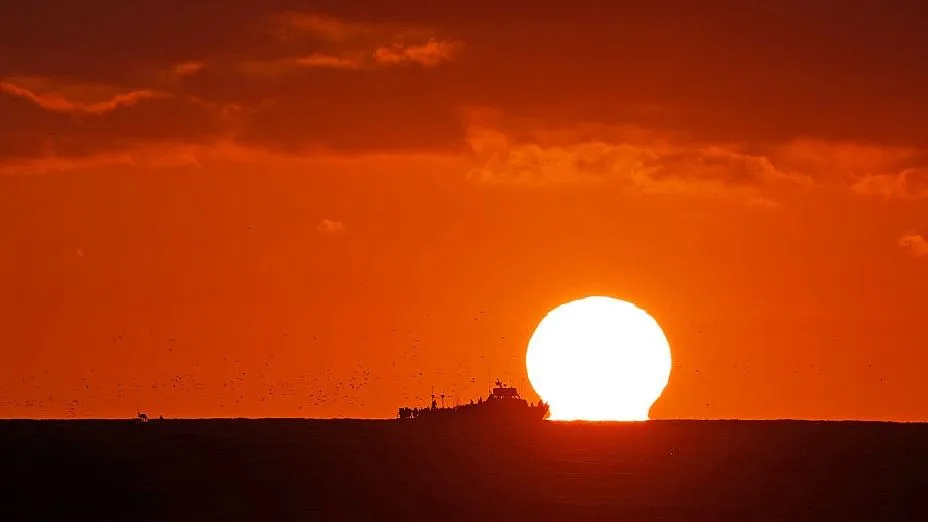
Copernicus, via the Copernicus Climate Change Service, confirmed June global sea surface temperatures reached a record high of 20.86 degrees Celsius (69.55 degrees Fahrenheit), with the record set on June 21. The new peak, corroborated by the Copernicus Marine Service, matters for decision-makers because it raises near-term odds of more extreme weather, flooding, sea level rise, and marine ecosystem stress.
June’s global sea surface temperatures climbed to record highs, and the new number matters: Copernicus Climate Change Service says the record was set on June 21 at 20.86 degrees Celsius (69.55 degrees Fahrenheit). That beat the prior June record of 20.83 C (69.49 F) set in 2023 and 2024. Copernicus didn’t stop at one dataset either. The Copernicus Marine Service, an independent dataset, corroborated the spike with temperatures reported at 21.0 C (69.8 F).
If you are tracking operational risk, this is not a “weather story.” It is a system story. In the same Copernicus framing, Carlo Buontempo, director of the Copernicus Climate Change Service at the European Centre for Medium-Range Weather Forecasts (ECMWF), warned that “Current conditions could indicate the beginning of a new phase, leading, once more, to uncharted territory,” and tied the likely continuation of record-shattering to El Niño building pressure in the Pacific. Copernicus itself says the newly declared El Niño in the Pacific is the warm phase of a natural climate cycle and that this El Niño is likely to reach levels not seen in decades, with more temperature records expected as Pacific heat gets injected into an already warming world.
The headline’s record temperature is just the visible part. The risk is how ocean heat telegraphs into everything above it. Copernicus representatives explain the mechanism in plain terms: higher ocean temperatures keep the atmosphere warm for longer, provide extra energy to storms, and increase evaporation. That combination enhances the potential for extreme precipitation and flooding. The same warming also contributes to sea level rise and ice melt, and stresses marine ecosystems. Translation: when oceans run hot, the atmosphere tends to behave like it has extra fuel, and that can amplify flooding and broader disruptions.
Just as important, the warming is not evenly distributed. The source flags regional extremes. According to European Space Agency data, in the Mediterranean temperatures in June were up to 8 C (14.4 F) higher than average for the period from 1990 to 2020, based on data recorded on June 29. The most significant rises were also reported in the Mediterranean, the Baltic Sea, bands across the Pacific, and off the coasts of Northern Canada. For executives, that unevenness is a budgeting and resilience issue, not a scientific detail. Infrastructure, insurance pricing, port operations, fisheries, and even energy demand forecasts can all get skewed when the “heat anomaly” clusters in specific geographies.
Copernicus also warns against getting too confident about the pattern’s duration. The service added that it remains to be seen whether these temperature spikes are temporary or indicative of longer term trends. But regardless of whether this turns out to be a short-lived peak or a durable shift, Copernicus says more records are likely over the coming months, given the ocean temperature baseline and El Niño on the horizon. In other words, even if you believe in normalization later, the near-term window still looks volatile.
This is where it stops being a science bulletin and becomes an executive dashboard item. Extreme precipitation and flooding risk hits more than public safety. It threatens supply chains, damages physical assets, disrupts logistics, and can trigger costly downtime. Sea level rise and ice melt are slower-moving threats, but they are also drivers of long-cycle planning, from coastal development decisions to the long tail of liabilities. Meanwhile, stress to marine ecosystems has real downstream effects for sectors tied to marine life, including fisheries and the broader ecosystem services that coastal economies depend on.
And there is a governance angle too. The Copernicus record was announced July 1, and it was confirmed with corroboration from a separate Copernicus Marine Service dataset. That matters because regulators and boards often prefer multiple measurements and independent confirmation when translating uncertainty into policy. If you are evaluating climate risk reporting, physical risk disclosures, or even capital allocation for resilience, this kind of “two data sources” confirmation is the difference between a vague warning and a defensible risk signal.
For peers in similar roles, the strategic stake is simple: ocean heat is not just background noise. It is an input into storm potential, flooding likelihood, and marine system stress, and the source indicates the current conditions could mark a new phase of records. The question for decision-makers is not whether the oceans got warmer in June. The record number is already in hand. The question is how quickly you can translate that record baseline, plus an El Niño likely to reach levels not seen in decades, into planning assumptions for the months ahead.
This story's Key Insights and Take-aways are locked.
Create a free account to unlock Executive Actions for one credit.
Register to UnlockAlways free for Executives Club members. Join the Club
More in Science

Alaska's 1,580-foot tsunami had warning signs. Scientists just found them.
Rapid glacier retreat, heavy rainfall, and thousands of tiny tremors preceded Alaska's 1,580-foot tsunami, a warning for every coastal community in a warming world.

The rare mutation that lets high-risk brains dodge Alzheimer's
Scientists found a natural defense against protein buildup, opening a new path to preventive treatments.

3,000 steps a day may halve Alzheimer's decline, study finds
New research links a modest daily walk to less tau buildup and nearly half the cognitive and functional decline, even for those with early signs.