
CoreWeave bonds tumble to 81 cents, a 15% yield warning for AI's debt boom
The AI cloud darling's debt is suddenly trading like a distressed asset, and every CFO funding data centers with leverage should be watching.
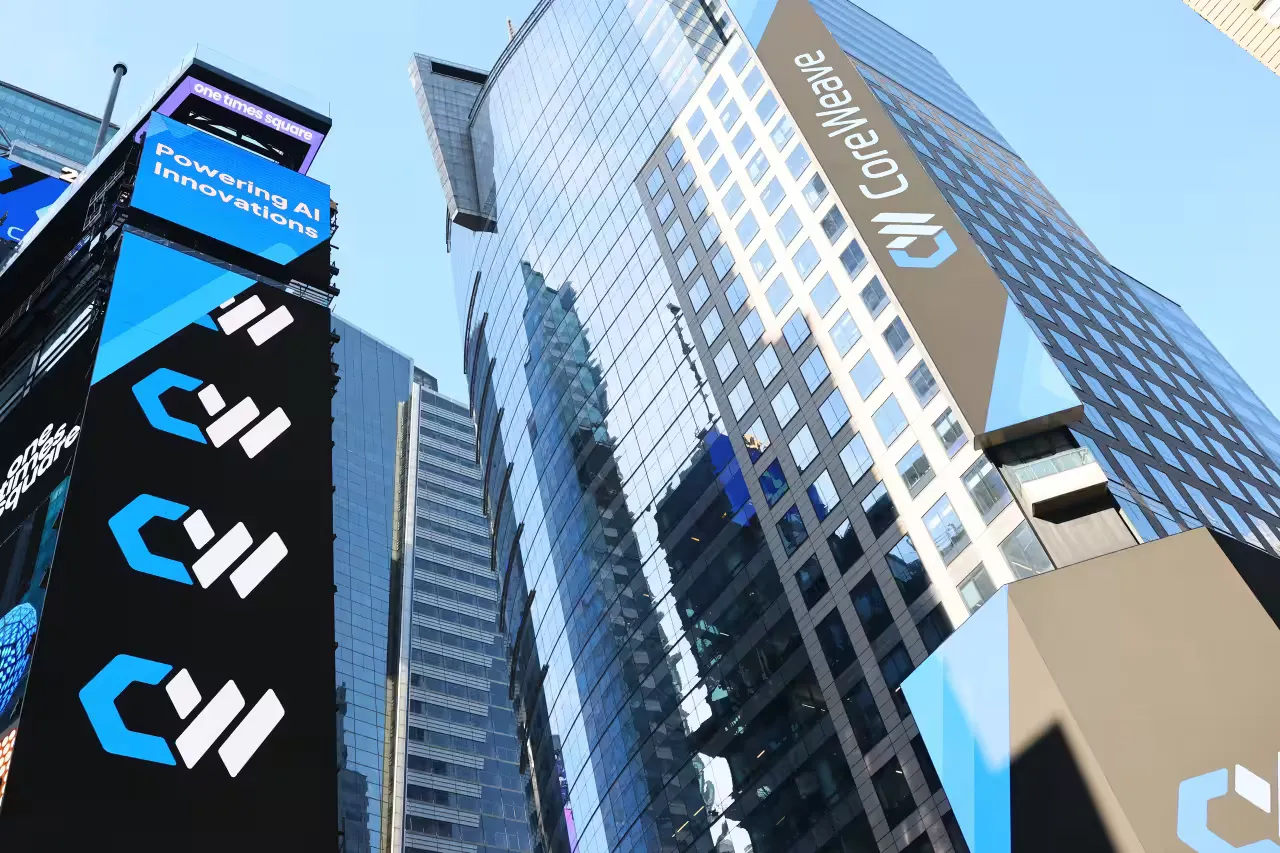
CoreWeave's bonds, issued a few months ago, fell to 81 cents on the dollar earlier Wednesday, pushing yields above 15%. The move signals that credit markets are starting to doubt the AI infrastructure buildout, raising the cost of capital for every leveraged player in the sector.
CoreWeave's bonds, issued just a few months ago, fell to 81 cents on the dollar earlier Wednesday, pushing their yield past 15%. For a company that has become the face of the AI infrastructure boom, that is a startling number: bonds trading at 81 cents signal that investors are pricing in a real chance the borrower struggles to pay back what it owes.
A 15%-plus yield is the kind of return investors demand from companies on the edge of distress, not from a growth story backed by the hottest technology trade of the decade. When a bond's price falls, its yield rises, and the market is effectively saying the risk of default has jumped. For CoreWeave, which has financed its aggressive data center buildout with heavy borrowing, the move is a direct vote of no confidence from the people who get paid before equity holders do.
For context, CoreWeave is an AI cloud provider that built its business renting out Nvidia GPUs to companies hungry for computing power. It went public earlier this year after a meteoric rise, becoming one of the marquee names in the AI trade. Its model is simple in theory: borrow heavily to build data centers, sign long-term contracts with AI giants, and let the demand for compute cover the debt. That model depends on one thing above all: continuous access to cheap capital. The bond market just sent a message that access is no longer guaranteed at yesterday's prices. For a company whose growth has been supercharged by leverage, that message lands directly on the balance sheet.
The bond market is often the first place trouble shows up. Equity investors can ride narratives and momentum, but bondholders are paid first, and their downside is limited to the coupon and principal. When they start dumping a recent issue at 81 cents, it means the people with the most to lose in a default are getting nervous. Historically, credit markets have been a leading indicator of stress, flashing warnings months before equity markets catch up. A single day of trading is not a trend, but the direction matters.
CoreWeave is not just any borrower. It is a bellwether for the AI infrastructure trade, a sector that has been built on enormous amounts of debt. If its bonds are trading at distressed levels, lenders will tighten terms for the next AI data center borrower. That raises the cost of capital across the entire sector, from GPU cloud providers to data center operators, and it puts pressure on companies that have not yet locked in their financing. For a sector that has grown by borrowing against future demand, a higher cost of capital is not a footnote; it is a fundamental change in the math. Every new project now has to clear a higher hurdle rate, and projects that made sense at yesterday's borrowing costs look very different at today's.
The AI buildout has been financed with a simple bet: demand for compute will grow fast enough to service the debt. For a while, that bet looked safe, with hyperscalers and AI startups signing billion-dollar contracts. But bond investors are now asking a harder question: what happens if the demand curve flattens, or if contracts do not convert into cash fast enough to cover interest payments? At 81 cents, the market is signaling it no longer takes that answer for granted. The equity story may still be intact, but the credit market is telling a different story.
For executives and boards across the AI ecosystem, the signal is clear: the market is starting to price risk into AI infrastructure. If CoreWeave's bonds keep sliding, the consequences could cascade: tighter covenants on new debt, higher borrowing costs for peers, and a harder time raising capital for the next wave of data center projects. Companies with strong cash flows and locked-in contracts will be fine; those that need to refinance soon will feel the squeeze first.
The strategic takeaway for CFOs and boards is uncomfortable but direct: the era of cheap AI capital may be ending. Companies that locked in long-term financing are in a stronger position, while those that need to refinance soon face a much colder market. CoreWeave's bond slide is a single data point, but it is the kind of data point that changes behavior across an entire industry. Watch the next few weeks of trading: if the bonds keep falling, the AI credit cycle has officially turned.
This story's Key Insights and Take-aways are locked.
Create a free account to unlock Executive Actions for one credit.
Register to UnlockAlways free for Executives Club members. Join the Club
More in Business

Elon Musk unveils a flying car, and SpaceX helped build it
The Tesla CEO's showcase at a SpaceX facility signals a future where road and rocket engineering converge.

Apple's $2,000 iPhone Duo opens preorders, taking on Samsung and Google
Apple's first foldable hits the market at a premium price, reshaping a category Samsung and Google have led.

Pope Leo XIV, first American pope, diagnosed with lung cancer
The 71-year-old Chicago-born pontiff underwent successful surgery on his right lung, and his diagnosis raises new questions about his AI-focused papacy and the Vatican's future.