
Cristiano Ronaldo answers doubters by scoring at a record six World Cups
Portugal's forward becomes the first to score at six World Cups, turning critics into a footnote and setting a new standard.
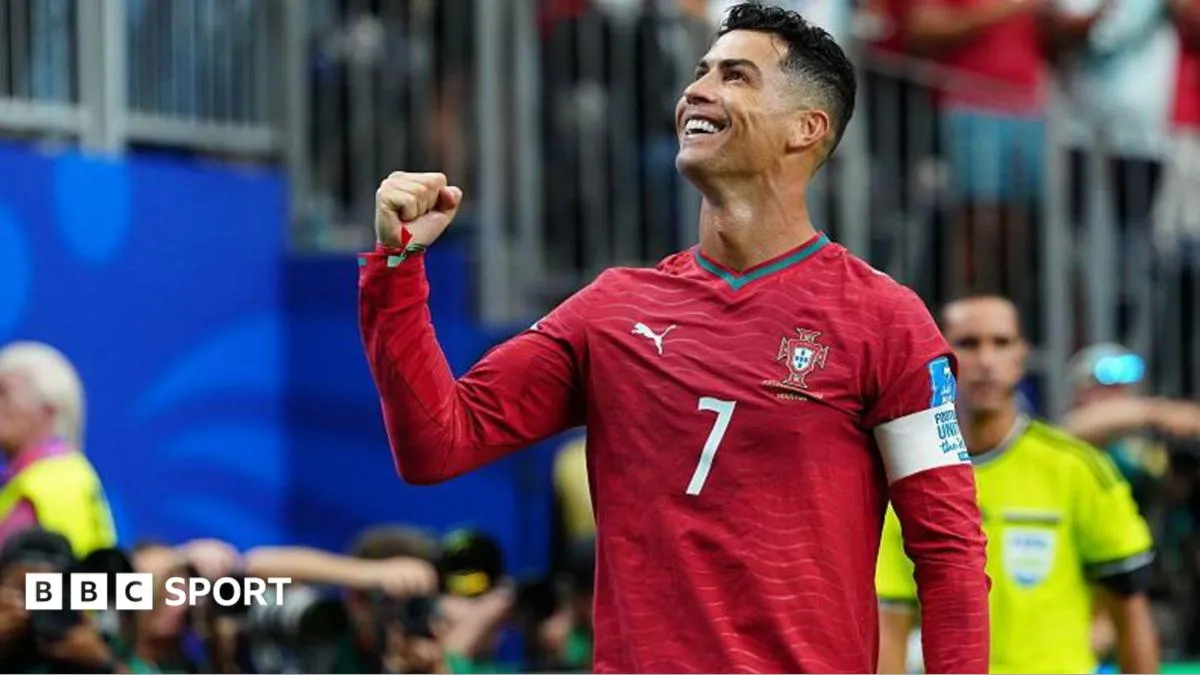
Cristiano Ronaldo, the Portugal forward, answered his critics by becoming the first player to score at six World Cups. For decision-makers watching global sports performance and brand equity, this is a reminder that longevity at the highest level compounds value.
Cristiano Ronaldo is back, and he did it in the most brutal way possible: by beating the doubt itself. Portugal’s forward scored at a World Cup for a sixth time, becoming the first player to do so. That makes him the first to reach a number that sounds fake until you see it on the scoreboard, six World Cups, one player, one continued ability to find goals when the spotlight is at its loudest.
This is the kind of “response” that does not require a press conference. Ronaldo’s record is the statement. The BBC Sport framing is clear: he provides the perfect response to those that doubted him, and he does it by setting the benchmark for World Cup scoring longevity. When critics question whether someone still has it, the counter is not rhetoric. It is output, in the most unforgiving tournament format in the sport.
To understand why this matters beyond the pitch, zoom out to how elite football treats age, relevance, and certainty. World Cups are not friendly environments where teams can experiment for weeks and figure things out later. They are short, high-pressure, win-now tournaments where margins are thin, game plans are tight, and defensive structures are built to stop the usual suspects. Scoring across six separate World Cups implies something that sports executives understand intuitively: the ability to keep performing is not only about talent, it is about adaptation. New teammates, new systems, new coaching instructions, new styles of opposition. The player who still delivers is the one who can recalibrate.
That reframes “critics” as more than just fans with opinions. In football, doubt often comes from multiple incentives pulling in different directions. Clubs and sponsors want dependable stars, broadcasters want clear storylines, and team managers want players who fit current tactics. When a legend’s output dips, it can trigger a cascade: media narratives shift, contract conversations get louder, and boards or leadership teams face pressure to plan for what comes next. A record like scoring at six World Cups cuts through that narrative turbulence. It does not erase complexity, but it resets the baseline for what “still elite” looks like.
There is also a brand and market angle to this record, even if the BBC Sport piece stays focused on the football fact. Ronaldo is a global media asset with deep recognition. Records like this create durable headlines that travel across markets and seasons. For decision-makers, durability is everything. Short-term brilliance can be marketed, but it can also be questioned when the next tournament starts. Longevity turns marketing into something sturdier, because it is backed by repeatable evidence.
Football’s governance and “regulatory” backdrop is less about rules in this specific story and more about the competition structure itself. The World Cup is organized under the sport’s international framework, with qualification and tournament cycles that force clubs, national teams, and players into multi-year planning. The record being tied to “scoring at six World Cups” is effectively a timeline challenge. It is not one hot run. It is proof of performance continuity across multiple tournament cycles, with every cycle requiring a new round of selection, fitness management, and tactical integration.
Second-order implications follow quickly for everyone else in the business of performance. Younger stars chasing mythos usually chase the appearance of immortality. Teams planning squads must decide how to allocate minutes, how to manage roles as players age, and how to balance experience with physical demands. Even for boards or investors watching sports ecosystems, records like this influence market perceptions of human capital. They can shift how quickly stakeholders assume a player is “finished,” and they can raise expectations for how leadership supports players through transitions.
So what is the strategic stake for peers in similar roles? It is the reminder that legacy is not just built on trophies. It is built on repeatable output under pressure, over time. Ronaldo becomes the first player to score at six World Cups, and the practical lesson is hard to ignore: when doubt shows up, the most credible rebuttal is performance that holds across cycles. That is the standard now, and everyone who cares about elite sport will measure themselves against it next time the World Cup clock starts again.
This story's Key Insights and Take-aways are locked.
Create a free account to unlock Executive Actions for one credit.
Register to UnlockAlways free for Executives Club members. Join the Club
More in Entertainment

Russell Brand's accuser 'bewildered and confused' as he denies 7 sex charges
The criminal case against the comedian is a live test of how media companies manage talent risk when serious allegations go public.

'It's a Magic Trick': Ballet Experts Say Rosalía's SNL Pose Is Impossible
Three ballet experts tell Rolling Stone Rosalía's gravity-defying SNL stillness shouldn't be possible - and why the debate is now part of the show.

Activision CMO: GTA 6 Will Boost Call of Duty, Not Bury It
Activision's top marketer says Rockstar's blockbuster will drive players back to consoles and into Modern Warfare 4, even as the company admits its recent strategy failed.