
Crysis 2’s destruction finally lands, even as its nanosuit gets nerfed
Despite AI, story, and traversal problems, Crysis 2’s staged city collapse delivers the series one honest superpower.
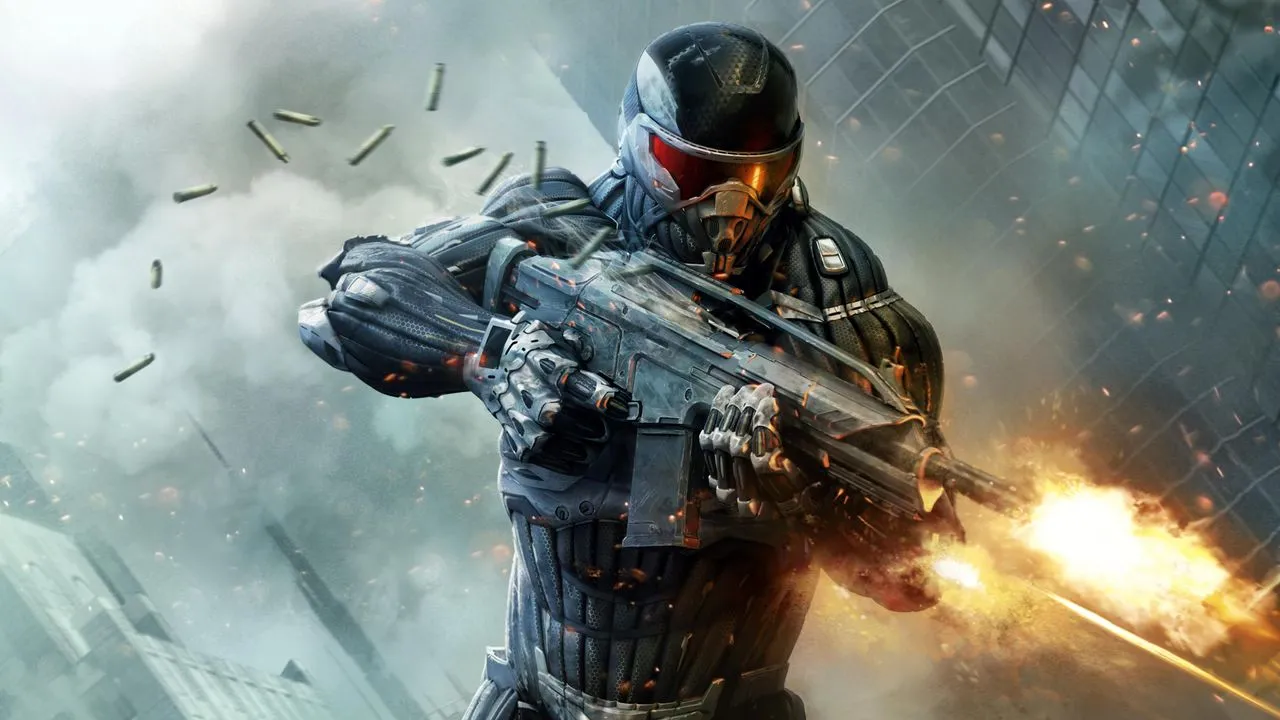
PC Gamer revisits Crysis 2 (from PC Gamer UK #279), arguing the game gets one thing right: destruction. The key consequence for decision-makers is clear: if you nail your core fantasy, players forgive a lot, but only up to a point.
Crysis 2 had a lot going wrong, but PC Gamer’s archive revisit draws a blunt line: the game’s destruction works so well it can become “at times even more enjoyable than the original.” It starts with a premise that’s basically a disaster movie with a gun in your hands: you play US marine Alcatraz, who within five minutes watches half his platoon get massacred by the Ceph, gets shot half to pieces himself, and is told to save New York by Prophet, the nanosuited squad leader from Crysis 1.
And that is the first payoff to the “destruction” claim. The destruction is not random set dressing. It is the theme the game leans on from low-key beginnings to an apocalyptic final act, if you “embrace this theme of obliteration rather than fighting it.” The nanosuit is positioned as the real hero of the experience, synthesising a cure for the alien virus as the story progresses. Alcatraz, meanwhile, is described as “merely a bag of leaky meat” whose job is largely to provide the suit with locomotive abilities to move objective to objective. In other words: the suit is the system that makes the chaos possible, and the player fantasy is built around watching the world break.
But here’s the twist, and it matters for anyone thinking about product design tradeoffs: PC Gamer says Crysis 2 “fails to walk its talk” during play. The nanosuit that should be the star is actively worse in certain ways than in Crysis 1. The number of active abilities drops from four to two, specifically armor mode and cloak. Speed and strength become passive abilities with “little impact on how you play.” That is a direct tension between story framing and moment-to-moment mechanics. It also sets up the central design mismatch PC Gamer keeps returning to: the game doesn’t deliver emergent play the way the original did, because there are “no walls to punch through,” and throwing objects and enemies is described as fiddly and unsatisfying.
Still, destruction is not just theoretical. PC Gamer points to specific, visceral mechanics that create satisfying feedback loops. Power Kick cars and certain objects, which “feels good,” but the author says after playing three times they “never once used this successfully in combat.” Cloaking, on the other hand, is “almost too effective,” letting you “waltz past enemies as they forget about you the moment line of sight is broken.” This is where executives and designers should take notes, because it shows how a single system can be both fun and dangerous to your intended gameplay rhythm. If stealth is too forgiving, players will find an easier path, and the intended “destruction” fantasy can become secondary unless the game channels players into it.
PC Gamer’s workaround is telling: they recommend using Cloak not as a pure stealth play, but as a tactical repositioning tool. Cloak to navigate to the nearest mounted machine gun, tear it off its mounts, then activate armor mode, identify a target, and “let rip.” The writing leans cinematic here because it is talking about the moment the player feels the game’s physics and combat converge. The author describes the HMG judder up your mouse arm, the stomp of your feet as the hardened nanosuit shell collides with tarmac, and the sight of CELL troopers and Ceph “crumble” under the onslaught. That “supremacy, then ripping through the enemy ranks” framing is the product lesson hiding in plain sight: the best destruction is engineered to reward a repeatable loop of positioning, commitment, and payoff.
The destruction itself escalates in a way PC Gamer says is “gradual escalation” rather than instant fireworks. In the early hours, an alien spacecraft smashes into a skyscraper and tears a huge hole in its upper floors. A couple levels later, a section of the FDR highway collapses, leaving a thick dust cloud you can use to quietly pick off mercenaries investigating the cause. But PC Gamer argues these are “merely scripted vignettes interspersed between long stretches of small-arms combat,” which means the game delays the full conversion of its theme into gameplay until later. Around a third of the way through, when you regroup with the marines, the grid-like streets of Manhattan become canyon-like gouges as the city is torn apart by the alien’s “root-like virus dispersal pipelines.” Your arsenal becomes more powerful, enemies larger and more numerous, and your role shifts more defensive as you help the army evacuate the city.
The climax of this mid-to-late escalation is framed as the game’s peak. The author describes a standoff against a thunderous Ceph assault, concluding with you bringing down one of their gunships. The best level is called “Unsafe Haven,” where you fight through Ceph battle-lines to prime and detonate demolition charges on a multi-storey building, bringing it crashing down across the Ceph’s artillery trajectory. PC Gamer credits at least “30%” of their enjoyment to the explosions, and ties the satisfaction to a progression tracker logic: as the fights become more desperate, the city becomes “less and less recognisable.” That also helps explain the second-order effect of world destruction. When the environment changes over time, the player gets an evolving scoreboard that doesn’t require UI, only attention. It’s compared to Half-Life 2’s “AntiCitizen One” and “Follow Freeman” chapters, but stretched over a longer period.
So why doesn’t this stay perfect all the way through? PC Gamer says the Ceph consistently feel like a genuine threat, capable of matching and exceeding Alcatraz’s superhuman capabilities. The problem is the final mission: it is called a “massive anticlimax.” The author says you can breeze past most enemies, and the ending becomes “a big dollop of nonsense” that leaves them mystified and disappointed. They also broaden the lesson: Crysis 2’s limitation on emergent play is described as an error in judgement, which Crytek tried to rectify in the undercooked Crysis 3. The strategic stakes for executives, founders, and investors are obvious even in a game review: if you limit player agency and then also fail to escalate to a satisfying climax, you can convert early magic into lasting trust only if the core fantasy is strong enough to carry the rest. In Crysis 2’s case, destruction did that carrying act. But it could not fully redeem the mismatch between systems, pacing, and payoff.
This story's Key Insights and Take-aways are locked.
Create a free account to unlock Executive Actions for one credit.
Register to UnlockAlways free for Executives Club members. Join the Club
More in Technology

Nvidia's $89B data center quarter: the 9 companies cashing in
The AI buildout is minting fortunes beyond GPUs, and memory, cloud, and cooling suppliers are riding the same wave.

Google quietly links your phone number to every Android account on your SIM
Adding a SIM now ties your phone number to all Google accounts - and future accounts inherit it. Here's the security and privacy stakes.

Hijacker AI 'Skynet mode' runs 100,000 attack steps against exposed models
Symantec caught a criminal AI agent that borrows other models, steals data, and mines crypto; the only relief is no confirmed victims yet.