
CXMT sues Pentagon to shed 'Chinese military company' tag after market surge
The world's No.4 DRAM maker is fighting a US designation that blocks defense contracts but not commercial sales - a move with big implications for chip supply chains.
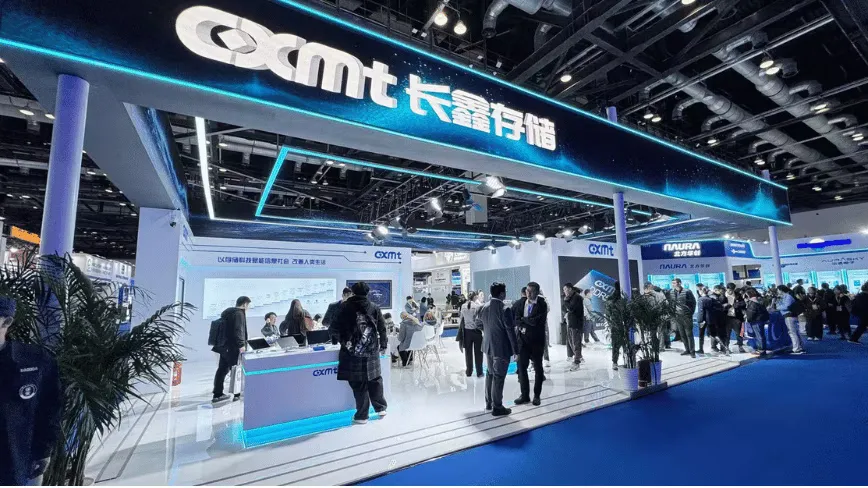
CXMT, the world's fourth-largest DRAM maker and China's most valuable listed company, has sued the US Department of Defense in Washington to remove its designation as a Chinese military company. The outcome could determine whether the chipmaker can access US defense contracts and set a precedent for other Chinese tech firms facing similar blacklists.
In a bold legal move that underscores the escalating US-China tech war, CXMT - the world's fourth-largest DRAM maker and, as of this month, China's most valuable listed company - has filed suit against the US Department of Defense in Washington. The chipmaker is demanding removal from the Pentagon's list of Chinese military companies, a designation that blocks it from US defense contracts but, notably, does not restrict its commercial sales. The lawsuit lands as CXMT's market value has surged past Tencent, a stunning shift that reflects investor bets on China's push for semiconductor self-sufficiency.
The designation in question stems from Section 1260H of the National Defense Authorization Act, which requires the Pentagon to identify Chinese companies operating in the US that are owned or controlled by the People's Liberation Army. Being on the list carries a heavy stigma: while it doesn't ban commercial trade, it effectively bars the company from US government procurement and can spook private-sector partners wary of regulatory blowback. For CXMT, which supplies memory chips used in everything from smartphones to data centers, the label threatens to tarnish its reputation and complicate its global expansion - even if its bottom line hasn't felt the pinch yet.
CXMT's decision to sue is a calculated gamble. The company has been on a tear, riding a wave of nationalistic support and government subsidies to challenge the DRAM duopoly of Samsung and SK Hynix, with Micron trailing close behind. Its market capitalization recently overtook Tencent's, making it the most valuable publicly traded company in China - a remarkable feat for a firm that was barely a blip on the global memory map a decade ago. The lawsuit signals that CXMT believes it can win on legal merits, or at least force a negotiation, rather than quietly accept the Pentagon's classification.
The stakes extend far beyond CXMT's own balance sheet. The Pentagon's list has become a key tool in Washington's broader effort to contain Chinese tech dominance, and it has already ensnared giants like Huawei and Xiaomi. Some companies have successfully challenged their inclusion - Xiaomi was removed in 2021 after suing the US government - setting a precedent that CXMT is now trying to follow. If CXMT wins, it could embolden other Chinese firms to push back, potentially unraveling a cornerstone of US export controls. If it loses, the message is clear: no Chinese tech company is safe from the Pentagon's reach.
For the global memory chip industry, the lawsuit adds another layer of uncertainty. DRAM is a $100 billion market, and CXMT's rise has already disrupted pricing dynamics, forcing incumbents to innovate faster and cut costs. A legal victory for CXMT could accelerate its expansion into Western markets, intensifying competition and squeezing margins for Samsung, SK Hynix, and Micron. Conversely, a defeat might prompt Washington to tighten restrictions further, potentially cutting CXMT off from critical US technology and equipment - a move that could ripple through supply chains that rely on its low-cost memory chips.
The timing is no accident. CXMT's lawsuit comes amid a broader thaw in US-China relations, with recent high-level meetings between trade officials and a tentative agreement on semiconductor export controls. By going to court, CXMT is testing whether the diplomatic detente translates into concrete relief for individual companies. It's a high-risk, high-reward strategy: the company is betting that the Biden administration, eager to avoid further escalation, might prefer to quietly settle rather than fight a protracted legal battle that could expose the list's flaws.
For decision-makers watching from the sidelines, the case is a live case study in navigating geopolitical risk. CXMT's move shows that even the most powerful Chinese tech firms are not content to be passive targets of US policy. They are willing to use every tool available - including American courts - to defend their interests. The outcome will be watched closely not just in Beijing and Washington, but in boardrooms from Seoul to San Jose, where executives are recalibrating their supply chains and partnership strategies in response to the shifting sands of the US-China tech cold war.
As the legal proceedings unfold, one thing is clear: CXMT's lawsuit is more than a corporate dispute. It's a test of whether the rules-based order can accommodate the rise of Chinese tech giants, and whether the Pentagon's blacklist can withstand judicial scrutiny. For now, CXMT is betting that the answer is yes - and that its market value, which has already surpassed Tencent, will continue to climb if it succeeds. The world's fourth-largest DRAM maker is no longer just a chip company; it's a symbol of China's technological ambitions, and its courtroom battle could reshape the global tech landscape for years to come.
This story's Key Insights and Take-aways are locked.
Create a free account to unlock Executive Actions for one credit.
Register to UnlockAlways free for Executives Club members. Join the Club
More in Technology

AI researcher's 26,000-word claim: Neural nets aren't tangled after all
Nick Cammarata's Goodfire post has the AI world split - if he's right, monitoring frontier models just got a lot easier.

A Chinese rocket deorbited over Minnesota and landed in a farmer's cornfield
Experts tied the fragment to LandSpace's Zhuque-2E, which launched on September 15 and shed debris over the American Midwest after deploying 10 satellites.

JPMorgan Chase deploys first $5B into defense tech and hypersonic missiles
The bank is moving off its balance sheet to back robot factories, hypersonic missiles, and supply chains, signaling a new era of bank-backed military innovation.