
Cyberdecks are vanishing into purses, toys, and jewelry boxes
DIY builders like Annike Tan are turning cyberdecks into disguised personal gadgets, and that shift changes how online hardware culture gets seen, shared, and copied.
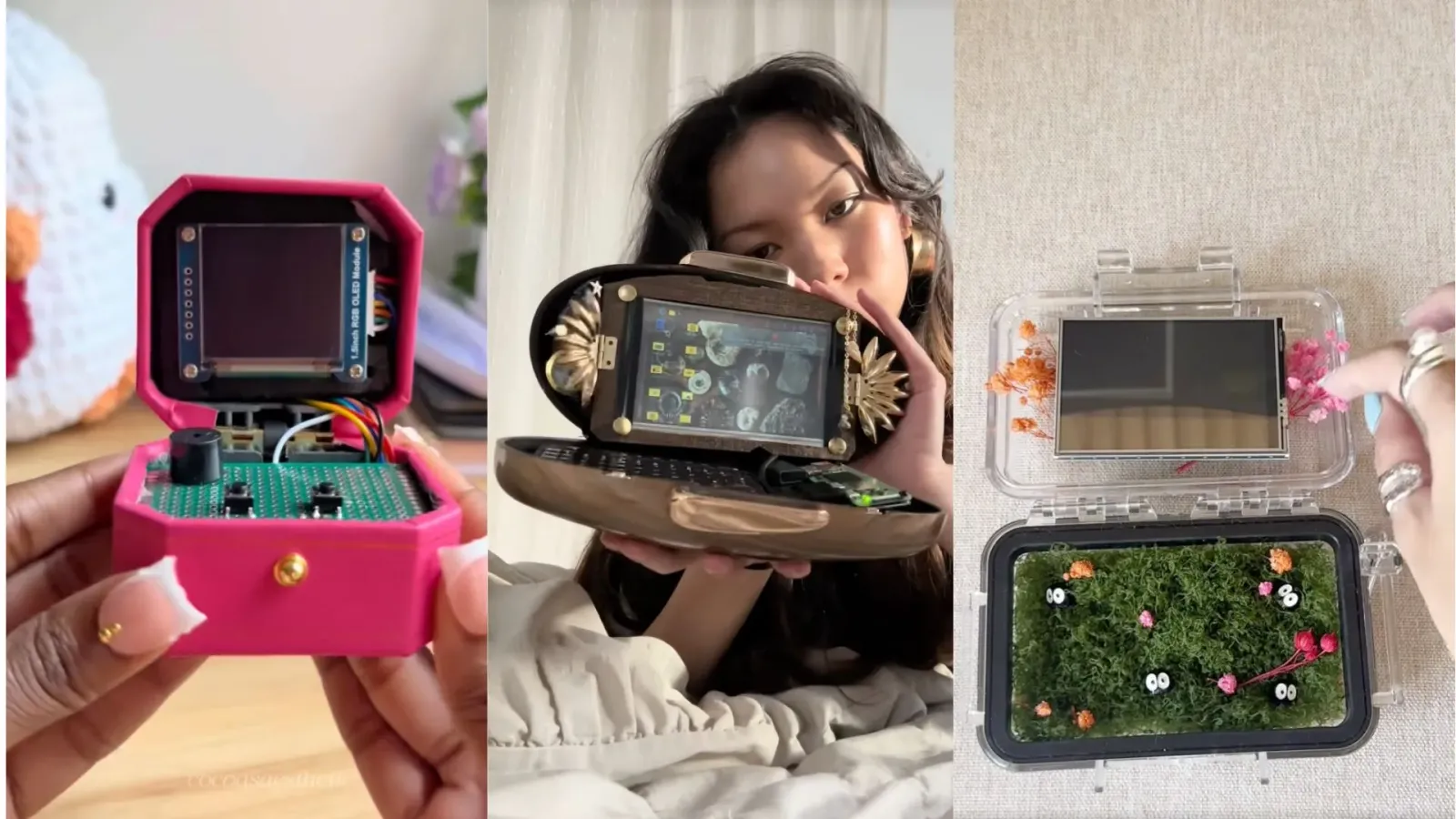
DIYer and TikTok creator Annike Tan, who goes by @ubeboobey, has built a mermaid-themed cyberdeck inside an old purse, then followed it with an MP3 player and a solar-powered cyberdeck. The trend matters because it shows how hobbyist hardware is moving from novelty laptop clones into highly personal, highly shareable artifacts that can drive attention, community, and product-inspired design language.
Annike Tan does not carry her cyberdeck like a computer. She carries it like a purse. That is the whole point, and it is why her work has caught fire online. Tan, who posts as @ubeboobey and has been featured in The Cut and Wired, went viral earlier this year with a mermaid-themed cyberdeck she built inside an old purse. Since then, she has upgraded that build and made two more projects, an MP3 player and a solar-powered cyberdeck. In other words, the cyberdeck has stopped being a quirky little laptop cosplay and started becoming something far more personal.
For anyone not deep in the rabbit hole, a cyberdeck is typically a homemade portable computer, often built around a Raspberry Pi board and wrapped in whatever shell the creator wants. Historically, the genre leaned hard into the "portable terminal" aesthetic, which meant chunky little laptop forms, retro hardware vibes, and lots of exposed components. What Tan and countless other DIYers are showing now is a different instinct: hide the computer inside an object that already means something. A purse. A jewelry box. A toy. Even old tech. The computer is still there, but the identity of the object does most of the talking.
That shift matters because it changes what makes these projects shareable. A small homemade computer is interesting to hardware people. A computer disguised as a piece of jewelry or a bag is interesting to almost everyone. That helps explain why these builds are attracting millions of views across TikTok and other social feeds. The visual punch is immediate: you think you are looking at an accessory, then it opens into a functioning personal computer. The surprise is not just aesthetic. It is social. These projects invite a kind of recognition that basic gadget photos rarely do. They are tiny performances of craftsmanship, personality, and technical confidence all at once.
Tan is a useful example because her work sits right at that intersection. The source notes that she can carry her cyberdeck around without anyone noticing because it does not look like a computer at all. That is a clever design trick, but it is also a distribution strategy in the age of algorithmic attention. The more the object resembles an everyday personal item, the more it can slip into a feed as something viewers feel they have to inspect twice. The earlier mermaid purse build made that clear, and the follow-on projects suggest she is not a one-off viral hit. She is iterating. That is the part operators and creators should notice.
There is also a broader cultural pattern at work here. DIY tech has long been about reclaiming agency from mass-produced hardware, and cyberdecks are a vivid extension of that instinct. Instead of buying a standardized device, builders are assembling something that reflects taste, identity, and use case. The source mentions Raspberry Pi boards tucked inside art projects, which is exactly the kind of modular, accessible hardware that makes this possible. That accessibility lowers the barrier to experimentation, and social platforms raise the ceiling on visibility. Put those together and you get a loop: someone builds a strange, beautiful, technically functional object, posts it, gets millions of views, and suddenly the format itself becomes a mini-genre.
For decision-makers in product, media, and consumer hardware, the interesting part is not just that these builds are cute. It is that they reveal what people respond to when technology feels too generic. The cyberdeck trend is moving toward objects that are more personal, more disguised, and more emotionally legible. That may not sound like a giant business insight, but it is the kind of taste shift that often shows up first in creator culture before it influences design language elsewhere. When a purse can become a computer and still feel like a purse, the line between utility and identity gets a lot thinner. That is exactly the kind of line creators love to erase, and exactly the kind of line companies eventually end up studying.
The practical takeaway for peers watching from the sidelines is simple: the market for DIY tech attention is not just about specs anymore. It is about narrative, disguise, and delight. Tan's builds work because they make a technical object feel like a personal artifact, and that formula is traveling fast. If you are building products, content, or communities around hardware, the lesson is not to copy the purse. It is to understand why people keep clicking on things that look nothing like computers until they suddenly are. That instinct is the story, and it is getting bigger, one disguised device at a time.
This story's Key Insights and Take-aways are locked.
Create a free account to unlock Executive Actions for one credit.
Register to UnlockAlways free for Executives Club members. Join the Club
More in Technology

OpenAI says 10,000 agents cracked a 90-year math problem in 88 hours
The company's claim is audacious, but one mathematician is pushing back. Here's what it means for AI-driven discovery.

Meta still serves child sexual abuse ads on Instagram in India - BBC report
A new report following the BBC Eye investigation says the ads are still there - what it signals for every platform with a self-serve ad engine.

White House yanks 'Build the Wall' game after Tetris Company copyright warning
The administration's arcade game vanished in hours - and the takedown playbook every brand can learn from.