

D-Matrix goes into full production with Microsoft-backed AI chip it claims is 10x faster
The Nvidia challenger says it avoids the GPU memory bottleneck, forcing buyers to reassess performance and supply risk.
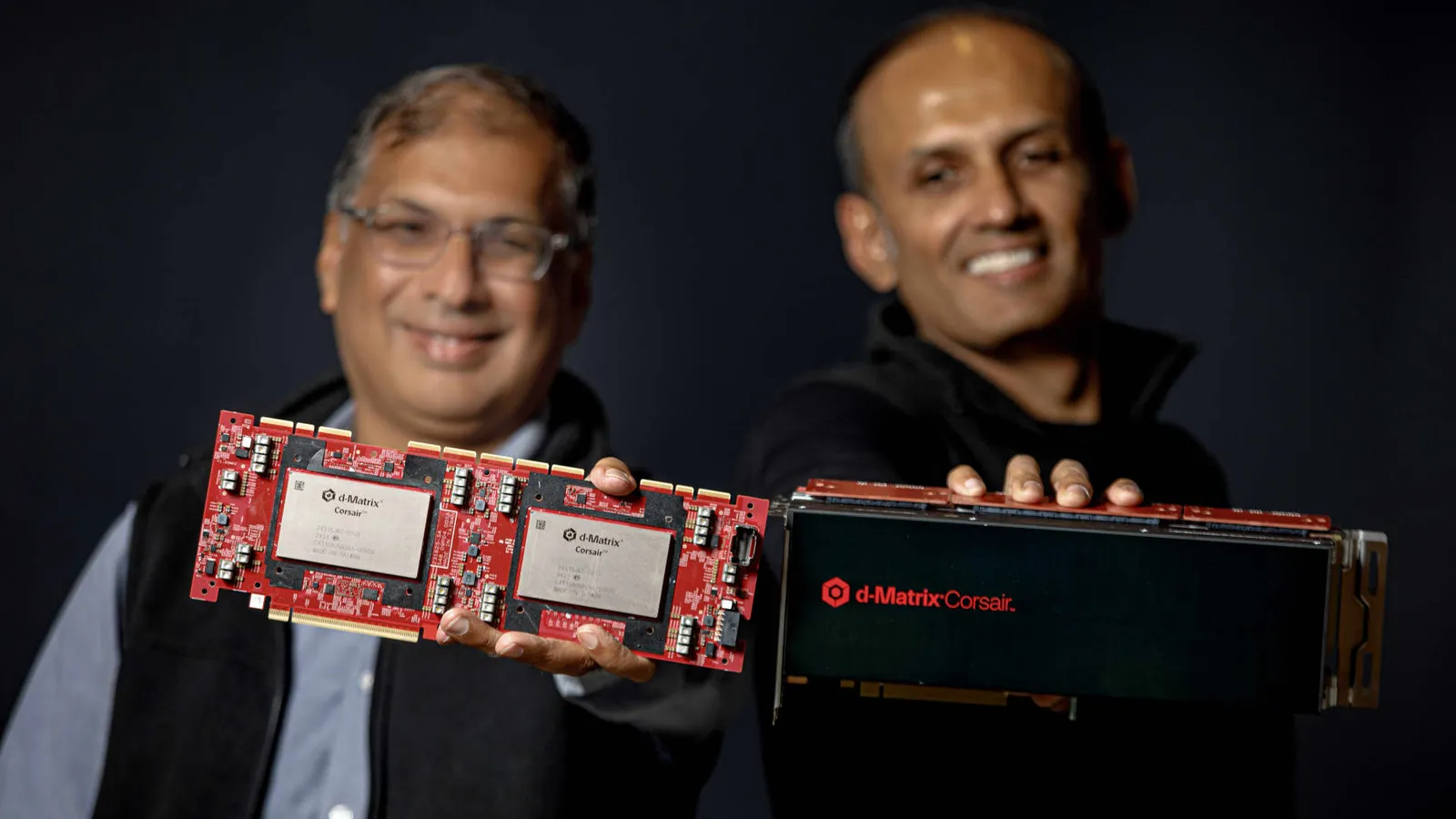
D-Matrix is entering full production of an AI chip Microsoft-backed D-Matrix says is 10 times faster than a GPU and bypasses a memory shortage. For decision-makers, it adds a credible second source option at a moment when compute demand is colliding with hardware constraints.
D-Matrix is entering full production of an AI chip, and the company is pitching it as a direct challenge to Nvidia on two fronts at once: speed and supply-chain pain. In its launch messaging, D-Matrix says the chip is 10 times faster than a GPU. It also claims a key advantage that matters to operators, not just engineers: it bypasses the memory shortage that has been constraining AI systems.
That combination is the point. In a market where many buyers do not only care about raw throughput, but also about whether they can actually get enough compute to run models, D-Matrix is positioning itself as both a performance upgrade and a practical workaround. The headline claim, “10 times faster than a GPU,” is the headline promise. The memory shortage workaround is the operational payoff D-Matrix wants procurement teams and engineering leads to believe they can realize immediately.
To understand why this is a big deal, zoom out to how AI hardware buying typically works. Training and serving AI workloads depend on GPUs, but those GPUs are not just about compute cores. They also depend on memory bandwidth and capacity, plus the broader platform ecosystem around them. When memory supply gets tight, systems often hit a wall even if the compute horsepower is available. In that world, a chip vendor that can claim it “bypasses the memory shortage” is not merely offering a faster part. It is promising fewer scheduling delays, less performance throttling, and potentially a smoother path from “we want more AI” to “we actually deployed more AI.”
D-Matrix’s move also lands in the middle of a broader competitive dynamic. Nvidia has dominated mindshare and market share in AI accelerators for a reason: the company’s GPUs come with a mature software stack and a proven ecosystem. Challengers that survive more than a news cycle usually need to do more than say “we are comparable.” They have to show either a better price-performance profile, a more compelling platform path for developers, or a way to reduce constraints that buyers are feeling right now. D-Matrix’s message is built for those exact constraints: it is claiming a meaningful performance jump while also targeting the practical bottleneck in memory.
The “Microsoft-backed” part is where boardrooms and budget owners lean in. When a large strategic backer supports a hardware startup, it signals that someone with serious market muscle is willing to put credibility behind the technology and, potentially, behind customer adoption. That does not automatically validate the “10 times faster” claim, but it does change how buyers will evaluate the risk. Companies typically price risk into hardware decisions. Strategic backing can lower perceived technology risk, accelerate pilot timelines, and strengthen the negotiating position of buyers who want more competition than a single-vendor world.
Regulatory and policy considerations are not the headline here, but they matter in the background for executives. AI supply chains are deeply global, and hardware scaling touches export controls, procurement rules, and geopolitical constraints. Even when regulations do not target a specific startup directly, buyers often have to think about resilience. A credible challenger that can ramp to “full production” changes the resilience story. In other words, it can influence not just performance forecasts, but also risk models tied to single-vendor dependence.
Now consider second-order implications for anyone else buying AI chips, deploying AI workloads, or evaluating vendor diversification. If D-Matrix can truly deliver performance gains “10 times faster than a GPU” while avoiding the memory shortage, it creates pressure on two fronts. First, it pushes internal teams to revisit architectures built around current GPU assumptions. If memory is less of a limiting factor, system design priorities shift. Second, it pressures competing vendors, including Nvidia, to defend not just benchmark performance, but throughput under real-world constraints. That matters for budgeting cycles and long-term capacity planning, especially for companies building AI features that have immediate revenue or cost impact.
The strategic stake is straightforward. For AI decision-makers, the question is whether you can scale demand without getting stuck waiting on constrained components. D-Matrix is entering full production with a pitch that it can help. If the claim holds, it gives buyers a path to expand compute faster and with fewer memory-driven bottlenecks. If it does not, it still forces the market to pay closer attention to memory constraints and alternative architectures sooner than many plans anticipated. Either way, the Nvidia challenger is making sure it is not just another promise in a crowded field. It is tying its pitch to the two issues buyers are least willing to ignore right now: speed and supply reality.
This story's Key Insights and Take-aways are locked.
Create a free account to unlock Executive Actions for one credit.
Register to UnlockAlways free for Executives Club members. Join the Club
More in Technology

OpenAI says 10,000 agents cracked a 90-year math problem in 88 hours
The company's claim is audacious, but one mathematician is pushing back. Here's what it means for AI-driven discovery.
Meta still serves child sexual abuse ads on Instagram in India - BBC report
A new report following the BBC Eye investigation says the ads are still there - what it signals for every platform with a self-serve ad engine.
White House yanks 'Build the Wall' game after Tetris Company copyright warning
The administration's arcade game vanished in hours - and the takedown playbook every brand can learn from.