
Daniel Dale: “No Such Proof” for Trump’s stolen-election claims before his Thursday speech
CNN’s fact-checker dismantles claims about 2020 results, foreign interference, and mail-in fraud ahead of Trump’s prime-time remarks.
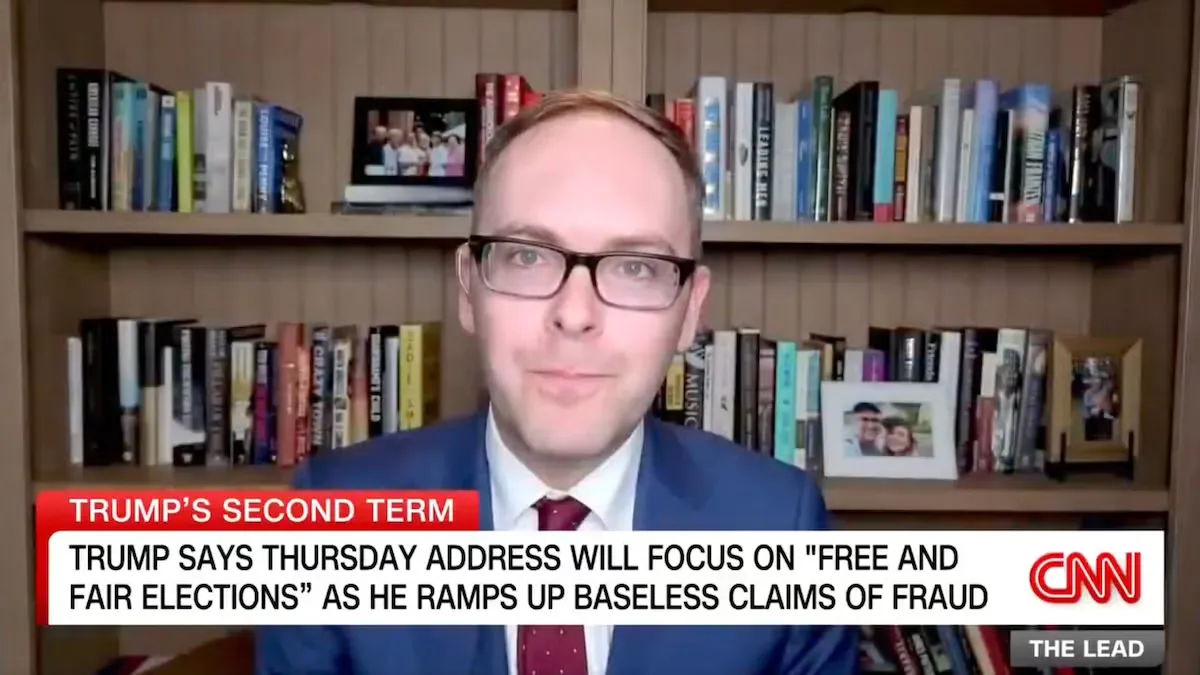
CNN journalist Daniel Dale fact-checked Donald Trump’s “stolen” 2020 election and mail-in voting claims ahead of Trump’s Thursday prime-time address. For decision-makers, the segment spotlights how election narratives are being built, challenged, and amplified in real time.
CNN’s Daniel Dale went on “The Lead” with Jake Tapper Tuesday night to fact-check a stack of Donald Trump’s election fraud claims just two days before the president’s Thursday prime-time speech on elections. Dale’s bottom line was blunt: “No such proof has emerged,” even as Trump continues to claim the 2020 election was “rigged.”
That matters because Trump framed the upcoming address as consequential, telling reporters in the Oval Office Tuesday that it would concern elections while adding, “I’d rather save it. But it’s really big news.” He did not elaborate further on what he would say, and CNN’s Dale used the gap before Thursday to show how the claims have been repeated without being substantiated.
In the segment, Dale described Trump’s pattern as a long-running insistence that he won in 2020, despite outcomes supported by recounts and court reviews. He pointed out that Trump “lost and yet” has been lying about winning for “approaching six years,” and then pivoted to the more specific claim Trump has recently been making: that “so much proof has already emerged” that the election was rigged and that Trump was the real winner. Dale’s correction was direct. “No such proof has emerged,” he said.
Dale also addressed claims Trump has made about election outcomes and vote counting. He named the assertion that Trump won the popular vote in all three of his elections, adding that it is not true because Trump “only won it in 2024.” He then tackled “wild conspiracies about China, Italy, other countries using voting machines to flip votes,” stating that “Simply did not happen.” That is the sort of allegation that tends to travel quickly in political ecosystems because it is hard to disprove at the speed of social media, which is exactly why pre-bunking and fact-checking routines are becoming more important for media organizations and tech platforms alike.
On mail-in voting, Dale again separated rhetoric from evidence. Trump has repeatedly pushed the idea that mail ballots are corrupt or “crooked,” and Dale responded by saying those claims “simply are not although the fraud rates are slightly elevated compared to in-person voting.” That nuance matters. It acknowledges that there can be differences in error or incident rates between systems while still rejecting broad fraud narratives. Dale also said mail-in ballots have been “good enough for legitimate voters,” including “one Donald J. Trump, who has voted by mail himself.”
The media timing is not subtle. TheWrap reported that ahead of Thursday, reports indicate Trump’s address will give Americans more insight into his task force on election fraud, but Trump had not confirmed the contents of his speech at the time of publication. The president created an administration task force intended to declassify “a large volume of sensitive government documents” so they could be made public. However, the source notes that “results of that effort have not been made public.” That combination, task force + sensitive documents + “nobody knows yet,” sets up an information asymmetry. Dale’s segment is effectively the “what’s actually known” counterweight to a “tune in Thursday” promotional posture.
Behind the scenes, White House communications leaned into that uncertainty. White House press secretary Karoline Leavitt told reporters in the Oval Office that anonymous sources are speculating about what Trump will say, and then added: “The truth is, nobody knows yet what President Trump will ultimately say, which is why everyone should tune in.” From a governance standpoint, that is a high-wire act. When officials tee up an upcoming revelation without publishing the substance, the next cycle can become less about adjudicating evidence and more about competing narratives, especially online.
Dale also connected Trump’s current messaging to a broader set of themes the president has been using, including claims that he is in a “third term” and what Dale described as “an entire cinematic universe” of “dozens of additional lies.” The point for executives and board members who sit in the crosshairs of political risk is not whether you agree with Dale. The point is the operating reality: election-related claims are not just political talking points. They can shape consumer behavior, partner decisions, public trust in institutions, and the regulatory scrutiny that follows when misinformation becomes operational.
For technology leaders, platforms, and media strategists, this is the second-order problem. If a presidential address is expected to lean into election fraud narratives, then the verification workload increases sharply in the hours before and after the speech. Fact-checkers and editors become time-critical infrastructure. For investors and compliance teams, the stake is reputational and legal. Even if claims are later rejected by court reviews or recounts, the initial dissemination can drive political and regulatory consequences that linger. Dale’s message of “No such proof has emerged” is not just a rebuttal. It is a signal that the evidentiary standard is being contested live, and Thursday’s speech is positioned to test that standard again.
This story's Key Insights and Take-aways are locked.
Create a free account to unlock Executive Actions for one credit.
Register to UnlockAlways free for Executives Club members. Join the Club
More in Politics
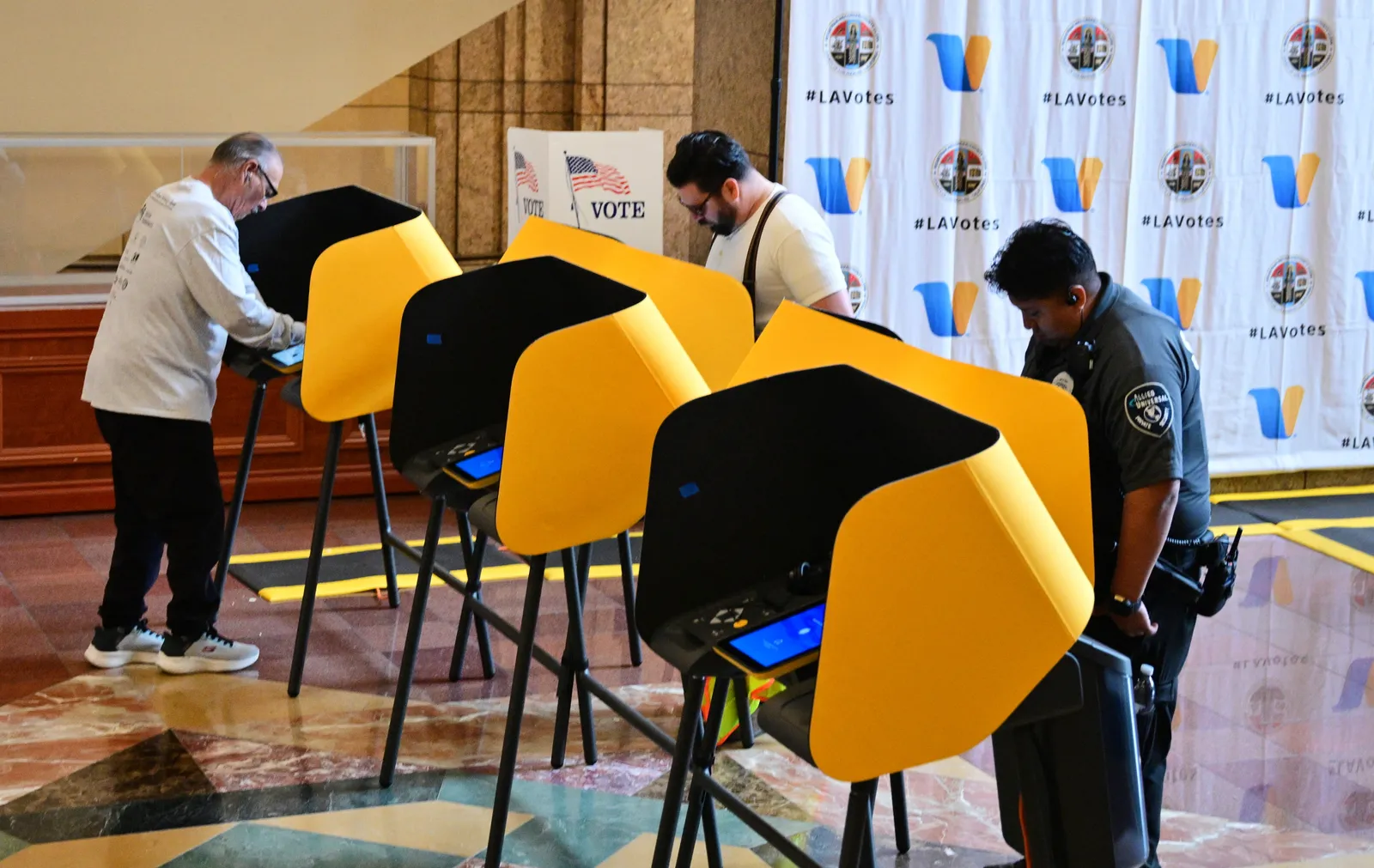
LA County: DOJ's 20,000 'noncitizen' voter list is 'unreliable,' includes U.S.-born
Preliminary review by Los Angeles County election officials finds errors in the federal list, raising the stakes for voter roll integrity ahead of November.
Trump's $1.5B Pentagon chip investment lands in North Carolina
A $1.5 billion defense infusion for North Carolina chipmaking signals a new era of Pentagon-backed reshoring - here's what it means for the industry.
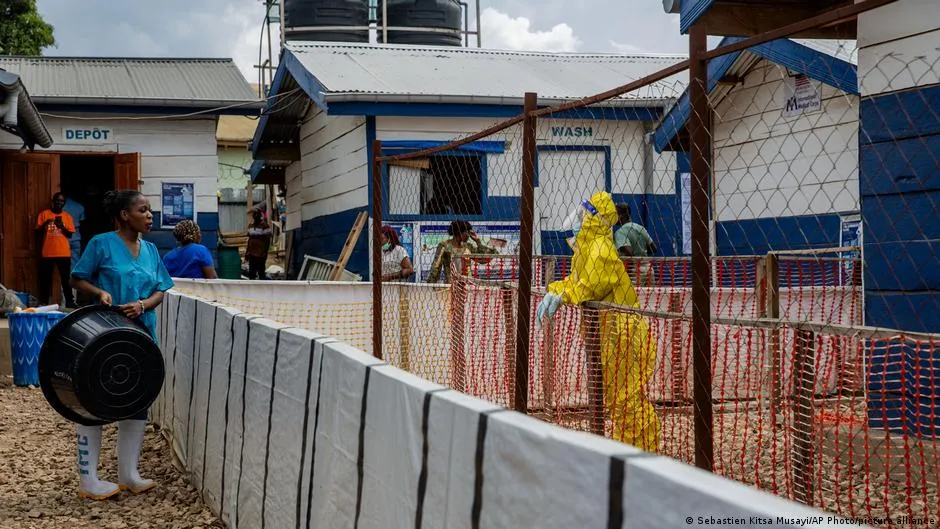
Nigeria confirms first Ebola case in Abuja, a woman just off a Uganda flight
Health Minister Muhammad Ali Pate says the patient flew in from Uganda, putting Africa's latest outbreak on Nigeria's doorstep.