
Danish Refugee Council warns DR Congo Ebola response could hollow out aid amid funding crisis
Charlotte Slente says the health emergency risks swallowing already-strained humanitarian resources in DR Congo.
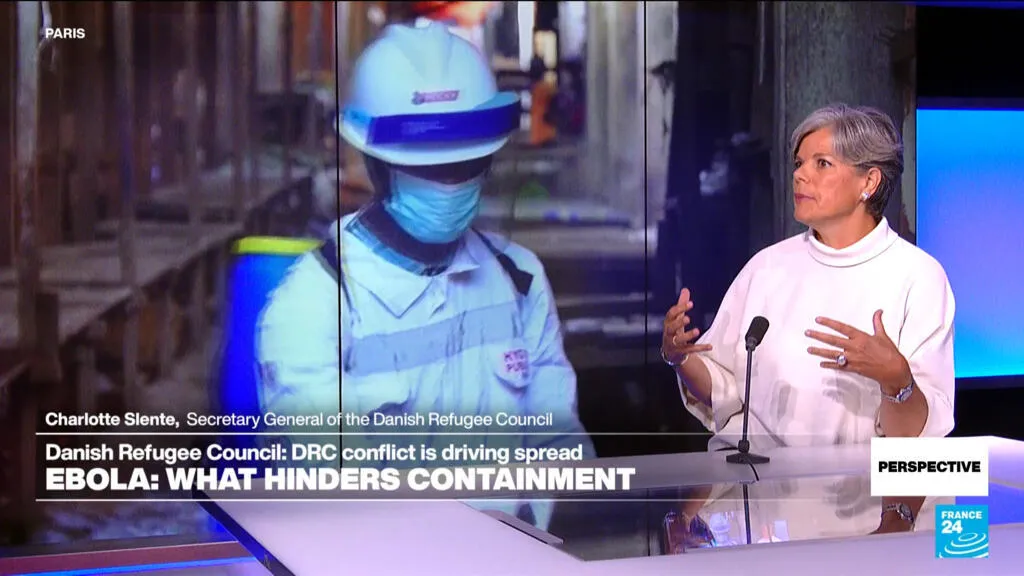
Charlotte Slente, Secretary-General of the Danish Refugee Council, warns that the latest Ebola outbreak in DR Congo is worsening an already strained humanitarian situation. She says a funding crisis predates Ebola and now creates a risk that resources shift into an Ebola-only response.
The Danish Refugee Council is warning that DR Congo's latest Ebola outbreak is doing more than adding a new health emergency. It is colliding with a humanitarian system that is already under strain. In a recent report, the NGO stressed that the response to the health emergency "must not hollow out the aid programming that is holding communities together." Speaking to FRANCE 24, Secretary-General Charlotte Slente backed that warning with a blunt concern: a "funding crisis" that was already present before Ebola arrived.
Slente’s point is straightforward but high-stakes. With the arrival of the virus, there is "a risk these resources are now turned into a response to Ebola." In other words, money and capacity that were already keeping communities stable could be rerouted, even if the non-Ebola humanitarian needs did not disappear. When an outbreak hits, donors and operators often understandably focus on the crisis that is visible, urgent, and medically defined. But Slente is flagging the operational downside of that gravity. If the broader aid architecture weakens, the community-level conditions that help people cope, access services, and maintain safety can degrade at the same time the health response scales up.
That is the crux of the Danish Refugee Council’s argument: coordination is not just a logistical preference. It is a way to avoid turning one emergency into a broader humanitarian unraveling. Ebola response does not happen in a vacuum. Humanitarian programming typically includes basic services, support systems, and assistance mechanisms that reduce vulnerability to multiple threats. When funding is tight, the temptation is to treat the Ebola outbreak as a separate bucket. Slente’s warning implies the opposite: the health response has to be integrated without cannibalizing the programs that are already doing the less visible work of holding communities together.
The phrase "funding crisis" matters because it changes how to interpret every operational decision. If shortages were already building before Ebola, then Ebola does not create only new demand. It also reshuffles limited resources. And when resources are constrained, the marginal dollar tends to follow the loudest narrative, the fastest reporting cycle, or the response that donors can verify in the short term. The risk Slente highlights is that the arrival of the virus could accelerate that rerouting, leaving non-Ebola humanitarian needs to absorb the cut.
For decision-makers, this is a governance and portfolio problem, not only a health problem. Boards and senior executives in humanitarian organizations often need to balance competing budget lines, shifting priorities, and accountability demands from funders. A coordinated response framework can reduce the probability that teams are forced into false trade-offs, where every addition to one program requires the subtraction of another that communities still rely on. Slente’s warning essentially asks funders and implementers to look at the system-level impact: does the response strategy preserve or reduce the base level of support that helps people remain resilient while health interventions scale?
There is also a second-order implication that gets lost in early outbreak dynamics. Even if Ebola-focused interventions are necessary, cutting other aid can worsen health outcomes indirectly, including through disruptions to access, nutrition support, protection services, and continuity of care. The Danish Refugee Council’s report framing, that the response "must not hollow out" community-supporting aid programming, is a direct signal that these indirect effects are not theoretical. They are the likely outcome when budgets, staff, and logistics are reallocated under pressure.
For executives at peer NGOs, donors, and coalitions, the lesson is to treat coordination as a core risk management function. In tight funding environments, response plans must include guardrails that prevent emergency scaling from degrading the non-emergency baseline. That means making trade-offs explicit, tracking where resources go as Ebola arrives, and ensuring that the response does not become an either/or exercise. Slente’s comments to FRANCE 24 emphasize that the humanitarian situation in DR Congo was already strained, and the Ebola outbreak complicates it rather than replacing it.
The strategic stakes are clear. If resources are turned into a response to Ebola at the expense of other aid that communities rely on, the overall humanitarian picture could worsen even as Ebola gets attention. For leaders overseeing humanitarian portfolios, the call is for a response that is coordinated enough to protect the broader support ecosystem. Otherwise, the immediate medical emergency can be paired with a longer, quieter crisis of community stability, driven by the very funding reallocation meant to fix a problem fast.
This story's Key Insights and Take-aways are locked.
Create a free account to unlock Executive Actions for one credit.
Register to UnlockAlways free for Executives Club members. Join the Club
More in Politics
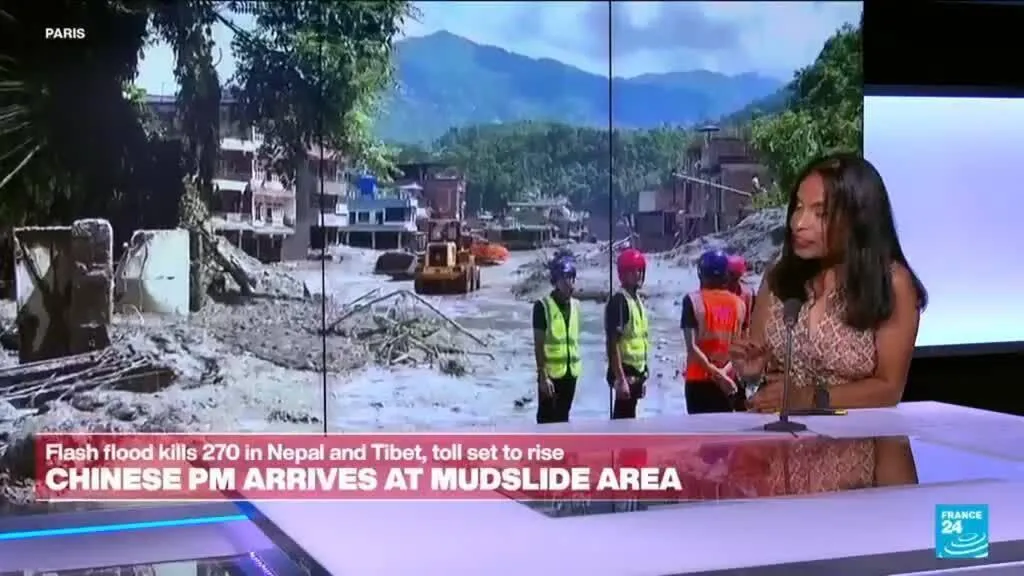
Glacial collapse, not rain, killed 180 in Nepal's Himalayan flood
The Himalaya's extreme geography hid the true cause of Nepal's catastrophic flood, a glacial collapse that turned a geological battleground into a mass-casualty zone.

Iran’s Esmail Baghaei says Oman talks start shipping via Hormuz, not US talks yet
Temporary route plans with Oman aim to restart commerce while Tehran says Washington dialogue is not on the table.

Standards watchdog opens probe into Reform UK deputy leader Richard Tice over interests
The parliamentary standards commissioner says it began an investigation on 28 July into a possible undeclared interest.