
David Crowley readies Wisconsin governor bid after Lt. Gov. Sara Rodriguez exits scandal fight
Rodriguez ended her run Friday over campaign finance errors, and Crowley signals a return to the Democratic primary.
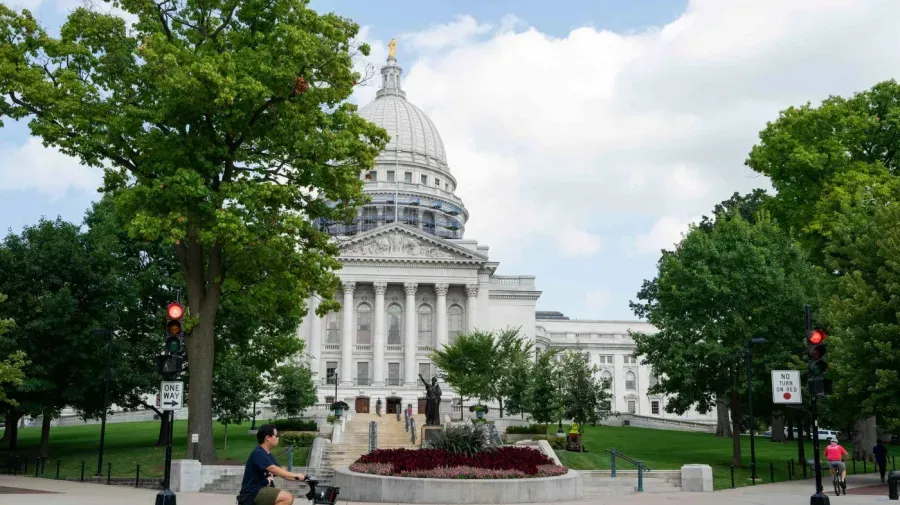
Milwaukee County Executive David Crowley is set to rejoin the Democratic primary race for Wisconsin governor after Lt. Gov. Sara Rodriguez ended her bid on Friday. The pivot reshuffles a high-stakes nomination battle and spotlights campaign-finance compliance as a decisive political risk.
Milwaukee County Executive David Crowley is set to rejoin the Democratic primary race for Wisconsin governor, after Wisconsin Lt. Gov. Sara Rodriguez (D) abruptly exited her own bid on Friday. Rodriguez’s endgame was tied to an ongoing scandal involving campaign finance errors, and that fast decision instantly changes the field dynamics for Democrats looking for a nominee who can survive both voters and regulators.
For Crowley, the timing matters. He teased on social media that a “big announcement” would be coming in a campaign, signaling he intends to capitalize on the opening left by Rodriguez’s sudden withdrawal. The headline is not just “a candidate is back.” It is “a campaign is responding to a credibility shock.” In a state-level race, where fundraising and voter trust are constantly tested, campaign finance mistakes can quickly become more than paperwork. They can become the storyline.
To understand why this matters, zoom out one step. Campaign finance is one of those issues that sounds technical until it hits the news cycle. “Errors” can mean anything from reporting problems to compliance failures, and even when a campaign believes the mistakes are fixable, the optics can still do damage. Regulators and watchdogs tend to focus on what was filed, when it was filed, and whether the reporting matched campaign activity. That is precisely the sort of thing that turns a primary election into a referendum on competence.
Rodriguez’s exit also creates a scramble, even if the remaining candidates do not say “scramble” out loud. Her withdrawal takes a sitting lieutenant governor and removes her from the race, which changes who has name recognition, existing infrastructure, and established donor relationships. It can also alter how quickly campaigns move money and staff. When a candidate quits suddenly, teams that had been operating at “survive and gain delegates” mode are forced into “recruit supporters now” mode.
Crowley’s move, then, is strategically obvious. Milwaukee County Executive David Crowley already has executive experience, a track record of governing, and a political base that can be activated quickly. But the additional advantage is timing. By teasing a “big announcement,” he is telling the market he can respond faster than rivals who were planning around Rodriguez’s continued presence. In politics, speed can be an advantage because donors and volunteers are looking for clarity. When one candidate drops out over scandal-related campaign finance errors, supporters do not want to waste weeks hedging.
There is also a second-order implication here for decision-makers across government and adjacent institutions. Wisconsin is not operating in a vacuum. Across the country, campaigns and political committees have learned that compliance is not optional. The compliance burden, while often boring, tends to become expensive when a scandal forces a campaign to defend its processes instead of its platform. That is why a lieutenant governor’s exit, tied to campaign finance errors, resonates beyond Wisconsin. It is a reminder to any political operation that internal controls and reporting discipline are part of strategy, not just governance.
For Crowley, re-entering the Democratic primary race after Rodriguez’s exit will likely mean the campaign will spend extra energy answering a question that now hangs over the field: what does the candidate’s operation look like when scrutiny arrives? Campaigns can pivot on messaging, but regulators do not care about slogans. They care about filings. Voters, meanwhile, may care about sincerity, but they still react to credibility gaps. If Crowley’s “big announcement” is meant to unify Democrats, it will also need to reassure them that the campaign can handle the compliance side cleanly.
Finally, think about what this does to the broader nomination environment. Rodriguez’s exit narrows the path to the nomination and intensifies competition among Democrats who remain or who decide to enter. The person who can convert that urgency into a coherent candidacy is the person who stands to benefit. Crowley is signaling he wants to be that person. And in a race where the trigger for Rodriguez’s withdrawal was an ongoing scandal over campaign finance errors, the nomination is not only about politics. It is about whether the campaign machine can run without stumbling into preventable mistakes.
This story's Key Insights and Take-aways are locked.
Create a free account to unlock Executive Actions for one credit.
Register to UnlockAlways free for Executives Club members. Join the Club
More in Politics

LA County: DOJ's 20,000 'noncitizen' voter list is 'unreliable,' includes U.S.-born
Preliminary review by Los Angeles County election officials finds errors in the federal list, raising the stakes for voter roll integrity ahead of November.

Trump's $1.5B Pentagon chip investment lands in North Carolina
A $1.5 billion defense infusion for North Carolina chipmaking signals a new era of Pentagon-backed reshoring - here's what it means for the industry.

Nigeria confirms first Ebola case in Abuja, a woman just off a Uganda flight
Health Minister Muhammad Ali Pate says the patient flew in from Uganda, putting Africa's latest outbreak on Nigeria's doorstep.