

David Lammy warns scrapping early sex offender release could leave England-Wales jails full
The deputy prime minister says opponents have “no solutions” and points to November capacity risk.
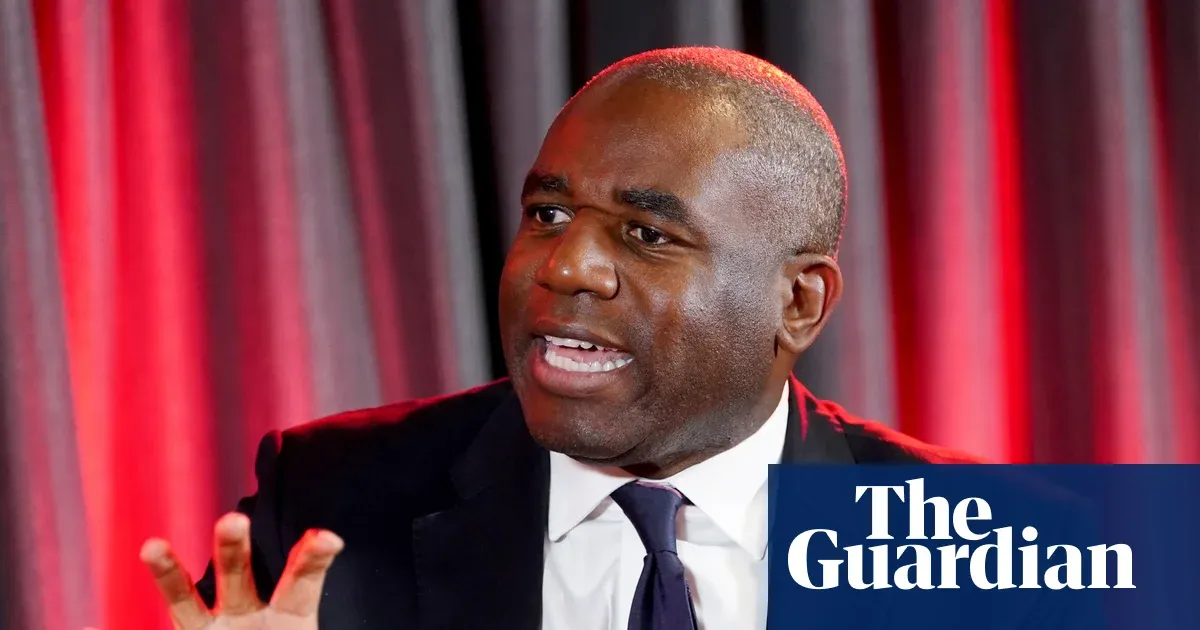
David Lammy, the deputy prime minister, says opponents to curbing early release for sex offenders have “no solutions” to prevent a possible prison system collapse in England and Wales. He warns that failing to implement the scheme could leave “no capacity” across jails in November.
David Lammy, the deputy prime minister, has thrown down a blunt warning in the prisons debate: scrapping or curbing the early release scheme for sex offenders, as some Labour MPs are pressing for, could leave England and Wales jails with “no capacity” in November. Lammy’s core claim is that opponents have “no solutions” to stop the criminal justice system’s possible collapse if the government changes course.
Why this matters, and why it is escalating fast, is that Lammy is not arguing from a vibes-based stance. He is tying the political fight directly to operational throughput. Under pressure from Labour MPs, including former safeguarding minister Jess Phillips, to curb the early release scheme, Lammy says failing to implement it could strand the justice system at the worst possible time, with no spare room in prison capacity in November. The argument is essentially a timing argument: if you remove or reduce the tool that increases capacity resilience, you might overwhelm an already strained pipeline.
To understand why a sentence like “no capacity across jails” lands like a threat, you have to recognize how prison systems behave when demand outpaces beds. In most justice systems, there is a chain reaction. More people sent to custody, slower processing, overcrowding, staffing constraints, and court schedules all compete for the same limited physical resource: cells. When that resource runs thin, the system does not flex neatly like a spreadsheet. It becomes a logjam that can affect everything from pre-trial detention dynamics to the pace at which sentences can be carried out.
Lammy is framing the debate as a choice between competing risks. On one side are MPs concerned about safety and accountability, arguing that the early release scheme should be curtailed or scrapped because it involves releasing rapists and sex offenders early. The Guardian notes this pressure is coming from Labour MPs including Jess Phillips, a former safeguarding minister, and the crux of their criticism is that the early release scheme may be undermining public protection.
On the other side is Lammy’s argument that the alternative being proposed by opponents does not come with a practical plan for how to keep the system functioning. When he says opponents have “no solutions,” he is asserting not just disagreement on policy, but a failure to address the operational math of prison capacity. In political terms, this is also a credibility challenge. If you want to stop a mechanism that reduces overcrowding risk, you need to provide a mechanism that replaces it. Without that replacement, the system is simply pushed toward the collapse point he warns about.
Zoom out, and you see why this is also a governance and signaling problem for decision-makers. Prison policy is one of those areas where incentives are misaligned. Political actors face voter pressure and reputational risk when they support early releases for violent or sexual offenders. Meanwhile, operators of the justice pipeline, including ministries responsible for incarceration, face a different kind of risk: the operational risk of running out of capacity. Lammy is trying to force the debate into that operational frame by making November the anchor point, and by calling out the lack of alternatives.
There is also an implicit second-order implication for how other parts of the system will behave if capacity tightens. When prisons reach near-full levels, downstream decisions often become more restrictive. That can affect sentencing outcomes, release planning, and the ability of courts and agencies to manage cases within expected timelines. Even if the debate is framed around a specific policy lever, the consequences can spread through the system, turning a targeted change into a system-wide constraint.
For executives and board-level leaders watching from outside government, the story is a reminder of a recurring operational reality: removing a pressure-release valve without adding capacity or process improvements does not eliminate risk, it redistributes it. Lammy’s warning is a political version of that same lesson. He is essentially saying the justice system is already under strain, and the proposed alternative lacks a credible plan to prevent a capacity breach in November.
The strategic stakes now are simple. If the scheme is not implemented as planned, Lammy warns there could be “no capacity across jails in England and Wales in November.” If that happens, the political question will be followed by an operational reckoning: the system will need a rapid replacement solution, at speed, while public pressure remains high. For other decision-makers, the message is clear. In high-stakes, resource-constrained systems, policy debates cannot stay at the level of principle alone. They have to survive contact with capacity, timing, and execution.
This story's Key Insights and Take-aways are locked.
Create a free account to unlock Executive Actions for one credit.
Register to UnlockAlways free for Executives Club members. Join the Club
More in Politics

Glacial collapse, not rain, killed 180 in Nepal's Himalayan flood
The Himalaya's extreme geography hid the true cause of Nepal's catastrophic flood, a glacial collapse that turned a geological battleground into a mass-casualty zone.

Iran’s Esmail Baghaei says Oman talks start shipping via Hormuz, not US talks yet
Temporary route plans with Oman aim to restart commerce while Tehran says Washington dialogue is not on the table.

Standards watchdog opens probe into Reform UK deputy leader Richard Tice over interests
The parliamentary standards commissioner says it began an investigation on 28 July into a possible undeclared interest.