

DC forecasts 102F Thursday as July 4 plans get reshuffled for the 250th birthday
Extreme heat this week forces Washington’s July 4 weekend to adapt, starting with a 102F forecast Thursday.

Washington, D.C. is facing extreme heat, with the National Weather Service forecasting a 102F high for Thursday. As the District prepares to celebrate the country’s 250th birthday over the Fourth of July, organizers are having to rethink event plans to match the conditions.
Much of the eastern half of the U.S. is dealing with extreme heat this week, including Washington, D.C. The immediate trigger for decision-making is simple and unglamorous: the National Weather Service (NWS) forecast a high temperature Thursday in Washington of 102 degrees.
That 102F forecast is the kind of number that turns “festivities” into “operations.” It is not just a discomfort metric. In a city running a major July 4th weekend for the country’s 250th birthday, heat changes what can happen safely, when it can happen, and how much contingency has to be built into schedules, staffing, and public-facing messaging.
For the District, the 250th birthday adds extra pressure. July 4 planning already has a complicated backbone, and milestone celebrations tend to increase the number of stakeholders and the visibility of outcomes. When you are planning for a national audience, you can’t quietly swap out key moments without creating ripple effects across permits, vendor contracts, crowd flow, security staffing, and interagency coordination. Extreme heat compresses timelines for those adjustments and raises the stakes of getting the basics right.
From a governance and risk perspective, extreme heat also sits at the intersection of public safety and logistics. Weather forecasts are not optional. The NWS forecast for 102F Thursday in Washington, D.C. means event planners have to assume that heat exposure risks are real during daylight and early evening hours, when many Independence Day activities typically concentrate. That affects everything from stage locations and shade availability to the need for hydration stations, medical coverage, and clear instructions for attendees.
There is also a regulatory and policy angle, even when the story is “just weather.” U.S. heat can become a public-safety issue quickly, and governments typically treat it as a situation that requires coordination rather than a normal condition. In practice, that means local agencies often work from established emergency management frameworks, pulling levers like changing operating procedures, adjusting resource deployment, and communicating safety guidance more aggressively. For organizers, that translates into operational readiness and a heavier emphasis on compliance with safety expectations.
If you zoom out, extreme heat this week is part of a broader pattern that has forced cities to think differently about outdoor public events. In the short term, that shows up as adjustments to July 4th weekend event plans in Washington. In the medium term, it changes how leadership budgets for weather-related contingencies, how they structure contracts with vendors and contractors, and how they model “go/no-go” decisions when forecasts worsen or when multiple days of heat stack on top of each other.
Second-order, it also changes how leaders talk to the public. With a clear NWS figure like 102F on Thursday, officials cannot hide behind vague language. They have to make decisions that look decisive and responsible, because people are choosing whether to attend, travel, or stay put based on what they hear. If messaging is inconsistent with conditions, trust erodes fast. If messaging is accurate and action-oriented, it helps reduce the burden on emergency services during peak exposure windows.
For boards, executives, and operators across cities that host major public moments, Washington’s July 4th weekend is a live case study in what extreme weather does to big-event playbooks. The question is not whether planning changes. It is how quickly the planning machinery can adjust once a forecast like 102F becomes a real constraint. The leaders who take that seriously early, align stakeholders, and build operational contingencies tend to protect the event experience and reduce safety risk. The ones who treat the forecast as background noise pay for it later, when the only remaining options are smaller, more expensive fixes.
This story's Key Insights and Take-aways are locked.
Create a free account to unlock Executive Actions for one credit.
Register to UnlockAlways free for Executives Club members. Join the Club
More in Politics
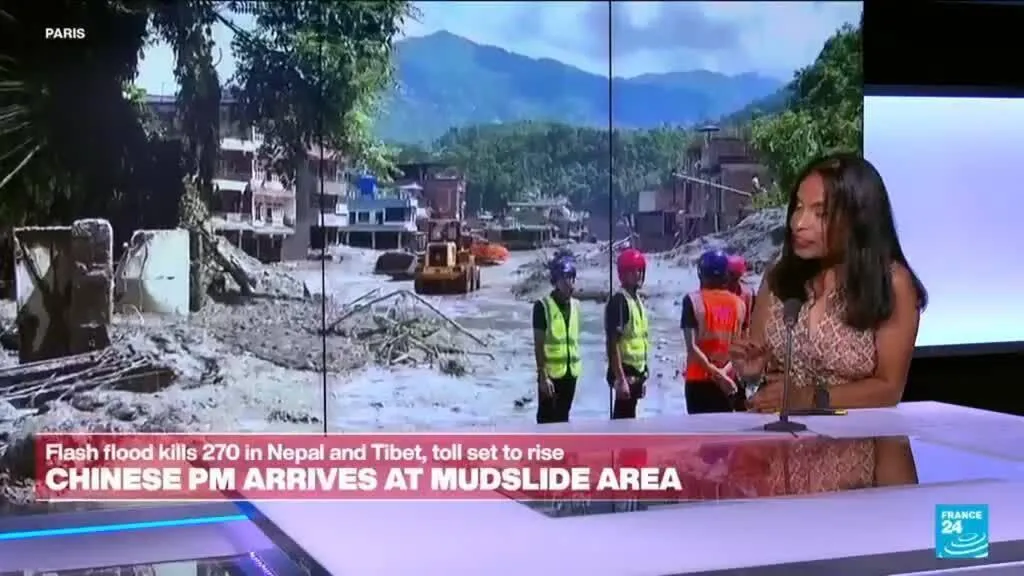
Glacial collapse, not rain, killed 180 in Nepal's Himalayan flood
The Himalaya's extreme geography hid the true cause of Nepal's catastrophic flood, a glacial collapse that turned a geological battleground into a mass-casualty zone.
Iran’s Esmail Baghaei says Oman talks start shipping via Hormuz, not US talks yet
Temporary route plans with Oman aim to restart commerce while Tehran says Washington dialogue is not on the table.
Standards watchdog opens probe into Reform UK deputy leader Richard Tice over interests
The parliamentary standards commissioner says it began an investigation on 28 July into a possible undeclared interest.