
Dead Space creator Glen Schofield retires after 35 years, citing tough times
His LinkedIn announcement caps a career spanning Dead Space and three Call of Duty releases, and it lands mid-industry churn.
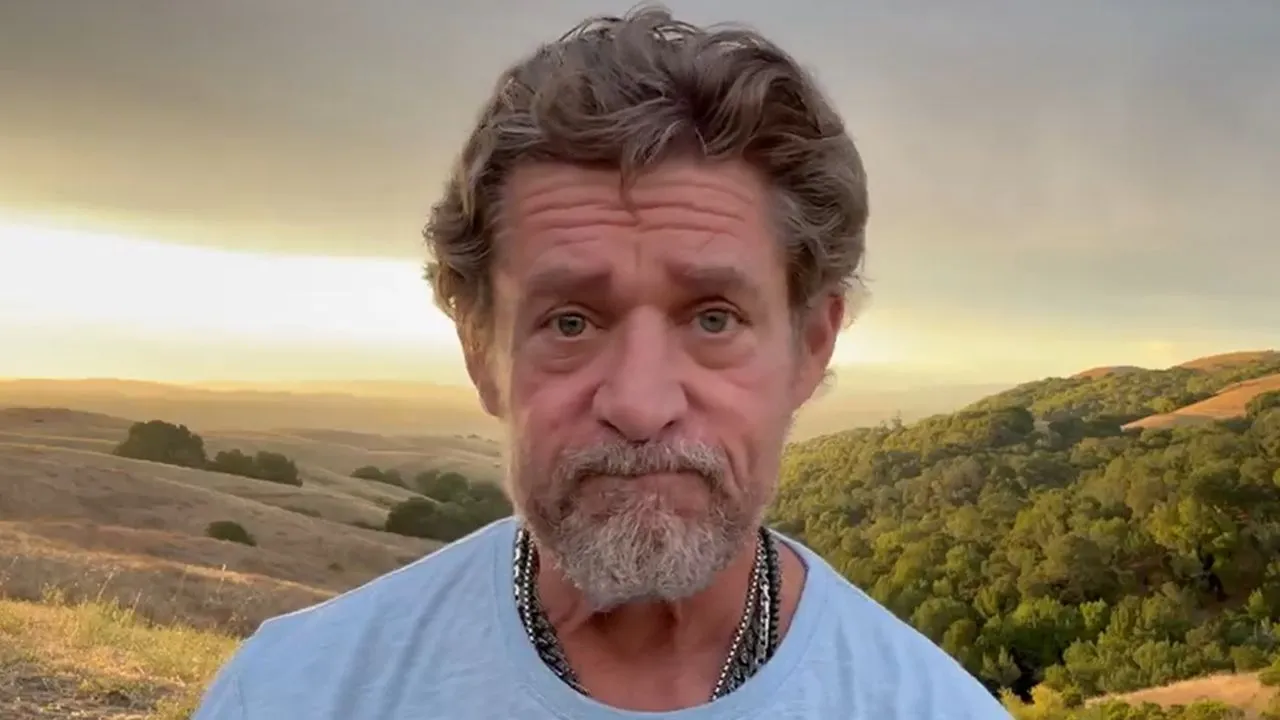
Glen Schofield, creator of Dead Space and director behind multiple Call of Duty titles, announced his retirement on LinkedIn after 35 years in games. For decision-makers, the timing underscores how creative veterans are weighing personal capacity against a turbulent market.
Glen Schofield is officially retiring from the day-to-day work of game development, and he announced it on LinkedIn with a video that looks back on 35 years in the industry. Schofield said he is “time[d] for me to officially retire from the day-to-day work” after “35 years of making games and directing them, running teams,” while also stressing gratitude for the people and teams that supported his career.
For anyone leading a studio, that first sentence carries a second meaning: this is not a retirement announcement from a stable, slow-moving industry. Schofield explicitly framed his timing inside an “amazing industry” that is currently dealing with turbulence, saying “times are tough right now,” but adding that “the future ahead is really, really bright.” In other words, the departure is personal, but it lands in a moment when the whole games ecosystem is recalibrating.
Schofield’s career history reads like a map of modern AAA game-making, with both experimentation and scale. He served as vice president at Crystal Dynamics in the late 1990s and directed earlier titles including Gex 3D: Enter the Gecko and Gex 3: Deep Cover Gecko. He also directed Blood Omen 2: Legacy of Kain. That earlier mix of established franchises and creative swings sets up the blockbuster leap most players associate with him: Dead Space.
Under EA, Schofield created and executive produced the 2008 sci-fi horror game Dead Space, a title that became a benchmark for atmosphere-driven survival horror. The point matters for execs because it shows how his skill set spans design ambition and production discipline. And then he moved into one of the biggest production machines in games. During his time with Sledgehammer Games and Activision, he co-directed and produced Call of Duty: Modern Warfare 3, Call of Duty: Advanced Warfare, and Call of Duty: WWII. Those are not small credits. They are evidence of operating at the intersection of creative leadership and high-pressure delivery.
The career arc also includes a quieter commercial chapter. Schofield’s latest release at the time of the announcement, The Callisto Protocol, came out in 2022. The survival horror game was developed by Schofield's Striking Distance Studios, and it “wasn’t generally well-received,” according to the source. Executives will recognize the pattern this implies even without adding new details: a tough market does not just challenge teams financially. It also changes how creators decide what they can sustainably carry into the next project.
In the LinkedIn video, Schofield’s gratitude is direct and specific. To friends and family, he thanked people who “stood by me, patted me on the back, listened to my crazy ideas.” To fans, he said their support let him and his teams bring games into players’ homes, and he credited them for both praise and criticism: “You told me when I was good and you told me when I wasn’t so good. But you made me better.” He also captured the emotional scale of the work by saying he “had a front row seat to one of the greatest creative explosions in history.” He thanked EA for letting him make Dead Space and Activision for “the keys to three Call of Duty games.”
Where the announcement gets strategically interesting is how he connects personal closure to industry conditions. The source describes the wider era as historically turbulent, marked by “mass layoffs and AI controversies.” Schofield did not claim solutions or policy fixes. He simply positioned the present as difficult, while insisting the “future ahead” is bright. For studios, publishers, and boards, that is an important signal: even veteran builders are publicly acknowledging systemic strain, but they still believe in the “next generation of game makers.”
So what does this mean for decision-makers who are not retiring? It raises a hard management question: when creative leadership exits, who inherits the ability to turn an idea into a production reality? Schofield ended his message with an exhortation focused on fundamentals, saying the most important thing is the “idea,” and encouraging people to “Explore, experiment, enjoy.” That advice lands differently in a market undergoing restructuring. If teams are being thinned through layoffs and pressured by uncertainty, the organizational challenge is not just shipping. It is preserving the environment where ideas can survive contact with budgets, timelines, and shifting technology.
In practical terms, Schofield’s retirement is a reminder that leadership continuity is part of risk management. When a figure who created Dead Space and helped drive multiple Call of Duty entries steps away from day-to-day work, it can accelerate changes in a studio’s creative direction, production processes, and culture. For peers in similar roles, the stakes are clear: you are not only building games. You are also building a sustainable career structure for the people with the “front row seat” to the next creative explosion.
This story's Key Insights and Take-aways are locked.
Create a free account to unlock Executive Actions for one credit.
Register to UnlockAlways free for Executives Club members. Join the Club
More in Science

Alaska's 1,580-foot tsunami had warning signs. Scientists just found them.
Rapid glacier retreat, heavy rainfall, and thousands of tiny tremors preceded Alaska's 1,580-foot tsunami, a warning for every coastal community in a warming world.

The rare mutation that lets high-risk brains dodge Alzheimer's
Scientists found a natural defense against protein buildup, opening a new path to preventive treatments.

3,000 steps a day may halve Alzheimer's decline, study finds
New research links a modest daily walk to less tau buildup and nearly half the cognitive and functional decline, even for those with early signs.