
Deborah Ann Woll says God of War Laufey lore was planned nearly 10 years ago
Her panel reveals Cory Barlog had a poster with Laufey and a cube years before the 2018 game shipped.
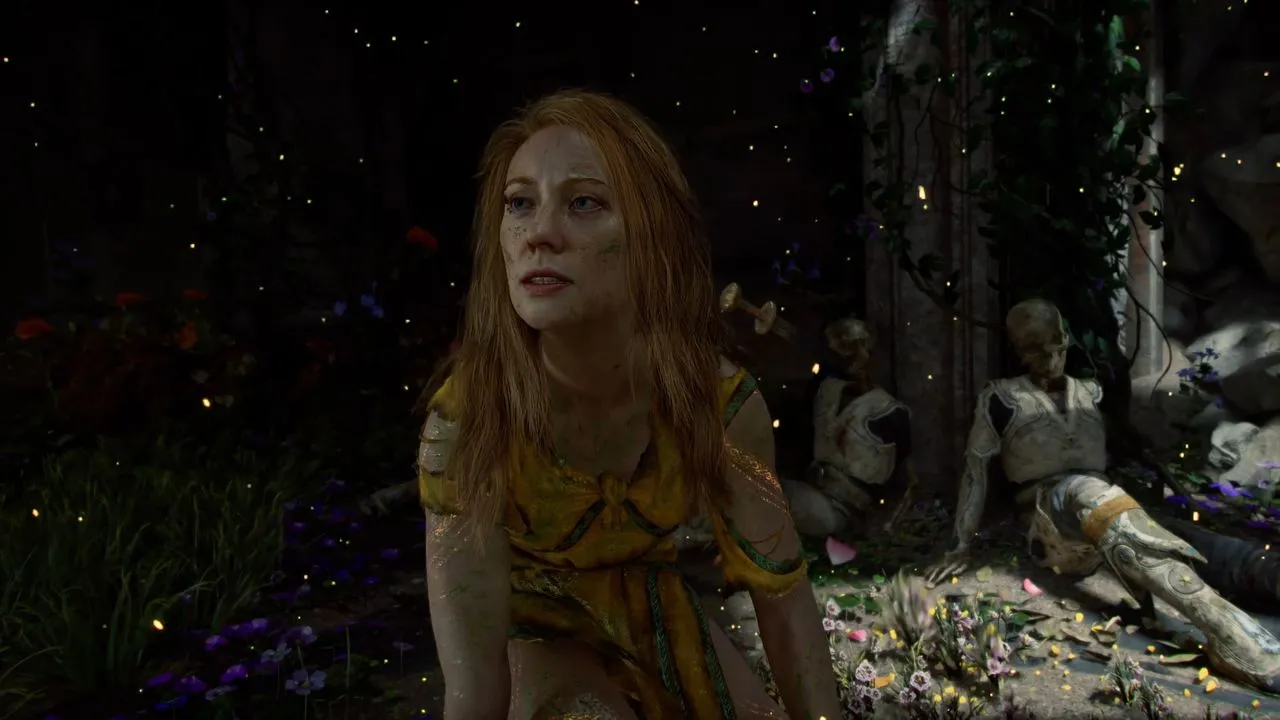
Deborah Ann Woll, known for Daredevil, says she learned about God of War Laufey nearly 10 years ago and that the concept was already underway before the 2018 game. For decision-makers, it signals Sony Santa Monica is treating this as a long arc, not a one-off announcement tied to hype cycles.
Deborah Ann Woll says she has known about God of War Laufey for nearly 10 years, and she links that timeline to the moment Cory Barlog brought her in during the 2018 God of War era. In a panel at Game Con Canada, Woll explains she was asked about the upcoming PS5 game and admits, “I’ve known about this for nearly ten years, and I haven’t been able to talk about it.” She adds that she found out in 2018, but the planning started even earlier: Barlog already had a poster showing the Laufey project with her, plus “a cube that's been there since the beginning,” which Woll calls “deeply a part of the lore.”
So when God of War Laufey was announced earlier this month as the finale to the Summer Game Fest season's PlayStation State of Play, with 20 minutes of footage shown off for the upcoming PS5 game, it was not a sudden pivot. Woll’s account reframes the reveal as the payoff of a long-running creative roadmap: the “Egypt-focused” rumors have been circulating for a long time, but her story suggests the real work has been in the pipeline for years and was already baked into the narrative architecture before 2018 shipped.
For executives, the interesting bit is not just that Laufey exists. It is that the project seems designed as a structured continuation, with continuity objects and visuals, not merely a new setting reskin. Woll describes a “poster” and a specific symbol, a cube, positioned as consistent lore DNA. That matters because studios do not typically build expensive, multi-year production investments around loosely connected mythology. When there are recurring props tied to a myth system, it usually points to a team that is planning audience payoff, world-building, and franchise cohesion on a multi-release timeline.
The context gets more revealing when Woll talks about what she is being asked to carry. She calls the role of a “face” for a new God of War title a “privilege,” then adds: “I pinch myself that I get to be a part of this and that I get to lead the charge for a little bit of this kind of new direction.” She also frames the change as additive rather than replacement. “The other direction is going to continue going forward,” she says. “But we're going to put a little time and focus on expanding this world and really trying to say, this is us doubling down on the world of God of War.” In other words, the studio’s incentive is not only to grow sales on the next release. It is to keep the franchise’s internal logic intact while bringing in a new narrative chapter.
Woll also makes the strategic goal explicit: “We want this to be huge.” She describes it as an invitation to an “untapped universe” and calls the PS5 game “just the beginning of a step into some of that.” That kind of messaging is not just fan-facing. It is an operational signal. When a studio says it is expanding an “untapped universe,” it is effectively staking out future production bandwidth for more characters, regions, and myth systems. Even the playful comparison she makes about Sony Santa Monica merging old and new eras, “Can I have chocolate and peanut butter together?,” points at a franchise strategy where the studio tries to satisfy long-time players while keeping the entry point attractive for newcomers.
There is also a second-order implication for how industry-watchers interpret announcements and reveal cadence. God of War Laufey is tied to a modern media machine: PlayStation State of Play as part of Summer Game Fest, with a chunky 20 minutes of footage shared to the public. Yet Woll’s timeline suggests the real creative decision-making is happening far earlier than the trailer calendar. That is a useful reminder for boards, investors, and partners who evaluate performance through public milestones. Production schedules, narrative design, casting, and lore planning often sit behind the curtain for years, long before the “moment” hits social feeds.
Finally, consider the governance and creative dynamics hinted by Woll’s remarks about Barlog. Having a poster ready in the 2018 conversation signals continuity of vision across team phases. In studios, leadership transitions and production realities can loosen a franchise’s long-term thread. Woll’s account implies the opposite here: Cory Barlog had already mapped the Laufey concept, and the studio treated those elements as “since the beginning” lore, not as optional extras. For other executives managing big IP, it is a strong signal that long-form franchise success depends less on any one reveal and more on keeping the myth consistent across releases, even when the public narrative is still catching up.
This story's Key Insights and Take-aways are locked.
Create a free account to unlock Executive Actions for one credit.
Register to UnlockAlways free for Executives Club members. Join the Club
More in Entertainment

Russell Brand's accuser 'bewildered and confused' as he denies 7 sex charges
The criminal case against the comedian is a live test of how media companies manage talent risk when serious allegations go public.

'It's a Magic Trick': Ballet Experts Say Rosalía's SNL Pose Is Impossible
Three ballet experts tell Rolling Stone Rosalía's gravity-defying SNL stillness shouldn't be possible - and why the debate is now part of the show.

Activision CMO: GTA 6 Will Boost Call of Duty, Not Bury It
Activision's top marketer says Rockstar's blockbuster will drive players back to consoles and into Modern Warfare 4, even as the company admits its recent strategy failed.