
Deloitte Cyprus staff backdated Abramovich offshore records, leaked files suggest
Leaked corporate records point to a long-running paper trail that helped the Russian billionaire's businesses dodge tax and hide assets, and they put a Big Four firm in the frame.
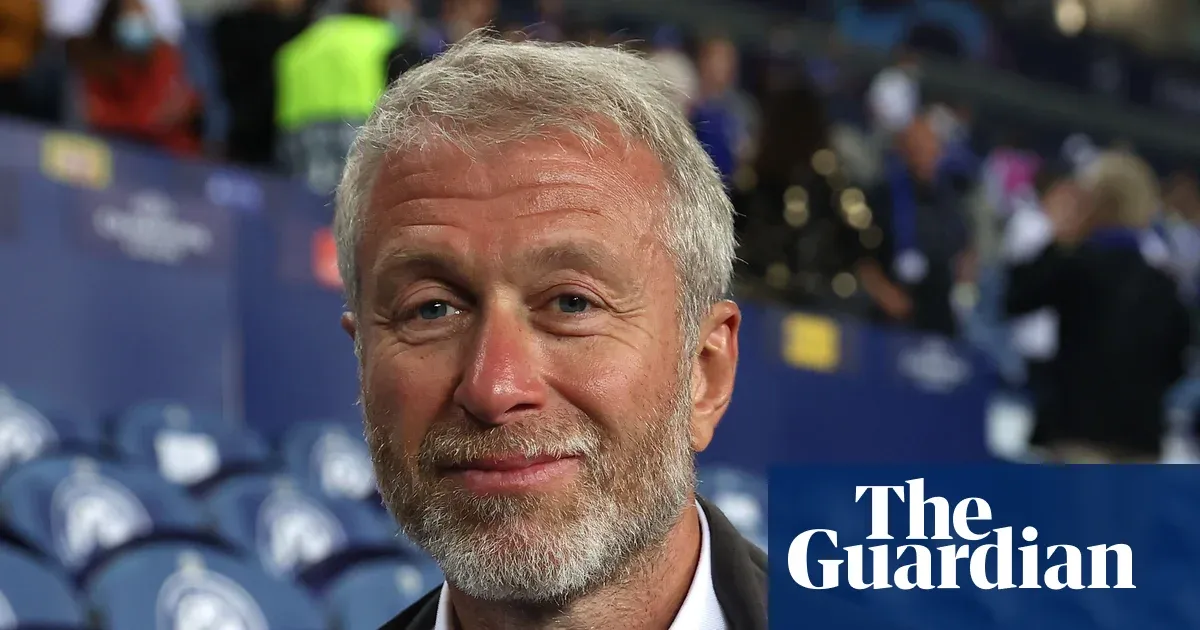
Aides to Roman Abramovich, including staff at Deloitte's Cyprus arm, falsified and backdated paperwork mapping his offshore business empire, according to new analysis of leaked corporate records. For boards and CFOs, the case is a reminder that document metadata and holding-structure hygiene are now enforcement evidence, not back-office trivia.
Aides to Roman Abramovich, including staff at the global accountancy firm Deloitte, falsified paperwork mapping the Russian billionaire's sprawling offshore business empire, according to new analysis of leaked corporate records. The records suggest the documents were backdated, a tactic that helped his businesses dodge tax and disguise assets. The reporting points at Deloitte's Cyprus operation, which appears in a paper trail the analysis describes as a long-running and carefully orchestrated strategy rather than a handful of isolated clerical errors. The framing is deliberate and worth reading closely: these are records that suggest and appear to show, not findings proven in court. But the allegation is unusually specific, and it lands on one of the most trusted names in professional services.
Backdating is not a typo. A document dated earlier than the day it was actually signed can quietly change who owned what, when, and under which rules. In offshore structures, that timing is often the whole game. Tax residency, disclosure deadlines, the point at which an asset moved between entities, and whether a structure complied with the rules in force at the time can all hinge on a date stamp. Shift the date and you can shift the liability. That is why investigators treat backdating as a red flag rather than an administrative slip, and why the analysis describes what it found as a strategy rather than a mistake.
Deloitte is one of the Big Four accounting firms, alongside PwC, EY and KPMG, and firms in that tier are paid to be the last line of defence in the financial system. Their signature on a set of accounts is supposed to mean someone independent checked. Cyprus, for context, has historically been a favoured jurisdiction for holding companies routing capital between Russia and the West, prized for a corporate-friendly legal regime and a low tax rate. That combination has made it a recurring feature of leak-driven investigations into Russian money. When the firm that certifies the structure is named in the same records that describe the structure being disguised, the reputational math gets uncomfortable fast.
Abramovich's own position raises the stakes. For context, he is a Russian billionaire and the former owner of Chelsea Football Club, sanctioned by the UK and the European Union in 2022 after Russia's invasion of Ukraine. Sanctions froze his assets and forced the sale of the club. For anyone under that kind of restriction, the paper trail of ownership is not back-office admin, it is the difference between wealth that is frozen and wealth that is reachable. Documents that misstate when assets moved, or who controlled them, are exactly the kind of thing sanctions enforcers and tax authorities want to reconstruct. The timing of the alleged backdating is therefore not a technicality. It is the substance.
The leak era has changed how this work gets found. The Panama Papers, the Paradise Papers and the Pandora Papers each turned private corporate records into front-page investigations, and Cyprus-specific leaks have followed the same pattern. Regulators responded with beneficial ownership registers, tighter anti-money laundering rules and, in the EU, a push to hold professional enablers accountable alongside their clients. The direction of travel is clear: the adviser who designs or maintains the structure is increasingly treated as part of the conduct, not a neutral bystander. That is the shift that should worry every firm whose revenue depends on complex cross-border work.
For executives and boards, the practical lesson is about evidence, not intent. If your group runs layered holding companies, the question is no longer only whether the structure is legal. It is whether you can prove when each document was created and who touched it. Metadata, version history, e-signature logs and dated board minutes are the difference between a defensible position and a reconstruction problem. Tax authorities and sanctions enforcers increasingly start from leaked data rather than formal information requests, which means legacy files from a decade ago can become today's enforcement exhibit. Structures built for opacity age badly.
The strategic stakes cut two ways. For a Big Four firm, one jurisdiction's file can outweigh years of compliance spending, because the product being sold is trust and trust does not scale back quickly. For founders, CFOs and family offices with cross-border holdings, the case is a reminder that complexity is a liability the moment scrutiny arrives. Nothing here has been proven in court, and the records are described as suggesting rather than establishing what happened. But leak-driven analysis has a habit of preceding regulatory and legal action rather than following it. The smart move is to assume the paper trail will be read by someone hostile, and to make sure it survives that reading.
This story's Key Insights and Take-aways are locked.
Create a free account to unlock Executive Actions for one credit.
Register to UnlockAlways free for Executives Club members. Join the Club
More in Business

Elon Musk unveils a flying car, and SpaceX helped build it
The Tesla CEO's showcase at a SpaceX facility signals a future where road and rocket engineering converge.

Apple's $2,000 iPhone Duo opens preorders, taking on Samsung and Google
Apple's first foldable hits the market at a premium price, reshaping a category Samsung and Google have led.

Pope Leo XIV, first American pope, diagnosed with lung cancer
The 71-year-old Chicago-born pontiff underwent successful surgery on his right lung, and his diagnosis raises new questions about his AI-focused papacy and the Vatican's future.