

Deloitte pays $21.5M to settle DOJ's DEI hiring discrimination claims
The Big Four firm's settlement with the Justice Department warns federal contractors that DEI programs are now legal liabilities.

Deloitte agreed to pay $21.5 million to settle Department of Justice allegations that it discriminated on the basis of race and sex in hiring and promotion practices. The settlement, which does not include an admission of liability, signals that federal contractors must reassess DEI initiatives or face escalating enforcement under the Trump administration.
Deloitte has agreed to pay $21.5 million to resolve Department of Justice allegations that it discriminated against job applicants and employees on the basis of race and sex. The settlement, announced Tuesday, stems from the DOJ's broader crackdown on diversity, equity, and inclusion (DEI) practices at federal contractors. Deloitte did not admit liability, but the payment is the latest in a series of actions that are reshaping how major companies approach DEI programs.
The DOJ accused Deloitte of violating federal anti-discrimination rules in its hiring and promotion processes, specifically by considering race and sex as factors. Attorney General Todd Blanche framed the settlement as a warning: "Government contractors cannot reward or penalize employees based on race or sex - and labeling the practice DEI does not make it lawful." He added that the Justice Department "will aggressively pursue government contractors that have used taxpayer dollars to fund unlawful discrimination." The statement underscores the administration's position that DEI initiatives, when they involve explicit demographic preferences, cross a legal line.
Deloitte, one of the Big Four professional services firms, had already begun scaling back its DEI efforts earlier in 2025. In early 2025, the company cut some of its diversity policies and instructed staff to remove pronouns from email signatures. Those moves, however, did not shield it from the DOJ's investigation. The settlement amount reflects the seriousness of the allegations, though the company's statement expressed relief: "We are pleased to have resolved this matter to avoid the cost and distraction of protracted litigation." That language suggests Deloitte prioritized business continuity over fighting the charges, a calculation that other firms may now replicate.
The Deloitte settlement is not an isolated event. In April, IBM agreed to pay $17 million to settle similar allegations of employment discrimination, also without admitting liability. And in a separate action announced Tuesday, Deloitte agreed to pay $1.2 million to the state of Indiana over claims it violated nondiscrimination requirements in its work with the state. Indiana Attorney General Todd Rokita called that settlement "the first of its kind between a state and a government contractor," signaling that enforcement is not limited to the federal level. State attorneys general are increasingly joining the fray, creating a multi-jurisdictional minefield for companies with government contracts.
For executives and boards, the pattern is clear: DEI programs that use explicit race or sex criteria are now high-risk legal exposures. The DOJ's focus on federal contractors means any company that receives federal funds - directly or through subcontracts - must scrutinize its hiring, promotion, and retention practices. Even firms that have already rolled back DEI policies are not automatically safe, as Deloitte's experience shows. The government is examining historical practices, not just current ones, and settlements can be retroactive.
The financial impact goes beyond the settlement amounts. Legal fees, management distraction, and reputational damage can far exceed the penalty. For a firm like Deloitte, which derives significant revenue from government contracts, a prolonged legal battle could have jeopardized future business. The decision to settle quickly, even without admitting wrongdoing, reflects a pragmatic risk assessment. Other Big Four firms and large consultancies are likely watching closely and may preemptively audit their own practices.
The broader implication is that the Trump administration's DEI crackdown is not just rhetorical. It is being enforced through concrete legal actions with real financial consequences. Companies that have not yet reviewed their DEI policies for compliance should do so immediately. The DOJ's stance is that any consideration of race or sex in employment decisions - even under the guise of diversity - violates federal law. That interpretation is now being tested in settlements, and the early results favor the government.
For boards, the takeaway is to treat DEI as a compliance issue, not just a cultural initiative. That means conducting internal audits, training hiring managers on neutral criteria, and documenting all employment decisions to demonstrate non-discriminatory intent. The cost of proactive compliance is far lower than the cost of a DOJ investigation, which can drag on for months and end with a multi-million-dollar settlement. As the Deloitte case shows, even the most established firms are not immune.
The strategic stakes extend beyond legal exposure. Companies that overcorrect by eliminating all DEI efforts may face backlash from employees and investors who value diversity. The challenge is to find a middle ground: promoting inclusive workplace practices without using demographic quotas or preferences. The DOJ's actions suggest that neutral policies - such as broad outreach to diverse candidate pools without preferential treatment - are likely acceptable. But any program that explicitly considers race or sex as a factor is now a liability.
In the coming months, more settlements are likely. The DOJ has signaled that it is actively investigating other federal contractors, and state attorneys general are following suit. For CEOs and CFOs, the message is unambiguous: review your DEI programs now, before the government does. The Deloitte settlement is a $21.5 million reminder that the cost of inaction is steep, and the window for voluntary compliance is closing.
This story's Key Insights and Take-aways are locked.
Create a free account to unlock Executive Actions for one credit.
Register to UnlockAlways free for Executives Club members. Join the Club
More in Business
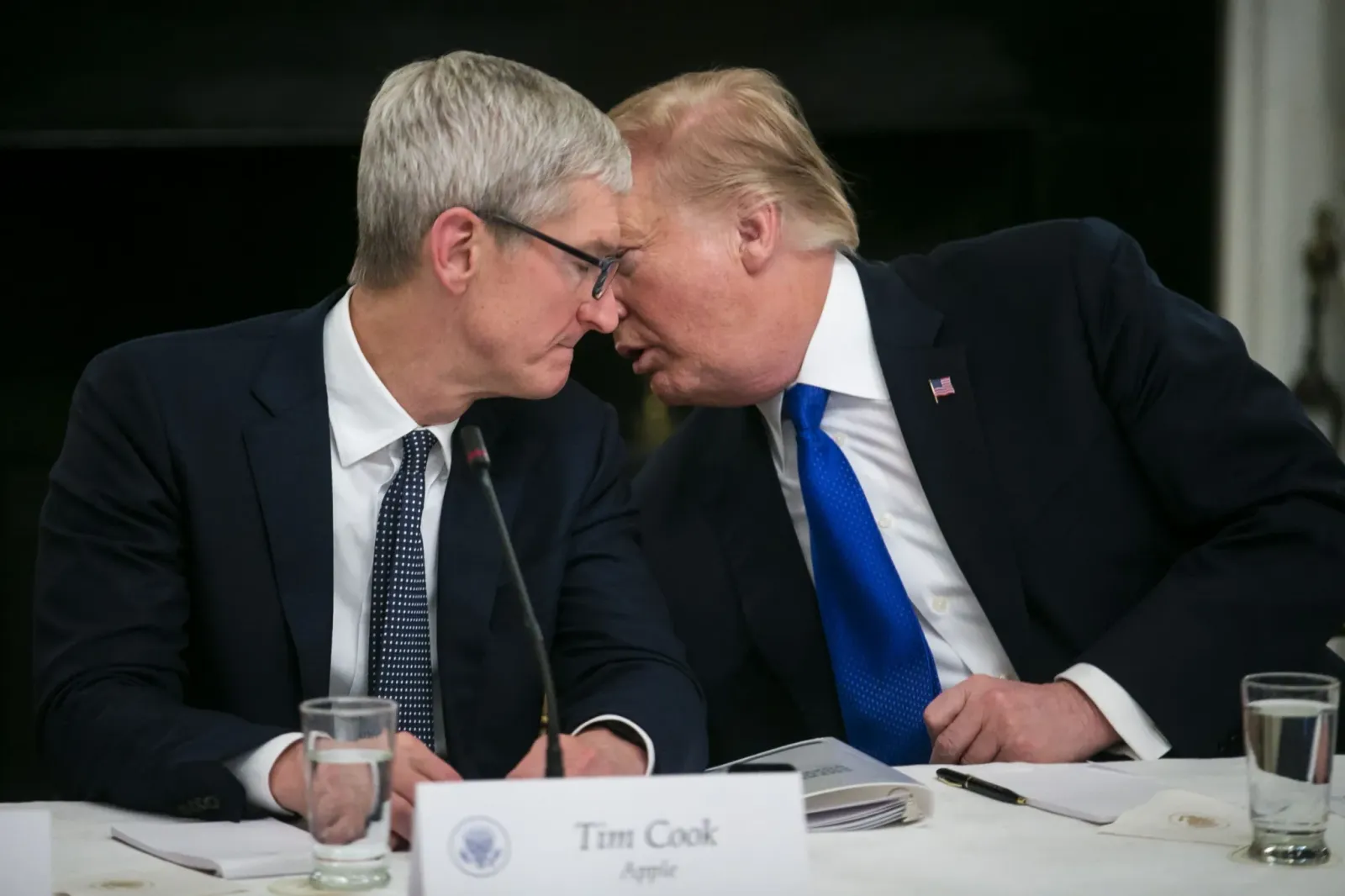
Tim Cook steps down as Apple CEO, stays on as chair with $45M equity
The 'Trump whisperer' keeps his White House and Beijing access as Apple navigates tariffs and a $4.6 trillion market cap.

Snowflake shares surge as AI data demand crushes estimates, lifting full-year forecast
Stocks jumped on stronger-than-expected guidance, signaling enterprise AI workloads are accelerating faster than Wall Street priced in.

Tim Cook's 15-year Apple CEO run ends: 3 lessons for any successor
After 15 years, Tim Cook hands Apple to John Ternus - here's how he turned a $350B company into a $4.6T juggernaut.