

Demis Hassabis says AGI could arrive by 2030, and time is running out
Google DeepMind's CEO says artificial general intelligence may be only a few years away, forcing leaders to prepare for a possible post-scarcity era now.
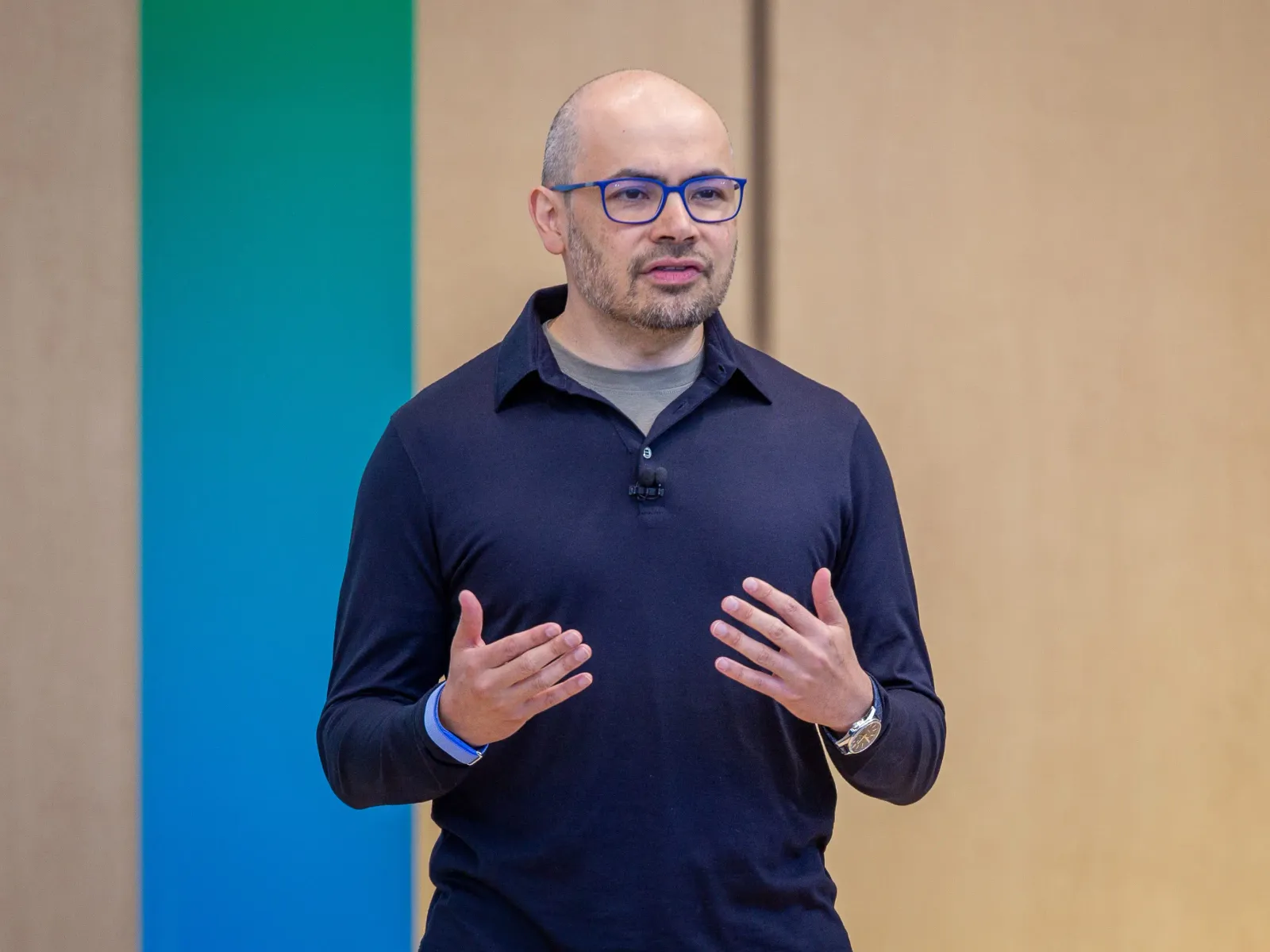
Google DeepMind CEO Demis Hassabis said artificial general intelligence could arrive around 2030, plus or minus a year, and described it as the start of a “new human era.” His warning matters because executives, boards, and policymakers may have only a narrow window to prepare for major labor, product, and social shifts.
Google DeepMind CEO Demis Hassabis is putting a timeline on the thing everyone in AI keeps circling but few can agree on: artificial general intelligence could arrive around 2030, plus or minus a year. He made the comment during a fireside chat at the Stanford Graduate School of Business that was posted on Tuesday, and he did not sound like he was describing a distant sci-fi milestone. He called it “astounding to think,” said it could be “such an enormous transformative technology,” and argued that it will effectively be “a new human era.”
That is the core message here. Hassabis, who leads one of the world’s most influential AI labs, is telling leaders that the clock is not theoretical anymore. In his telling, AGI, or AI that can perform cognitive tasks at or beyond human levels, is “a few years away.” He even compared the moment to the singularity, meaning a point of no return after a major technological breakthrough. For executives, that is not a fun dinner-party idea. It is a planning problem. If the technology comes online on the timeline Hassabis described, the companies, workers, and regulators trying to react after the fact may already be late.
The bigger reason this lands with a thud is that Hassabis is not saying this in isolation. He is part of a group of frontier AI executives who have spent the past year warning that society has only a narrow window to prepare for the next stage of the technology. OpenAI CEO Sam Altman has said AI could make wide swaths of jobs disappear, while Anthropic CEO Dario Amodei said half of entry-level white-collar work could vanish in the next half-decade. Recently, those executives have pulled back the doomerism talk, but the underlying message has not disappeared: the pace is fast, the stakes are large, and the planning horizon is shrinking. Hassabis’s version is just more explicit about timing. He said some of his peers are being “way too certain” about their predictions, which is a useful dose of humility from a field that often speaks in extremes.
Still, he did not minimize the upside. Hassabis said AGI could unlock medical breakthroughs and economic transformation, and he raised the possibility of a “post-scarcity world,” an idea often invoked by futurists like Elon Musk. In plain English, that means a world where AI drives abundance enough to reshape how goods, services, and even labor get distributed. That is the promise side of the ledger, and it is part of why so many companies are racing to build and deploy more capable models. If the technology can accelerate discovery, automate cognitive work, and improve productivity at scale, the upside for firms that own the infrastructure, models, or distribution could be enormous. But the same scenario also raises hard questions about who captures that value, how quickly industries reorganize, and which jobs get compressed or redesigned first.
Hassabis also made the practical point that humanity cannot afford to wait until the disruption is obvious. He said now is the time to brace for the impacts, calling on humanities and STEM students to adapt to the new era and “lean in” to the technology. “Society needs to hear that because we don't have long to prepare for what that means,” he said. “The future, in my view, is still to be written, but these next few years are going to be very critical as to which way that will go and how we collectively want that to look like.” That is the real executive takeaway: even if the exact AGI date is uncertain, the preparation window is already open, and it may close faster than most institutions expect.
For business leaders, that creates a strange kind of urgency. Boards and management teams do not have to agree on whether AGI lands in 2030, 2032, or later to know they need scenario planning now. Product teams have to think about which workflows AI can absorb. HR leaders have to think about which skills become more valuable when cognitive work gets cheaper. Investors have to think about whether their portfolios are exposed to automation, labor displacement, or a sudden jump in AI-enabled productivity. And policymakers have to think about whether existing rules are anywhere near ready for a technology that could alter employment, education, healthcare, and competition faster than normal regulatory cycles can move. Hassabis’s point is not that the future is settled. It is that the interval for shaping it is short, and that is exactly why the next few years matter so much.
This story's Key Insights and Take-aways are locked.
Create a free account to unlock Executive Actions for one credit.
Register to UnlockAlways free for Executives Club members. Join the Club
More in Technology

OpenAI says 10,000 agents cracked a 90-year math problem in 88 hours
The company's claim is audacious, but one mathematician is pushing back. Here's what it means for AI-driven discovery.

Meta still serves child sexual abuse ads on Instagram in India - BBC report
A new report following the BBC Eye investigation says the ads are still there - what it signals for every platform with a self-serve ad engine.

White House yanks 'Build the Wall' game after Tetris Company copyright warning
The administration's arcade game vanished in hours - and the takedown playbook every brand can learn from.