

Demis Hassabis says STEM students will use AI 10x better with real software fundamentals
DeepMind's CEO argues that AI raises the bar for engineering basics, plus ethics and humanities.
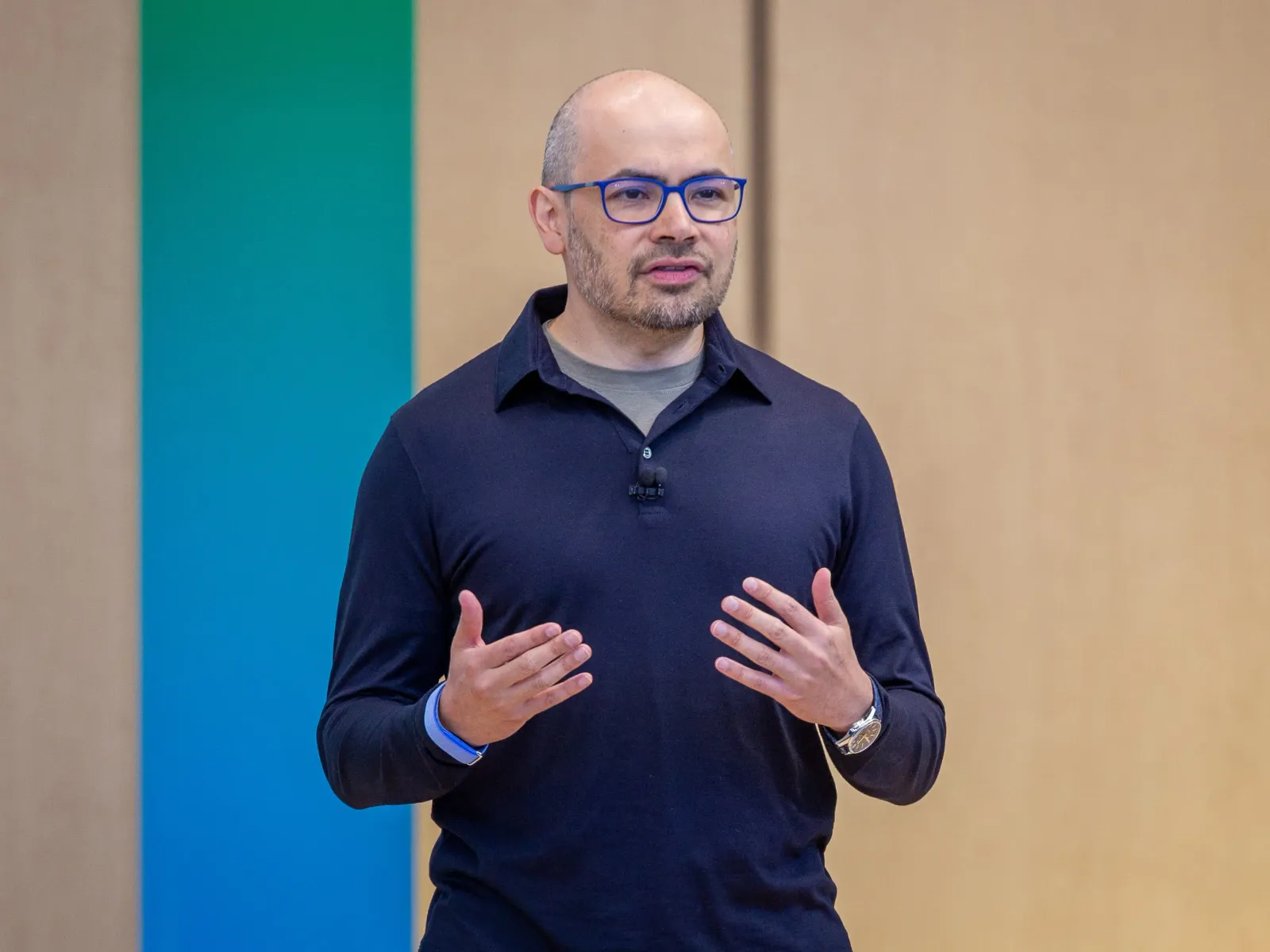
Demis Hassabis, CEO of DeepMind and cofounder in 2010, says people with deep STEM and software fundamentals can use AI 10 times more effectively than those without. His message, echoed by Geoffrey Hinton and Max Levchin, challenges fears that computer science degrees will become obsolete.
Demis Hassabis is putting a number on it: DeepMind's CEO says people who understand “the deep technical” can use AI “10 times more effectively” than people who do not. Speaking in an interview at a London business conference, Hassabis framed the claim around one idea: AI will change how work gets done, but it does not remove the need to understand the fundamentals of software and programming.
Hassabis, who cofounded DeepMind in 2010 and saw Google acquire the company in 2014, argued that learning STEM, and computer science in particular, gives a “leg up” because it helps you think about what programming is becoming. He described this as more than learning a tool. “You absolutely needed to lean into STEM and computer science,” Hassabis said, adding that a “higher-level programming language” is still a way to understand what programming is going to be. That is the practical upside he is pointing to: AI can accelerate output, but only fundamentals let you steer it.
It helps to unpack what he means by “fundamentals” in plain terms. Hassabis compared how programming evolved from machine code to C to Python, then suggested the future may make programming feel closer to English. Even if the interface shifts, his argument is that people still need to know how to architect systems and apply best software engineering practices. He explicitly tied effectiveness to technical depth, saying that those who understand deep technical aspects will be able to use AI tools “10 times more effectively.” In other words, the advantage is not that you can prompt. The advantage is that you can design, validate, and improve what you are building.
This is a direct response to a very real anxiety spreading across tech education and hiring: the fear that degrees like computer science and engineering are getting redundant because AI could make “vibe coding” possible. Hassabis is trying to calm that fear without pretending the labor market will be unchanged. AI is already altering what entry-level work looks like, and it can compress some tasks that used to require long ramp-up times. But Hassabis’ stance implies that compression cuts two ways. It can reduce the value of basic “typing code” competence, while increasing the value of people who can reason about systems, correctness, architecture, and tradeoffs. AI may automate more steps, but it does not automate judgment.
That theme lines up with what Geoffrey Hinton said in a separate Business Insider interview in December. Hinton, described as the “godfather of AI,” highlighted the risk to mid-level programming as a job category, saying that “being a competent mid-level programmer is not going to be a career for much longer, because AI can do that.” But Hinton did not conclude that computer science degrees lose value. He argued instead that the value of a CS degree is “much more than just coding,” and he expects a “CS degree will be valuable for quite a long time.” The second-order implication is important for boards and hiring leaders: AI might change which tasks dominate day-to-day work, not whether technical education provides durable leverage.
Max Levchin, CEO of Affirm, adds another angle, also grounded in how AI affects code quality. Levchin said on a podcast earlier this year that computer science fundamentals help distinguish good code from “garbage.” He described programming as a mix of “taste and elegance,” and he argued that without a solid CS foundation, he would not be able to have that conversation. That matters because it reframes “automation” from a productivity story into a quality and maintainability story. If organizations rely on AI output without technical grounding, they risk scaling poorly designed systems. If they do rely on technical grounding, the competitive advantage shifts toward teams that can evaluate, refactor, and govern.
One more layer sits underneath all of this: ethics and social sciences. Hassabis said AI creates the need for people to study ethics and social sciences. He specifically pointed to humanities such as philosophy and economics, saying, “I also believe that the time is now for the humanities like philosophy, economics. I think we really need them in the world we're about to enter.” That is not a throwaway line. In an AI workplace, ethics is not just campus content. It becomes a decision filter for product behavior, data use, and risk tradeoffs, particularly as AI systems move from prototypes to production. Executives who are planning talent pipelines should treat this as a signal that technical depth alone will not be sufficient; decision-making frameworks will matter too.
So what should decision-makers take from a CEO of DeepMind arguing for STEM fundamentals and humanities at the same time? First, AI is raising the bar for how effectively teams can use AI tools, and Hassabis’ “10 times” claim is basically a challenge: can your organization translate AI output into correct, engineered outcomes? Second, the message suggests education and hiring strategy should shift from “can this person write code quickly” to “can this person understand how software works deeply enough to use AI productively and safely.” Third, if the fear is that CS degrees are about to disappear, these comments do not support that. They support a different future: coding may get easier, but judgment and engineering fundamentals may become even more valuable.
For peers in similar roles, the strategic stake is simple. Your competitors will not just deploy AI. They will deploy AI through teams with different levels of technical leverage. Hassabis is warning that the teams with real fundamentals will compound faster, while teams that treat AI as a substitute for understanding will hit a wall. And if Hinton and Levchin are right, the wall will show up quickly: not as a lack of code, but as a lack of quality, taste, and governance in the systems that code becomes.
This story's Key Insights and Take-aways are locked.
Create a free account to unlock Executive Actions for one credit.
Register to UnlockAlways free for Executives Club members. Join the Club
More in Technology

Google quietly links your phone number to every Android account on your SIM
Adding a SIM now ties your phone number to all Google accounts - and future accounts inherit it. Here's the security and privacy stakes.

Hijacker AI 'Skynet mode' runs 100,000 attack steps against exposed models
Symantec caught a criminal AI agent that borrows other models, steals data, and mines crypto; the only relief is no confirmed victims yet.

Nvidia's AI-financier shift faces its first big test as neoclouds stumble
A rout in neocloud stocks is forcing investors to weigh Nvidia's hidden exposure as both supplier and lender to the AI buildout.