

Dems lead in cash 3x to 20x, but Maine and Michigan turn the Senate math messy
Georgia, North Carolina, and Texas show huge Democratic bankrolls. Maine and Michigan show why narrow paths back to control get narrower.

Democrats are out-raising Republicans in several pivotal Senate races, with figures like Jon Ossoff’s 20x cash edge and Roy Cooper’s $8.2M haul. But contentious primaries in Maine and Michigan have reshaped the cash landscape in ways that could complicate Democrats’ bid to regain Senate control this fall.
Democrats are sitting on some seriously lopsided cash advantages in key Senate races, including Georgia, North Carolina, and Texas. In Georgia, Democratic Sen. Jon Ossoff has 20 times as much cash on hand as his Republican challenger, Rep. Mike Collins. In North Carolina, former Gov. Roy Cooper outraised former RNC Chair Michael Whatley $8.2 million to $2.9 million. In Texas, Democratic state Rep. James Talarico ended June with $21.5 million in the bank compared to $1.8 million for his GOP opponent, Texas Attorney General Ken Paxton.
The headline numbers are why Democrats believe they can keep pressuring Republicans down the map heading into the fall. Their optimism got a fresh boost from second-quarter campaign finance reports filed with the Federal Election Commission, where a Democratic strategist framed the pattern as “out-raising and out-polling many of their Republican counterparts.” For decision-makers watching Senate control, the immediate implication is simple: when candidates have cash, they can buy time. More paid outreach, more field operations, more advertising tests, more ability to respond when the opponent attacks.
But the map is not a spreadsheet. In two places, Maine and Michigan, Democrats’ cash advantage is colliding with political chaos that prevents a clean, timely consolidation of resources behind one nominee. In Maine, the GOP built up a cash advantage because primaries prevented Democrats from sending their resources to a single candidate. That’s the structural problem: money follows momentum, and if the primary drags on, donors and committees get diluted across multiple lanes.
Maine’s breakdown became concrete after Graham Platner’s exit. After POLITICO reported that a woman accused him of sexually assaulting her years ago, Platner denied the allegations and ended his bid after he hemorrhaged support. With that scramble, Democrats now face a massive financial disadvantage against GOP Sen. Susan Collins, who ended the second quarter with $11 million in the bank. Platner raised $9 million in the second quarter, but his high burn rate meant he ended up with only $1.7 million cash on hand at the end of June. Democrats are racing to bankroll their next standard-bearer: the DSCC launched a fund for the eventual new nominee as soon as Platner dropped out, and Swing Left said it plans to raise roughly $500,000 for the eventual nominee.
That “race” matters because the calendar is unforgiving. With just a few months until Election Day, it is not clear whether Platner’s successor will be able to recapture the small-dollar donor base electrified by his populist candidacy. The real second-order effect for executives and board-level planners is that fundraising is not just about total dollars, it’s about donor identity. If the coalition that responded to one candidate does not automatically transfer to the next, then cash flow can be slower than the spreadsheet suggests.
Michigan adds a different flavor of disruption. Democrats Abdul El-Sayed and Rep. Haley Stevens are burning through cash ahead of their Aug. 4 face-off, which allows the presumptive GOP nominee, former Rep. Mike Rogers, to build a cash advantage for the general election. Rogers had stockpiled nearly $5.7 million heading into July, compared to Stevens’ $3.4 million and El-Sayed’s $2.7 million. That is not just about who has more. It is about who can set the pace. A nominee with more cash entering the general tends to control the early advertising rhythm, the field rollout, and the narrative response window when opponents try to define the contest.
On top of candidate-level cash, both parties are playing a longer game involving party committees. Republicans point to a Supreme Court decision relaxing rules around coordination between candidates and party campaign arms, which they say will allow the GOP to flex its committee-level cash advantage. The National Republican Senatorial Committee had just shy of $49 million in the bank at the end of May compared to just under $39 million for the Democratic Senatorial Campaign Committee. GOP strategist Doug Heye argued that Republicans were ready to hit the ground running following the Supreme Court decision on Super PACs, and that fundraising has shifted over several years in a way that gives Republicans reason for optimism about holding the Senate.
So here’s the practical takeaway embedded in all these numbers: Democrats can show spectacular candidate bankrolls in some states, but narrow paths back to Senate control still depend on whether those dollars concentrate at the right moments. Maine and Michigan demonstrate how primaries and nominee churn can turn an otherwise strong cash story into a campaign logistics problem, especially when the general election is looming and party committee strategy is shifting after the Supreme Court ruling. For executives, investors, and operators who track political money as an early indicator of broader trust and momentum, the cash gaps are not just campaign trivia. They are a measure of who can execute faster, scale up, and sustain attention when it counts.
This story's Key Insights and Take-aways are locked.
Create a free account to unlock Executive Actions for one credit.
Register to UnlockAlways free for Executives Club members. Join the Club
More in Politics
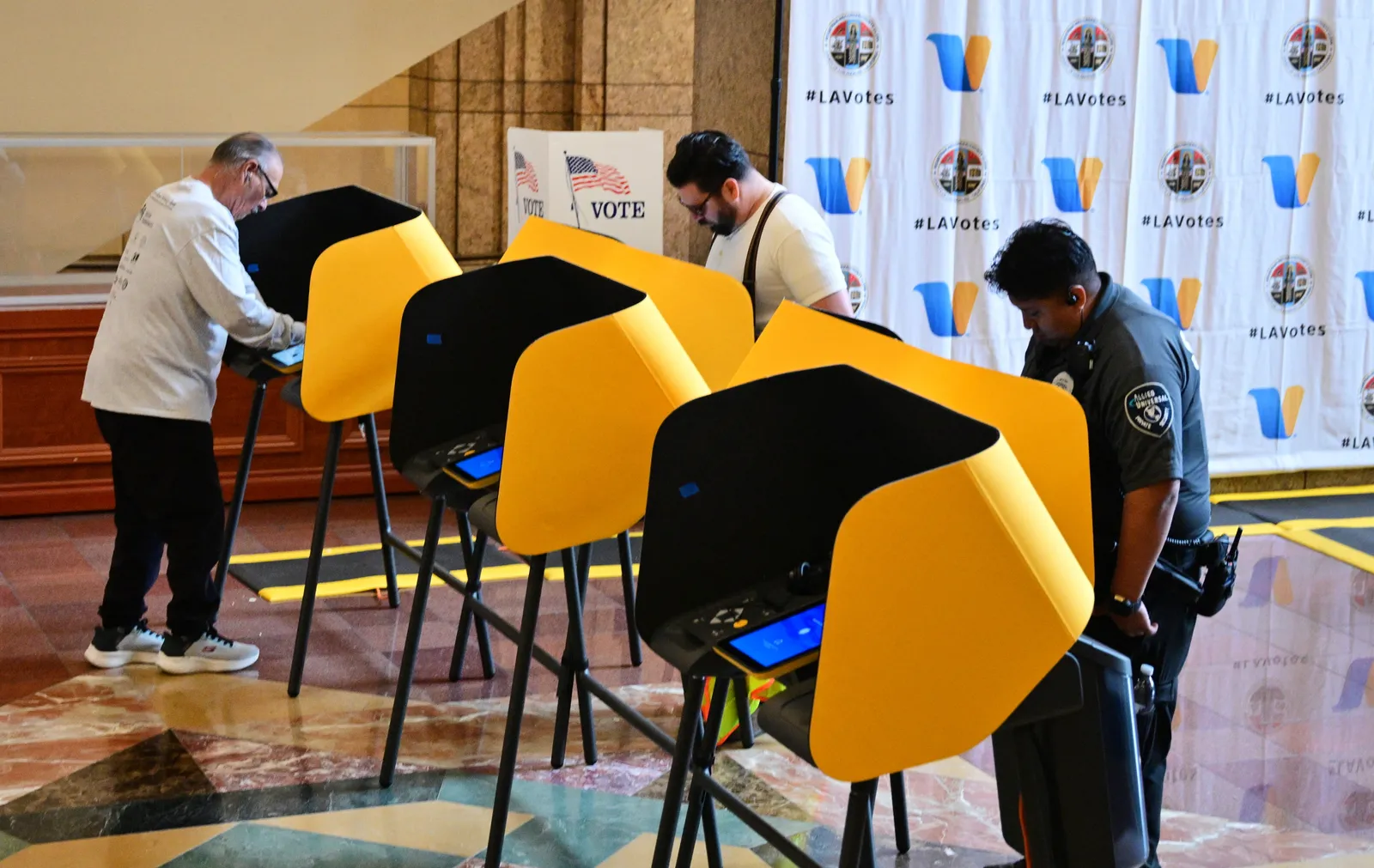
LA County: DOJ's 20,000 'noncitizen' voter list is 'unreliable,' includes U.S.-born
Preliminary review by Los Angeles County election officials finds errors in the federal list, raising the stakes for voter roll integrity ahead of November.
Trump's $1.5B Pentagon chip investment lands in North Carolina
A $1.5 billion defense infusion for North Carolina chipmaking signals a new era of Pentagon-backed reshoring - here's what it means for the industry.
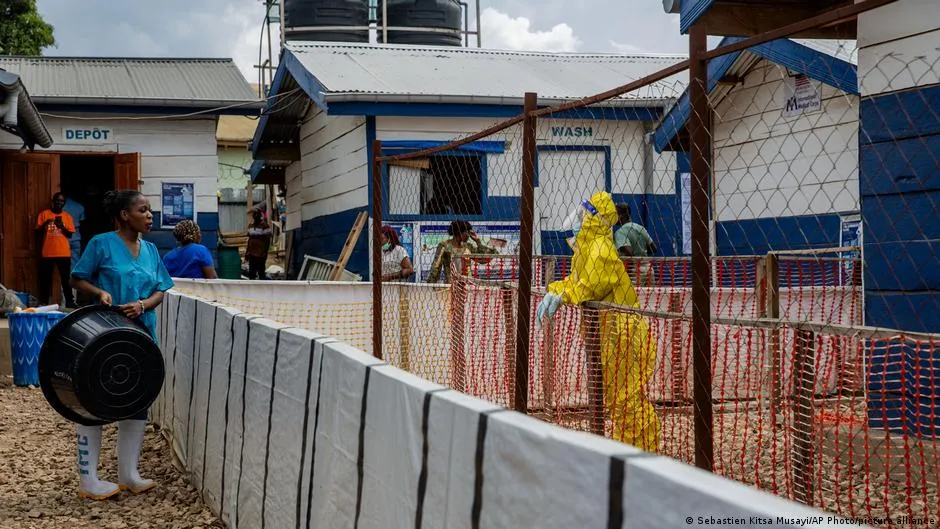
Nigeria confirms first Ebola case in Abuja, a woman just off a Uganda flight
Health Minister Muhammad Ali Pate says the patient flew in from Uganda, putting Africa's latest outbreak on Nigeria's doorstep.