
Dennis Woodside engineered Motorola's Lenovo sale, then “sold himself out of a job”
The Freshworks CEO’s career turns on hard pivots: big deals, ruthless focus, and an AI reckoning for customer-support software.
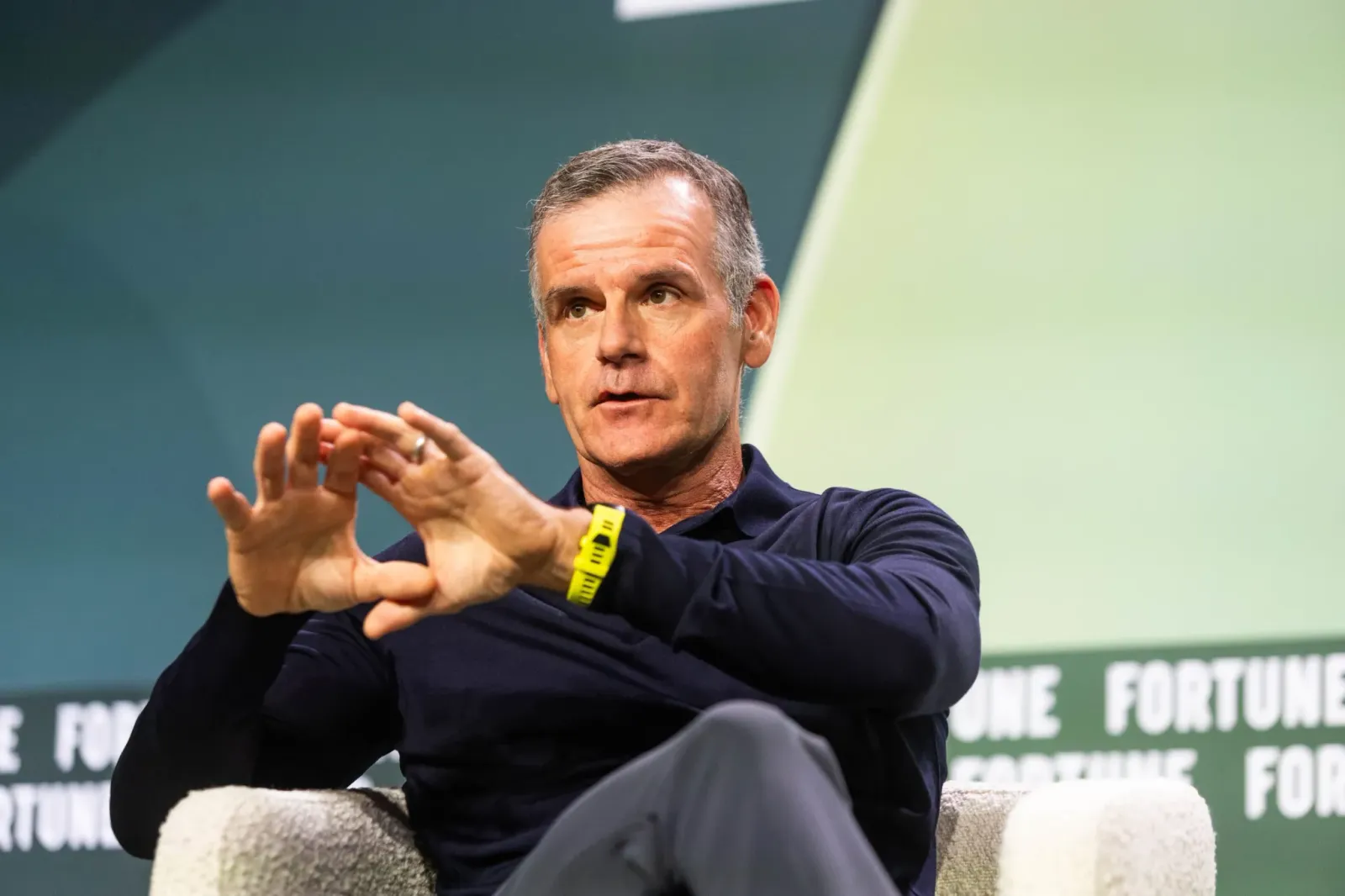
Dennis Woodside, now CEO of Freshworks, describes how he engineered the sale of Motorola Mobility to Lenovo in early 2014 and ended up losing his own CEO role. For decision-makers, his lessons connect directly to today’s AI automation pressure on software workflows that support and IT teams rely on.
Dennis Woodside did not just watch Google sell Motorola Mobility to Lenovo. As CEO of Motorola Mobility, he engineered the deal, and he put it bluntly at Fortune’s COO Summit in Scottsdale, Arizona: “We sold it - which meant I sold it - which meant I sold myself out of a job.” The context matters because Woodside inherited Motorola Mobility in 2012, after Google’s acquisition, and the unit was a $13.1 billion hardware operation during a brutal smartphone war. He launched Moto X and Moto G to revitalize the brand. Then Google moved to sell Motorola Mobility to Lenovo in early 2014, and Woodside’s strategic success came with a personal cost.
That reversal is a useful way to read the rest of his career, and it’s also the first message he lands with for other executives: being “on the path” to CEO should not stay invisible. Woodside asked the audience in Arizona, “Who wants to be a CEO here?” Not many hands went up, and he called that “interesting.” He emphasized that if you have a COO title, “you have it for a reason,” because the board and the CEO have effectively decided you are readying for the top job. But he also said no mentor spelled that out for him: “No one really told me that. You kind of had to figure it out yourself.” His prescription is operational, not motivational. Make your ambition explicit early, have the conversation with the board, and then be excellent at the job in front of you, because you “can't just talk about what you want to do tomorrow.”
Woodside’s own résumé looks like a Silicon Valley scavenger hunt. He’s been an M&A lawyer turned McKinsey consultant turned Google sales chief, and then moved through roles that rarely line up neatly: Motorola Mobility CEO, Dropbox COO, and Impossible Foods president before landing at Freshworks. At Fortune’s summit, he framed that as less a master plan and more a willingness to follow big challenges even when the roadmap is missing. He also described how he thinks in the margins of a packed calendar, running and biking through 18 Ironman races and doing four more races that summer. He said he does it not for bragging rights but for “uninterrupted time to think,” comparing it to meditation or yoga: “I go ride a bike or I go for a run.” The career metaphor is simple: when you do hard work, you need uninterrupted thinking time, because the next move is not going to arrive as a slide deck.
That approach shows up in the “start-up speed, public company pressure” phase of his Freshworks tenure. Woodside formally became CEO of Freshworks in May 2024, replacing founder Girish Mathrubootham, who had led the company for 12 years. Woodside did not arrive blind. He spent nearly two years as president, developing an independent view of where Freshworks needed to go. In his first three months as CEO, he made an acquisition, shut down several product lines, and refocused the organization. But he also kept the founder close, which is often the hardest part for new CEOs. Mathrubootham served as executive chair for 18 months, helping build the AI roadmap that now underpins Freshworks’ product strategy. Woodside said that Mathrubootham was building AI products six years ago, “when AI was not a thing yet,” and that he valued that work. They remain friends, with Mathrubootham reportedly buying a house down the street for him.
Here’s where Woodside’s story turns from career strategy to a bigger board-level reckoning. Freshworks sells software to customer support and IT teams, and those are the exact functions exposed to AI-driven automation. Some customers have already moved to support teams of zero. Woodside warned executives about the scale mismatch between AI spending and software value creation: “We have to invest $1 trillion in CapEx and systems and chips for AI,” he said, noting that the semiconductor industry has added a trillion in market cap in the last year, while “The software industry has gone down by $1.3 trillion.” The stakes are not theoretical. When the market punishes software that fails to prove AI-driven value, boards are forced to decide whether the organization will find real use cases fast, or get priced like vapor.
His advice is hands-on and blunt. The companies that see real value, he said, have a business leader who is deeply engaged. The business leader frames it as a business problem and asks, “Let's see if the technology can solve it.” The ones that struggle, he implied, are the ones “not clear in their thinking.” That is the same theme he started with in earlier parts of his career: ambiguity kills. If you want to be CEO, say it. If you want to adopt AI, define the business problem that proves value. And if you are running a software company serving support and IT, you should assume automation pressure is not coming someday. It is already here.
One more nuance from the story deserves attention because it mirrors the AI-era need for accuracy: Fortune updated the report to correct the scale of Motorola Mobility’s revenue in 2012. It was $13.1 billion, not a $1 billion operation as previously stated. In other words, even the past needs to be updated when the underlying numbers matter. For executives today, the operational lesson is clear: small measurement errors can become big strategic errors. Freshworks and other software leaders are now being tested on whether they can translate AI investment into durable customer value, fast enough for the market to stop looking past them.
This story's Key Insights and Take-aways are locked.
Create a free account to unlock Executive Actions for one credit.
Register to UnlockAlways free for Executives Club members. Join the Club
More in Business

Anthropic’s Levant Alpöge cracks the Jacobian conjecture after 87 years
A Harvard valedictorian used Claude to hit a 1939 breakthrough, but the missing “why” is the real problem.

Uber buys Delivery Hero for nearly $15B, vaulting to top food delivery outside China
The deal doubles Uber's dual-services footprint and pushes a ride-and-eats bundling play into 50 more markets.

Epic and Google drop settlement bid, forcing rival Android app stores by July 22
Google told the court it is ready to carry third-party app stores starting Wednesday, July 22.