

DGA lands tentative 4-year deal with AMPTP, details withheld until National Board review
The union and studio group agree on terms, but the public filing waits for board approval, ratification, and member review.
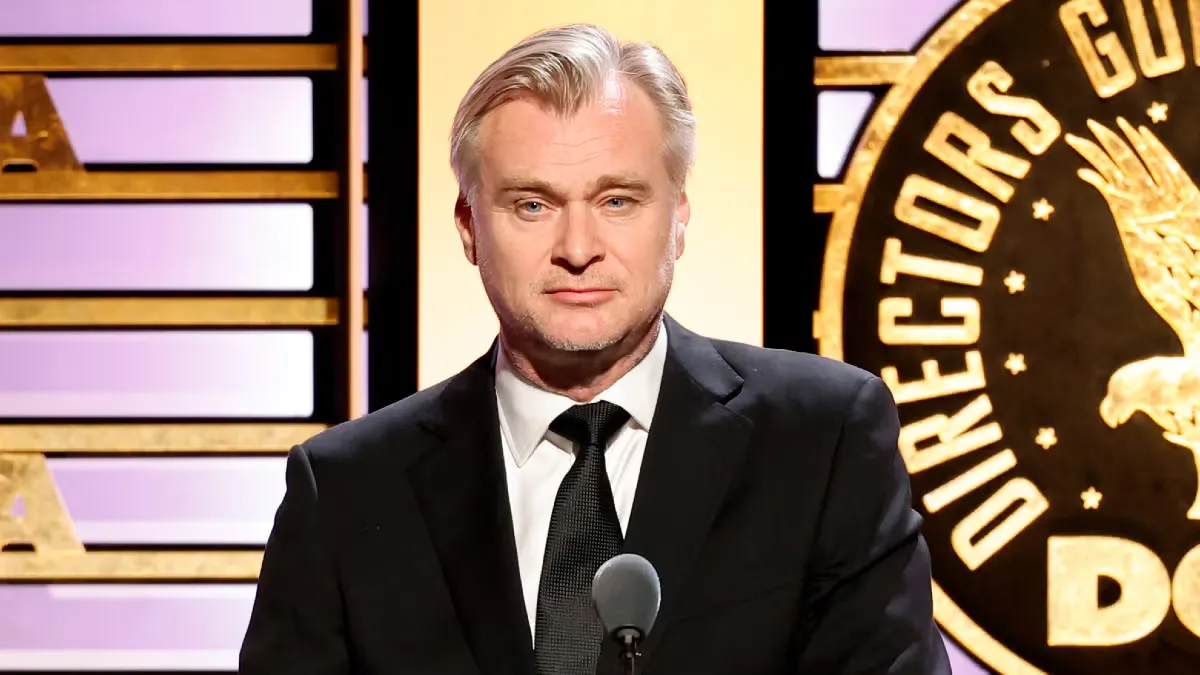
The Directors Guild of America (DGA) confirmed it reached a tentative four-year collective bargaining agreement with the Alliance of Motion Picture and Television Producers (AMPTP). Decision-makers should treat the timing as a benchmark, since all three major entertainment guilds have now reached four-year agreements with AMPTP.
The Directors Guild of America (DGA) just reached a tentative four-year collective bargaining agreement with AMPTP, and the clock is already ticking. The deal came exactly three weeks before the current agreement was set to expire on June 30. Now the details live behind a gate: they will not be released publicly until the DGA National Board completes its review.
Here is the key sequence, straight from the DGA: the new four-year agreement will be presented to the National Board for approval. Only after that will the union share the deal terms with guild members for review, consideration, and ratification. Consistent with the Guild's longstanding practice, the union says it will not release the terms publicly until the board has been able to complete its review. The AMPTP, meanwhile, put out its own statement calling the tentative deal a “fair deal” that helps “advance a stable and successful entertainment industry.”
Why executives should care is not just that talks ended. It is that the industry is approaching a rare kind of labor alignment: AMPTP has now reached four-year agreements with all three of the major entertainment guilds. With the DGA announcement Tuesday, the union synchronization story becomes complete. Last week, SAG-AFTRA members voted overwhelmingly in favor of ratifying its new bargaining agreement with AMPTP, with 91.42% of voting members voting in favor. The Writers Guild of America (WGA) voted to ratify its new deal back in April, with 90.4% in favor of ratification. In other words, the DGA deal is the final piece of a puzzle that has already moved through the two other giant constituencies.
If you are sitting on the business side, this matters because collective bargaining is one of the few levers that can directly change production cost structures and schedule risk at scale. Even when a contract is not yet public, the mere existence of a tentative agreement can reduce uncertainty in planning. The source does not provide the terms themselves, but it does show the governance and process steps: National Board review first, then member review and ratification. That governance step is not trivial. It shapes how quickly information becomes actionable for studios, producers, and talent-adjacent operations because nothing becomes final until approvals and votes run their course.
This is where board dynamics and information control enter. The DGA told the public it will follow its longstanding practice of withholding terms until the National Board finishes review. That is effectively a two-step confidentiality mechanism: it limits premature scrutiny in public before internal checks, but it also creates a later information burst when the terms are finally shared with members and, potentially, indirectly influence the broader market. For executives tracking labor risk, that means the next reporting cycle will not just be “deal reached,” it will be “deal ratified,” and the timeline between those events can matter for budgeting and deal-making.
There is also timing. The DGA reached the tentative agreement on Tuesday, after talks between the DGA and AMPTP have been underway since May 11. That means the negotiations were not a short sprint; they were sustained through the month leading into June 30, the expiry of the current agreement. The agreement landing exactly three weeks before that expiry provides a practical buffer. A buffer is valuable because it creates runway for review, consideration, and ratification without the kind of last-minute scramble that tends to amplify operational disruption.
Look at what the studio group said to understand the incentive alignment. In its statement, AMPTP said it was pleased to have reached a tentative agreement with the DGA. It appreciated the “hard work and commitment” of guild partners in achieving a “fair deal” that helps advance a “stable and successful entertainment industry.” That language is typical of bargaining optics, but it also signals what studios want most: stability. Stability means fewer surprises in production planning, labor negotiations, and downstream contracting. It also suggests studios are thinking beyond this immediate contract, because the moment AMPTP has four-year deals with all three major guilds, it can simplify multi-year forecasting and reduce the number of concurrent negotiations that could otherwise collide.
For peers in leadership roles across media, the second-order implication is straightforward: when one of the biggest guild contracts clears internal governance gates and members ratify, it reduces the odds of a fragmented negotiating landscape across writers, actors, and directors. This does not eliminate cost and schedule uncertainty, and it does not disclose the actual terms yet. But it does change the probability distribution. If you manage production pipelines, development calendars, or long-term staffing, fewer simultaneous labor risks generally means more predictable planning. For boards and C-suite teams watching entertainment labor, the question is no longer whether a deal exists. The question becomes how quickly the DGA National Board approves it and how likely members are to ratify once details are shared.
This story's Key Insights and Take-aways are locked.
Create a free account to unlock Executive Actions for one credit.
Register to UnlockAlways free for Executives Club members. Join the Club
More in Business

Anthropic’s Levant Alpöge cracks the Jacobian conjecture after 87 years
A Harvard valedictorian used Claude to hit a 1939 breakthrough, but the missing “why” is the real problem.

Uber buys Delivery Hero for nearly $15B, vaulting to top food delivery outside China
The deal doubles Uber's dual-services footprint and pushes a ride-and-eats bundling play into 50 more markets.

Epic and Google drop settlement bid, forcing rival Android app stores by July 22
Google told the court it is ready to carry third-party app stores starting Wednesday, July 22.