
Disclosure Day opens with $44.0M, Spielberg’s best original weekend since 2010
The numbers say the blockbuster audience still buys original ideas. The analytics now ask, can it sustain?
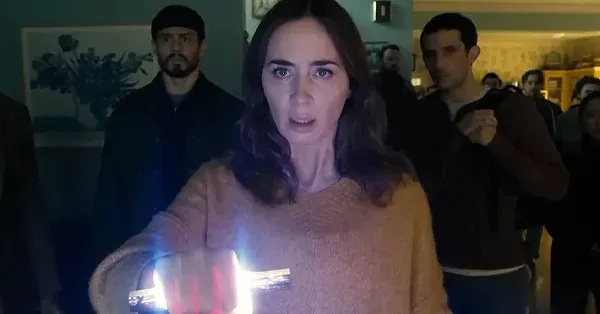
Steven Spielberg’s Disclosure Day started with a $44.0 million opening weekend and is his top opening for an original project. For executives, the strategic signal is clear: original, high-concept live-action still converts, but window competition may decide the ceiling.
Disclosure Day opened to $44.0 million this weekend, and it is not just another Spielberg headline. It is his fifth-best opening overall, but more importantly, it is his best opening weekend for an original project, beating 2002’s Minority Report ($35.6 million) and Saving Private Ryan ($30.05 million). In June, that matters because it is the month Spielberg has historically dominated, and because the market has gotten used to treating “big openings” like they are supposed to be automatic. They are not. Social media and criticism can turn even strong starts into a debate, especially in a world where $48.2 million used to feel untouchable.
The context makes the $44.0 million feel even more consequential. In 1993, Spielberg opened Jurassic Park on June 11 to $47 million, then watched it become the highest-grossing film of all time. He later did the same double claim with Jaws in 1975 and E.T. in 1982. Now, inflation and ticket price changes mean the same headline number does not mean the same thing at the box office. Rotten Tomatoes frames this as a “ticket prices vs. attendance” issue, which is the kind of distinction executives and operators should care about when translating box office into demand. The takeaway: Disclosure Day’s start is not being measured by nostalgia, it is being measured against what audiences actually do now.
So how good is the start, in hard terms? The source places Disclosure Day at Spielberg’s fifth-best opening among his films, behind Indiana Jones and the Kingdom of the Crystal Skull ($100.1 million), The Lost World: Jurassic Park ($72.1 million), War of the Worlds ($64.8 million), and Jurassic Park ($47 million). Ready Player One follows at $41.7 million, making the immediate competition tight at the top. More revealing, when you isolate “original” live-action idea productions and remove sequels, franchises, spinoffs, prequels, book adaptations, and name-recognition advantages, the list becomes a test of whether theater audiences still show up for fresh concepts. On that list since 2010, Disclosure Day sits in the middle of the highest-converting group, at $44.0 million, alongside titles like Inception ($62.7 million), Us ($71.1 million), and Avatar ($77.0 million), and ahead of Lucy ($43.8 million) and Weapons ($43.5 million).
This is where the business implication gets interesting for decision-makers. The source explicitly narrows the definition further by excluding biopics and other true-story categories: sorry Michael, Bohemian Rhapsody, and Straight Outta Compton; sorry Dunkirk; and even “true” stories like The Conjuring. What is left is a cleaner read on original screenplay entertainment. Executives looking at slate strategy, distribution risk, and marketing allocation should treat this as evidence that there is a hunger for original theatrical experiences, not just IP reboots. The source points to directors who have delivered original entertainment in recent years, including James Cameron, Christopher Nolan, Quentin Tarantino, Ryan Coogler, and Jordan Peele, tying the performance trend to recognizable auteur-level creation.
But no market signal is complete without the “can it sustain?” question. The source flags that Disclosure Day is his 16th film with an 80% or higher score on the Tomatometer. It also brings in Cinemascore and historical multiplication patterns, because the difference between “strong opening” and “real run” is often whether audiences keep returning week after week. The source says Spielberg films find their audiences, and specifically notes that for some of his releases, the final gross multiplied the opening weekend by large factors. Jurassic Park multiplied its opening by 7.59, Saving Private Ryan’s July run multiplied by 7.08, and the pattern held for other major titles. It also notes a cautionary edge: only two Spielberg films, including the lowest Cinemascored film of his career (a C+ for A.I. Artificial Intelligence) and The BFG, failed to multiply their summer openings by more than three times.
And then there’s the disruptor in the room: Obsession. The source says audiences remained obsessed with Obsession, taking a long run with slow decays and repeated top-10 weekend rankings even as it passed milestones. It took Curry Barker’s film five weekends to drop more than 10 percent, and it still only fell 25 percent to $19 million. Obsession is now at $188.3 million domestic and $286 million worldwide, and it also became the top R-rated film in its category by besting Deadpool & Wolverine’s $18.3 million fifth weekend. For Disclosure Day’s near-term path, this matters because the source explicitly says Obsession could spoil Disclosure Day’s run, and it even projects a visibility window: Disclosure Day could be in the top five through the week of the July 4 holiday. Competitive gravity in the mid-summer window is real, and Obsession looks like the kind of incumbent that bends the calendar.
There is another layer executives should not ignore: the global economics. The source says Disclosure Day has a reported $115 million production and is nearly $93 million after a single weekend worldwide. That is fast progress on the “recoup and then profit” equation, even as domestic ceiling remains uncertain. The source also mentions a potential finishing range of $125-150 million domestic, grounded in comparisons to Minority Report’s trajectory. If Spielberg’s sixth-sense for finding an audience still holds, Disclosure Day could validate the thesis that original science fiction, released in summer, still has a real economic role in a crowded market. If Obsession keeps its grip, the lesson may shift from “original ideas win” to “original ideas win, unless the audience is already captured.” Either way, boards and studio leaders get the same message: the window is the product now, not just the opening.
This story's Key Insights and Take-aways are locked.
Create a free account to unlock Executive Actions for one credit.
Register to UnlockAlways free for Executives Club members. Join the Club
More in Entertainment

Russell Brand's accuser 'bewildered and confused' as he denies 7 sex charges
The criminal case against the comedian is a live test of how media companies manage talent risk when serious allegations go public.

'It's a Magic Trick': Ballet Experts Say Rosalía's SNL Pose Is Impossible
Three ballet experts tell Rolling Stone Rosalía's gravity-defying SNL stillness shouldn't be possible - and why the debate is now part of the show.

Activision CMO: GTA 6 Will Boost Call of Duty, Not Bury It
Activision's top marketer says Rockstar's blockbuster will drive players back to consoles and into Modern Warfare 4, even as the company admits its recent strategy failed.