
Djokovic equals Federer’s Wimbledon record of 105 wins by beating Rinderknech
A new Wimbledon milestone lands for Novak Djokovic, and it matters because greatness at peak events keeps careers, brands, and sponsorship value compounding.
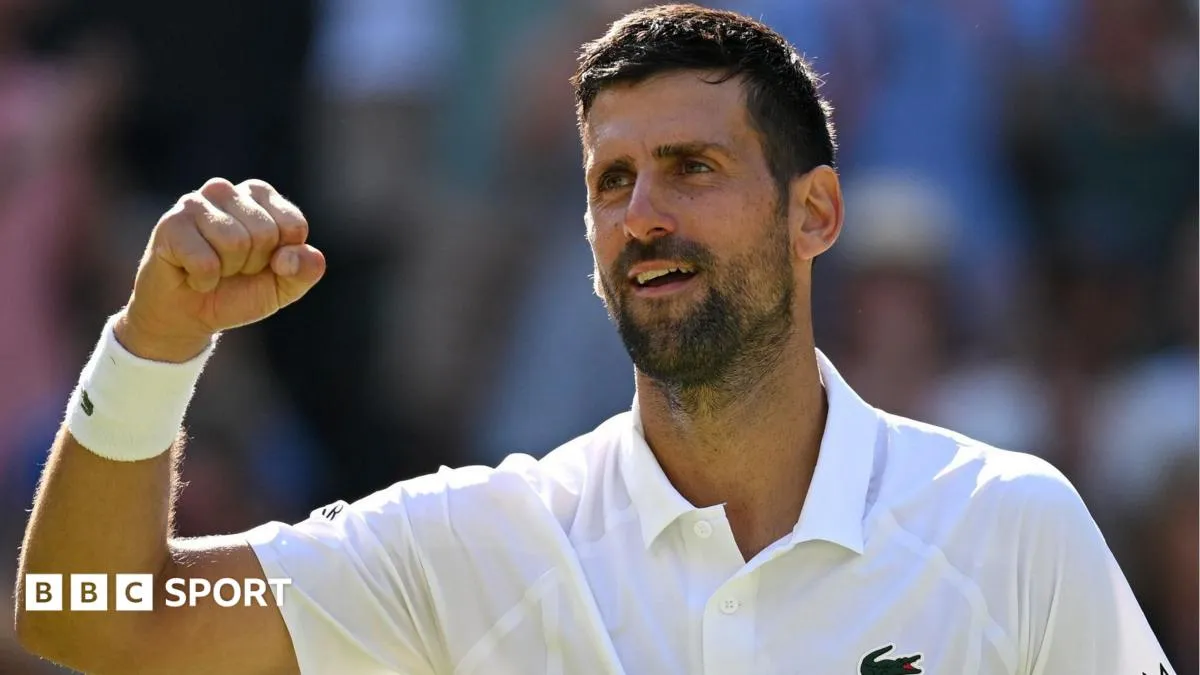
Novak Djokovic matched Roger Federer’s Wimbledon record total of 105 men's singles match wins by beating Arthur Rinderknech. For decision-makers tied to elite sport, the win is a reminder that record-setting on the biggest stage can reshape long-term commercial and reputational momentum.
Novak Djokovic just matched Roger Federer’s Wimbledon record total of 105 men’s singles match wins, after battling past Arthur Rinderknech. That is the headline in a nutshell, and it lands for a clear reason: Wimbledon is not just another tournament, it is the sport’s most unforgiving stage for repeat success. To equal a Federer number tied specifically to Wimbledon men’s singles match wins means Djokovic is not merely collecting titles, he is collecting proof of consistency under the most pressure-heavy conditions in tennis.
The match also answers the “how” behind the milestone. Djokovic did not stroll past Arthur Rinderknech; he had to battle past him to reach the 105-win threshold and match Federer’s record. Wimbledon win counts are the sport’s version of endurance metrics. They reflect who can survive the physical grind, the match-to-match tactical adjustments, and the psychological weight of expecting to win every time they step on court. In other words, Djokovic’s accomplishment is not a one-off surge. It is a measurable equality with a record that has long functioned as a benchmark for what domination at Wimbledon looks like.
Why should executives and operators care? Because elite sports records are not only sports trivia. They feed into a chain reaction across sponsorships, broadcast value, fan engagement, merchandise demand, and the perceived reliability of an athlete as a brand asset. A record like “105 Wimbledon men’s singles match wins” is the kind of stat that makes marketing and licensing teams sit up. It turns an athlete from “current competitor” into “historical event.” And historically significant events tend to be easier to sell, harder to fade, and more resilient when audiences fragment across platforms.
This also matters for the tennis ecosystem in quieter ways. Wimbledon is governed by its own tradition and competitive structure, but the broader tennis economy typically rewards repeat appearances and consistent performance at high-profile tournaments. When a player equals a long-standing record, it can pull attention toward the event itself and toward the sport’s top-tier narratives. That impacts broadcasters looking for high-signal storylines and rights holders seeking audience loyalty. If viewers are tuning in not only for a champion but for a record that can be reached in real time, the event becomes more appointment-based and less casual.
There is also a strategic boardroom subtext here. When a company backs a sports figure, it is not just underwriting talent. It is underwriting continuity. Records like Federer’s Wimbledon wins total of 105 create a yardstick that makes “how rare is this?” measurable. Djokovic matching it reinforces the idea that the athlete is capable of sustaining elite results across years and match conditions, which can translate into stronger long-term returns on sponsorship activations. Even for decision-makers not directly involved in tennis, the pattern is familiar. Big audience moments reward incumbency. The longer a star remains at the top, the more their story can be packaged as both aspiration and authority.
At a more operational level, this milestone highlights what top players do under tournament pressure. Wimbledon’s match schedule and surface dynamics typically favor those who can adapt quickly between rounds. Djokovic getting to 105 by battling past Rinderknech shows that high-level success is not always smooth. It is often a series of problem-solving sessions where you handle different opponents, different rhythms, and different stress levels. For any organization, whether in sport or business, that is a transferable lesson: records are built by surviving the messy versions of performance, not only the clean ones.
The second-order implication for peers is straightforward: record equaling changes the reference frame. Federer’s number of 105 Wimbledon men’s singles match wins has been a symbol of Wimbledon greatness. When Djokovic matches it, the benchmark does not disappear. It becomes a living standard that other players and the entire tennis narrative must now orbit. That can affect everything from how audiences interpret future Wimbledon runs to how competitors shape their expectations entering the tournament.
In short, Djokovic equaling Federer’s Wimbledon wins record at 105 is a moment tennis fans will remember, and sports business teams will study. It is a real milestone earned through a real match, achieved by battling past Arthur Rinderknech. For executives watching the intersection of sport, media, and value creation, it is a reminder that the biggest brands and the biggest stories often compound when dominance meets repeatability on the world’s most visible stage.
This story's Key Insights and Take-aways are locked.
Create a free account to unlock Executive Actions for one credit.
Register to UnlockAlways free for Executives Club members. Join the Club
More in Entertainment

Russell Brand's accuser 'bewildered and confused' as he denies 7 sex charges
The criminal case against the comedian is a live test of how media companies manage talent risk when serious allegations go public.

'It's a Magic Trick': Ballet Experts Say Rosalía's SNL Pose Is Impossible
Three ballet experts tell Rolling Stone Rosalía's gravity-defying SNL stillness shouldn't be possible - and why the debate is now part of the show.

Activision CMO: GTA 6 Will Boost Call of Duty, Not Bury It
Activision's top marketer says Rockstar's blockbuster will drive players back to consoles and into Modern Warfare 4, even as the company admits its recent strategy failed.