

DNA from 85 Scythians shows elite dynasties, sparking inequality by 900 B.C.
The Science Advances study finds elite families were far more interrelated, with women at the center too.
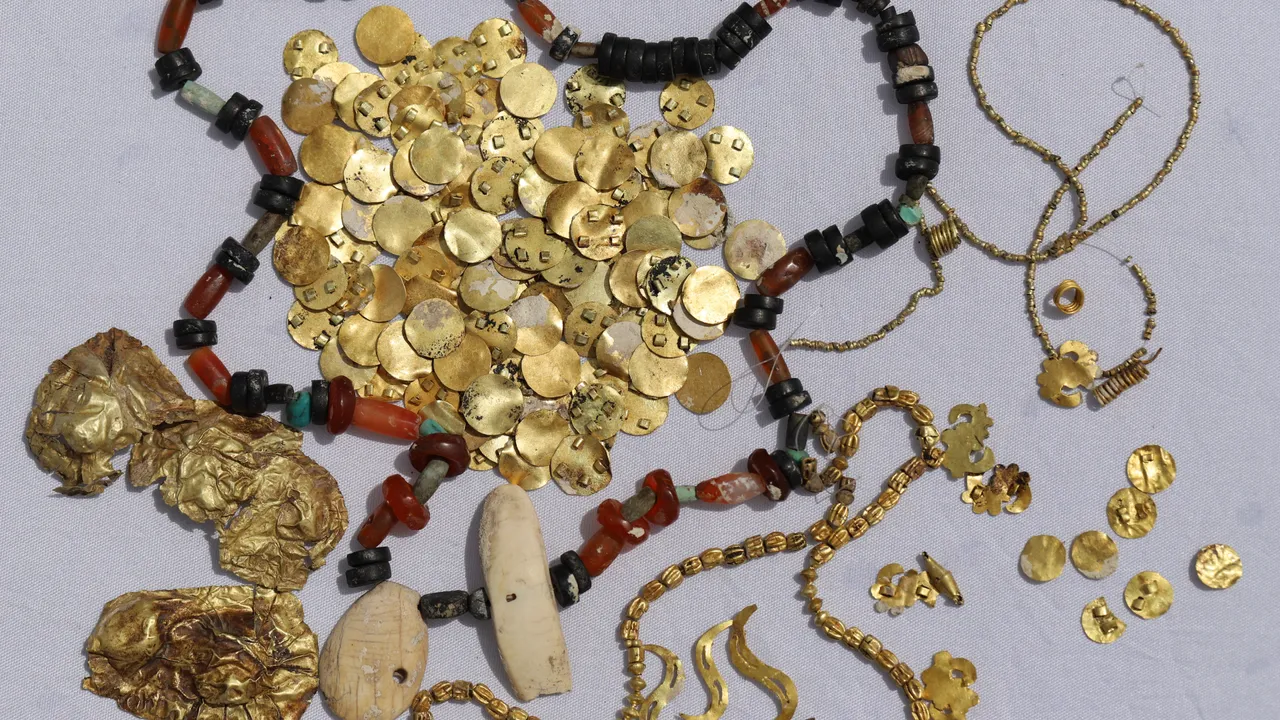
A large-scale DNA analysis of 85 Iron Age Scythians, published July 3 in Science Advances, shows elite dynastic rule arose around 900 B.C. The researchers sequenced genomes from 38 elite and 47 non-elite people buried in kurgan tombs across 20 sites and found women held high status.
A new DNA study published July 3 in Science Advances reshapes a long-running mystery about the Scythians, the Iron Age nomads of the Eurasian steppe. Researchers sequenced DNA from 85 Scythians and conclude that social inequality emerged around 900 B.C., when elite dynastic families began ruling from centralized locations.
The “why does this matter?” answer is immediate in the data. The study generated genomes from 38 elite and 47 non-elite individuals buried in kurgan tombs between 900 and 200 B.C. The non-elite tombs were smaller and lacked the weapons and gold artifacts seen with elite burials. Then the genetics delivered the punch: elite people were 11 times more likely to be related to each other than they were to be related to non-elite people. In other words, the steppe’s hierarchy was not just cultural theater. It was genealogical.
To understand the significance, you have to remember how little the Scythians left behind. They did not write their own records. Much of what archaeologists know comes from ancient Greek and Roman accounts and from the material landscape they left: mound-shaped tombs called kurgans that dot the steppe. Those tombs, along with well-known artifacts like tattooed mummies and intricate animal-themed jewelry, have fueled interpretations for decades. But interpretations can drift when the evidence is mostly secondhand. DNA is a tool that pulls interpretation back toward measurable relationships.
The study also addresses a flashpoint claim: that women held high-status roles among the Scythians, sometimes tied to the Greek myth of the Amazons. Here, the genetic evidence turns up something concrete. The researchers found a noticeable presence of elite women. “Nearly half of the elite individuals in our dataset were female, indicating that women held high social status within Iron Age Scythian society,” study first author Ayshin Ghalichi, an archaeogeneticist at the Max Planck Institute for Evolutionary Anthropology in Germany, said in a statement. That does not mean every elite position was identical, but it does mean elite power was not confined to men.
There is more: the “family” in elite dynastic families shows up not only in averages, but in specific relationships. Among the elite, the researchers discovered two pairs of biological brothers, a brother and a sister, and a parent and child. In at least one case, the two brothers were buried at different sites some distance apart, suggesting that elite kin networks spanned geography rather than being trapped in a single burial ground. The researchers also found two elite grandfathers and grandsons buried in different cemeteries. Even with this spread, the elite were still buried closer together than the non-elite people were, which supports the idea of some degree of geographic centralization of elite burials. Study co-author Ainash Childebayeva, a genetic anthropologist at the University of Texas at Austin, put it this way in an email to Live Science: it “is possible that this indicates some degree of geographic centralization,” comparing it to Siberia’s “Valley of the Kings,” an area containing many large mounds likely elite of a similar time period.
And then there is the bonus reveal that bridges archaeology and pop history: the Golden Man. A skeleton of a teenager discovered in 1969 in a kurgan in Kazakhstan, the Golden Man was found with more than 4,000 gold ornaments and a silver bowl with an inscription that has never been deciphered. Historically, experts assumed the person was a powerful male warrior, partly because the bones were taken to indicate male sex and partly because Scythian elites were often imagined as male-dominated. The genetic result complicates that assumption. While the skeleton’s sex could not be determined based on the bones, Childebayeva reported that the study’s genetic evidence found the individual was “a lot more likely to be genetically male than female.” The study also found no relatedness for the Golden Man.
So what should decision-makers in other fields take from a steppe DNA paper? The lesson is about how systems consolidate power. The researchers conclude that inherited elite status, backed by extended family relationships, helped produce inequality among Iron Age nomadic groups. Their framing points to a broader history of how differentiation took shape in Central Eurasia. For today’s executives and boards, the second-order implication is not about Scythian politics. It is about incentives and governance: when leadership becomes centralized around tightly related networks, you get durable hierarchy. When that hierarchy includes women, it changes how status is distributed and who commands it. In modern terms, the “structure” is the inheritance mechanism, and the genetics in this case is the proof of concept that inheritance can be both social and biological, appearing as early as 900 B.C.
This story's Key Insights and Take-aways are locked.
Create a free account to unlock Executive Actions for one credit.
Register to UnlockAlways free for Executives Club members. Join the Club
More in Science

Alaska's 1,580-foot tsunami had warning signs. Scientists just found them.
Rapid glacier retreat, heavy rainfall, and thousands of tiny tremors preceded Alaska's 1,580-foot tsunami, a warning for every coastal community in a warming world.

The rare mutation that lets high-risk brains dodge Alzheimer's
Scientists found a natural defense against protein buildup, opening a new path to preventive treatments.

3,000 steps a day may halve Alzheimer's decline, study finds
New research links a modest daily walk to less tau buildup and nearly half the cognitive and functional decline, even for those with early signs.