

DOE says green grants were cut “solely” by states’ political affiliation, court filing
A recent DOJ court filing alleges federal clean energy awards were canceled for political reasons, not project merit.
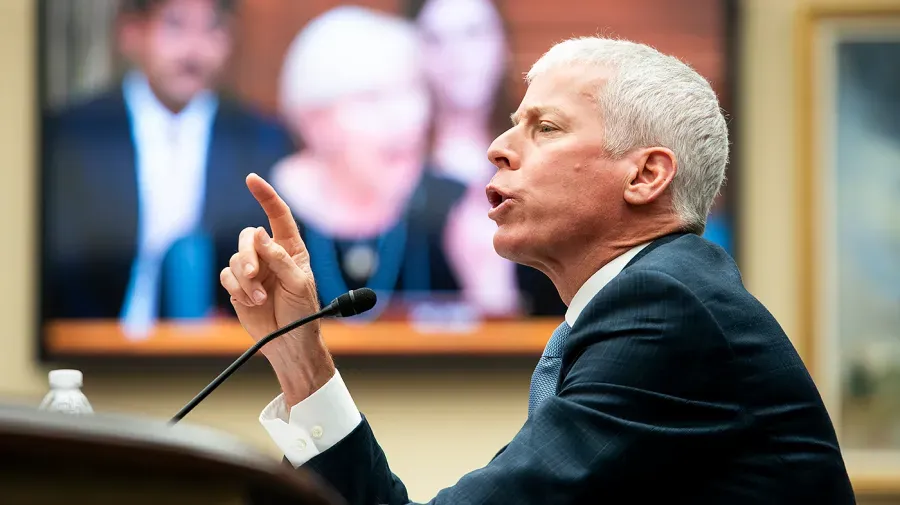
Department of Energy lawyer Jeff Novak said in a court filing that federal green grants canceled last year were selected “solely” based on a state’s political affiliation. For decision-makers, the dispute raises immediate questions about regulatory predictability, risk pricing, and how public capital gets allocated.
Federal green grants canceled last year were allegedly selected “solely” based on a state’s political affiliation, according to a recent court filing by the Trump administration. In the filing, Department of Energy (DOE) lawyer Jeff Novak argued that the decisions were driven by political alignment rather than technical or economic merit.
That claim matters because it goes to the heart of how companies and states plan for clean energy. Grants are not just goodwill checks. They are often the difference between a project that scales and one that pauses, between hiring a team this year and delaying it until the next funding cycle. If federal support can be revoked or redirected primarily for political reasons, then every business model built on policy stability starts to wobble.
To understand why this has big stakes, you have to zoom out to how U.S. clean energy funding typically works. Large federal programs often rely on competitive or criteria-based selection, with the expectation that outcomes are tied to performance, readiness, and impact. Even when politics influences policy broadly, the day-to-day mechanics are supposed to be legible enough for developers, manufacturers, utilities, and state agencies to forecast. A court dispute that reframes selection as “based solely” on political affiliation does not just challenge specific grants. It challenges the premise that the process is predictable.
The filing’s framing also highlights a familiar tension in the governance of federal grants: who gets to decide which projects align with national priorities, and how those priorities are translated into awards. When legal arguments move from “the agency had discretion” to “the agency acted on political affiliation alone,” the question becomes whether the stated justification can survive judicial scrutiny. In practical terms, that is a risk that boards and executive teams have to price, because regulatory uncertainty is not abstract. It hits procurement timelines, supply chain commitments, and financing costs.
There is another second-order effect here for organizations that depend on state-federal coordination. Many clean energy projects live at the intersection of federal funding, state permitting, local approvals, and utility or offtake arrangements. If federal grants are perceived as contingent on state political alignment, states may adjust their posture, and developers may diversify their funding sources. The result can be slower deal velocity, more complex capital stacks, and a higher premium on projects that already have long-term contracts or alternative financing routes.
For companies considering bids for future federal opportunities, the real question is not only what the DOE intended last year, but what the legal theory could mean for future selection. Courts can narrow agencies’ ability to justify decisions, or force agencies to revisit processes. Even before a final ruling, the existence of the dispute can change how organizations approach compliance, documentation, and lobbying strategy. It can also affect who gets invited into early conversations, and which program managers are willing to take on contentious allocations.
At the board level, this is the kind of story that turns governance into a risk conversation. Committees responsible for audit, compliance, and strategy will care less about headlines and more about exposure: What share of projected revenue or capex depends on grants? How quickly can the organization pivot if federal support shifts? How does management demonstrate that project assumptions are robust under changing policy conditions?
Ultimately, this court filing by DOE lawyer Jeff Novak is a direct challenge to the legitimacy of grant selection for at least some of the federal green grants canceled last year. The headline allegation is blunt: selection was “solely” based on state political affiliation. If that theory gains traction, it signals a future where public clean energy capital may be assessed through a political lens as much as an economic one, forcing executives across the sector to treat policy volatility as a core operating variable, not a one-off surprise.
This story's Key Insights and Take-aways are locked.
Create a free account to unlock Executive Actions for one credit.
Register to UnlockAlways free for Executives Club members. Join the Club
More in Politics
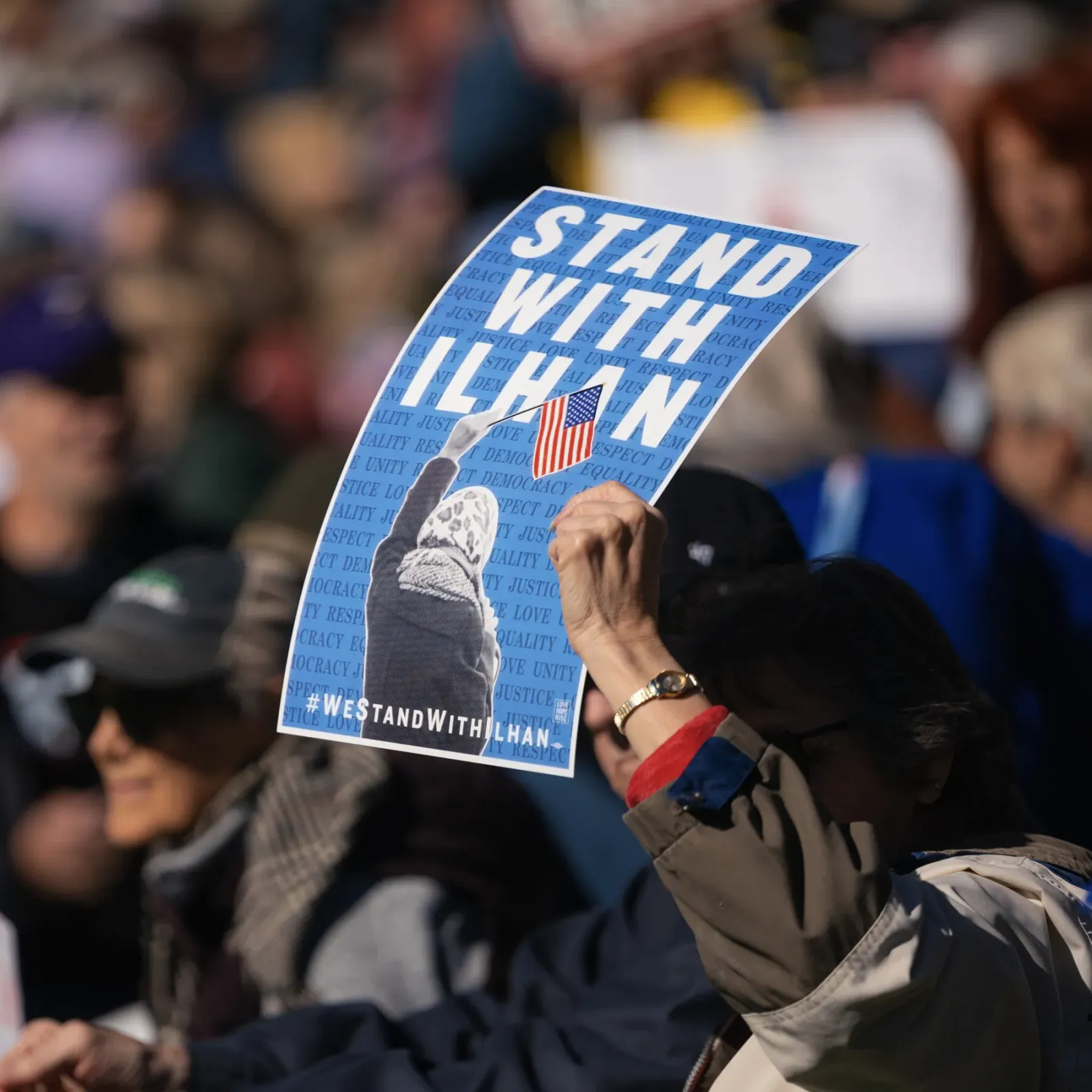
Obama Defends Ilhan Omar After Agents Search Her Home in Trump Inquiry
The former president's intervention raises the stakes in a federal probe into immigration paperwork that has put a prominent progressive lawmaker in the crosshairs.

Blair-era minister: cut welfare to fund youth job support
Alan Milburn's call for welfare cuts to fund employment support opens a Labour fight over benefits and the Neet crisis.
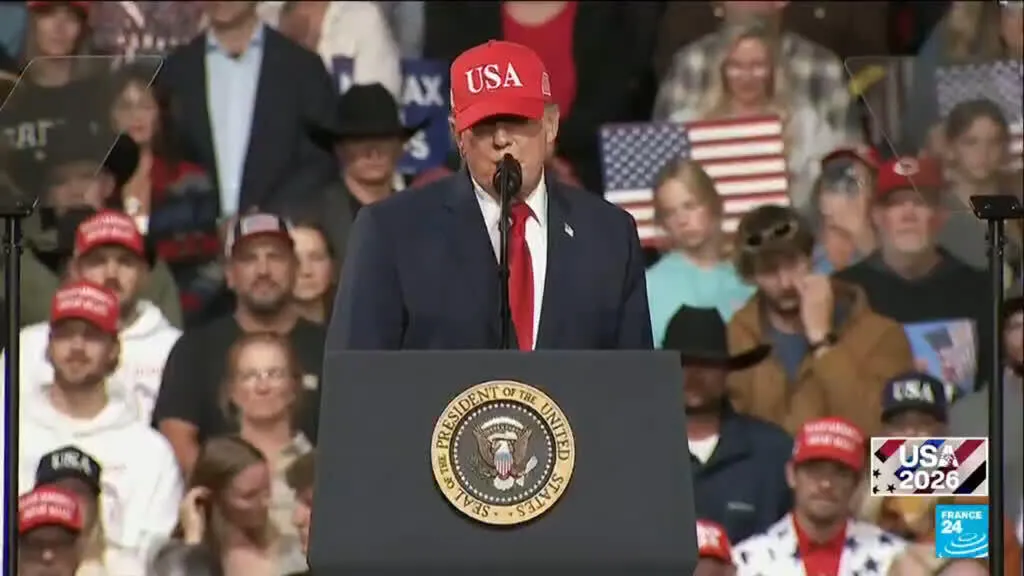
Hot September CPI: energy costs surge, voters feel the squeeze before midterms
The latest inflation print lands as Trump campaigns for GOP control of Congress, putting cost-of-living worries at the center of the midterm fight.