
Doug Cockle says he feared he lost Geralt, then doubled down for 20 years
The actor behind Geralt explains the long road from theater training to a role that reshaped his career.
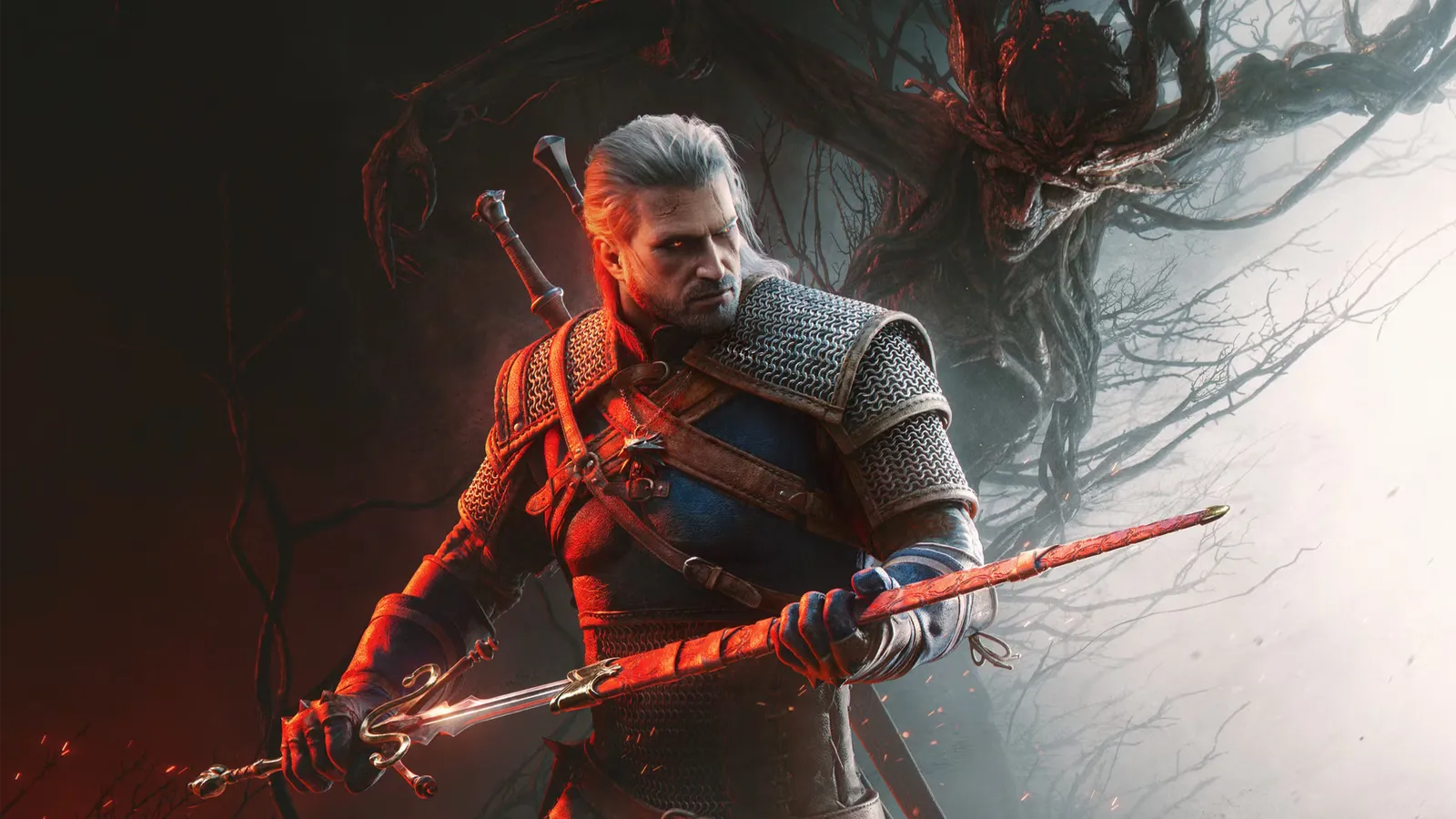
Doug Cockle, the actor who voices Geralt in CD Projekt Red's The Witcher saga, discusses 20 years in the role and what comes next in a Polygon video interview. For decision-makers in entertainment and games, his story is a playbook for how risk, identity, and long-term franchise value intersect.
Doug Cockle trained as an actor primarily for theater, and he says “building a career primarily around voicing game characters was something that wasn't even on my radar.” In a Polygon video interview, he explains that the Geralt conviction he eventually built came only after he stepped into voice acting, first with Independence War 2: Edge of Chaos in 2001.
That detail matters because it reframes the “iconic casting” story. Cockle’s path was not a straight line from fame to franchise. It started with a career mindset that did not include games, then pivoted as the work proved itself. In other words, the role became iconic partly because he treated it like craft, not luck, even when the whole situation started out outside his radar.
To understand why this is a bigger deal than any one interview, you have to look at how game voice acting careers tend to form. Unlike film or TV, games demand performance that can live across branching dialogue, repeatable scenes, and long production cycles. That can reward actors who are comfortable with iteration and with making characters feel stable even when the player’s experience changes. Cockle’s point about theater training is relevant here, because theater tends to drill consistency of voice and presence. When a franchise like The Witcher becomes a long-running world, those skills start to look less like “background” and more like infrastructure.
Cockle’s first foray into video game voice acting was Independence War 2: Edge of Chaos in 2001. That is a telling starting point for anyone tracking talent pipelines. Early in a career, most actors and studios operate with partial information: the actor is not sure games are where they will build a livelihood, and the studio is not sure the performance will become a long-term franchise asset. The Witcher saga later turned that bet into a defining identity marker for Geralt. When an audience hears a voice and thinks “that is him,” the actor becomes part of the product’s brand, not just its cost.
This is also why “what’s next for the series” is more than fan-service framing. When a voice becomes tightly associated with a character, every sequel or rework has a compounding effect on expectations. The studio is not just building content. It is protecting continuity. And the continuity is partly emotional and partly operational: it affects casting decisions, production planning, marketing, and how quickly audiences accept a transition if one ever happens.
From a board and capital-allocation perspective, franchises like The Witcher sit at the intersection of creative and commercial risk. Voice performance is not the only variable, but it is one of the variables that can be hard to replace without some form of churn. If an actor who embodies a character changes, the company may face an immediate credibility test with audiences, and it may take time to re-establish trust. Cockle’s emphasis on being trained for theater, and then gradually building a career in a medium that was initially not even on his radar, underscores how much of that trust is earned through consistency over time.
There is also a second-order implication for executives across entertainment. Talent narratives are often treated like marketing. But Cockle’s interview describes a talent trajectory that is closer to operational reality. Studios often need performers who can survive the grind of long projects and still deliver a performance that holds up session after session. When an actor explains that game-voice work was not initially “on my radar,” it also hints at how many performers enter the medium without pre-existing career maps. That makes studio relationships and early opportunities more consequential than people assume.
For peers in games and broader interactive media, Cockle’s story is a reminder that iconic roles are usually the outcome of sustained craft, not a single casting moment. The Witcher saga has now benefited from 20 years of Cockle voicing Geralt, and the character identity has become part of the franchise’s cultural footprint. If you run a creative business, you are not only managing production schedules. You are managing the long arc between training, opportunity, and audience attachment.
Cockle’s “not on my radar” origin story is the hook, but the payoff is the career he built after it. He trained in theater, stepped into voice acting with Independence War 2: Edge of Chaos in 2001, and then became the voice audiences associate with Geralt for two decades. That is the kind of continuity that quietly turns projects into institutions, and it helps explain why “what’s next for the series” is a strategic question, not just a casting question.
This story's Key Insights and Take-aways are locked.
Create a free account to unlock Executive Actions for one credit.
Register to UnlockAlways free for Executives Club members. Join the Club
More in Entertainment

Russell Brand's accuser 'bewildered and confused' as he denies 7 sex charges
The criminal case against the comedian is a live test of how media companies manage talent risk when serious allegations go public.

'It's a Magic Trick': Ballet Experts Say Rosalía's SNL Pose Is Impossible
Three ballet experts tell Rolling Stone Rosalía's gravity-defying SNL stillness shouldn't be possible - and why the debate is now part of the show.

Activision CMO: GTA 6 Will Boost Call of Duty, Not Bury It
Activision's top marketer says Rockstar's blockbuster will drive players back to consoles and into Modern Warfare 4, even as the company admits its recent strategy failed.