

DR Congo stunned Portugal 1-1 in Group K opener as Wissa struck in stoppage time
Portugal controlled the ball, but DR Congo found the decisive moment, leaving decision-makers watching how momentum swings.
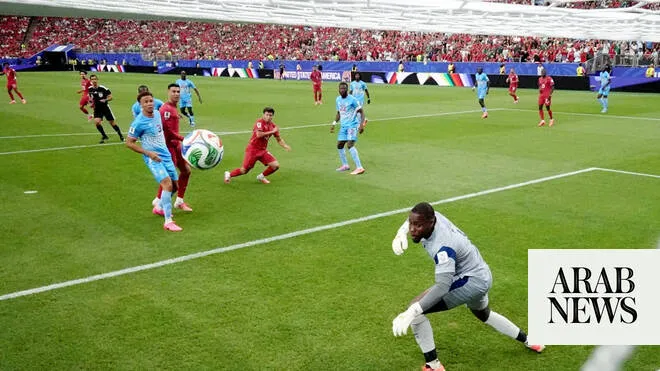
Yoane Wissa scored in first-half stoppage time as the Democratic Republic of Congo secured a surprising 1-1 draw against Portugal in the World Cup Group K opener in Houston. The result immediately reshapes Group K leverage, because one point can dramatically change who can take risks next.
The Democratic Republic of Congo did not just earn a point against Portugal in the World Cup Group K opener. It earned one against the odds, with Yoane Wissa scoring in first-half stoppage time and the team holding on for a surprising 1-1 draw at Houston on Wednesday.
Portugal dominated possession, but the match story turns on a brutally simple detail: Portugal produced just one shot on goal, and DR Congo goalkeeper Lionel Mpasi finished the game without making a save. That is the kind of stat line that makes analysts double-take, because possession usually correlates with chances. Here, possession did not cash in, while DR Congo converted a tight moment into a goal when the clock was already moving into stoppage time.
For executives and investors watching sports for the same reason they watch any competitive ecosystem, this is a reminder that control is not the same as conversion. In business terms, Portugal had the “activity” but not the “output.” They controlled phases of play, but DR Congo repeatedly brought the game back to a single, high-leverage question: can you create a shot on goal, and can you do it at a time when your opponent is least set?
The match also illustrates how group-stage formats punish slow starts and reward timing. Group K, like other World Cup groups, operates on a simple arithmetic that becomes important quickly. With each side beginning group play Wednesday, the draw immediately affects future decisions, game plans, and risk tolerance. Teams that earn a draw often get to play differently in the next match, while teams that concede late or fail to convert dominance might have to become more aggressive sooner than they planned.
Portugal’s dominance of possession would normally look like a safe indicator that the pressure would eventually find a finish. But the sourced account points out that Portugal had only one shot on goal. That mismatch between dominance and effectiveness is where surprises are born. Possession can be a comfort blanket, but without finishing it becomes noise. DR Congo, by contrast, showed the kind of efficiency coaches love: when they had the chance, they made it count.
The fact that Lionel Mpasi recorded no saves is also a strategic clue. If the goalkeeper does not have to intervene, it suggests Portugal’s efforts were not really threatening the target, or that their few attempts were not dangerous enough to force action. From a team-management perspective, that is still a conclusion worth tracking. A goalkeeper “without saves” can imply a stable defensive shape and a disciplined opponent. It can also imply a creative ceiling problem on the other side, the kind of issue that shows up when teams struggle to translate rehearsed possession patterns into actual shooting.
Wissa’s goal in first-half stoppage time adds another layer. Stoppage time goals are momentum accelerators. They can also swing how a coach manages the rest of a half, and how a team returns from the dressing room. In a group opener, those timing swings matter even more. Teams often come into tournaments with plans for controlled starts, but a stoppage-time breakthrough forces adjustments right away, before teams even see the next opponent on their schedule.
This is the second-order implication for anyone who thinks about competition like a system: one point changes the options. With Group K play beginning immediately on Wednesday in Houston, DR Congo’s early result gives it leverage for subsequent matches, and Portugal now has to manage expectations after failing to turn dominance into more than a single shot on goal. In group-stage play, where every game is both a contest and a future planning session, the first match can quietly decide who gets to play freely and who has to chase.
This story's Key Insights and Take-aways are locked.
Create a free account to unlock Executive Actions for one credit.
Register to UnlockAlways free for Executives Club members. Join the Club
More in Entertainment

Russell Brand's accuser 'bewildered and confused' as he denies 7 sex charges
The criminal case against the comedian is a live test of how media companies manage talent risk when serious allegations go public.

'It's a Magic Trick': Ballet Experts Say Rosalía's SNL Pose Is Impossible
Three ballet experts tell Rolling Stone Rosalía's gravity-defying SNL stillness shouldn't be possible - and why the debate is now part of the show.

Activision CMO: GTA 6 Will Boost Call of Duty, Not Bury It
Activision's top marketer says Rockstar's blockbuster will drive players back to consoles and into Modern Warfare 4, even as the company admits its recent strategy failed.