
Dr Toby Kiers charts fungi underground networks up to 100 quadrillion km long
In a new podcast, the evolutionary biologist explains how invisible fungal systems protect planetary health, and why that matters.
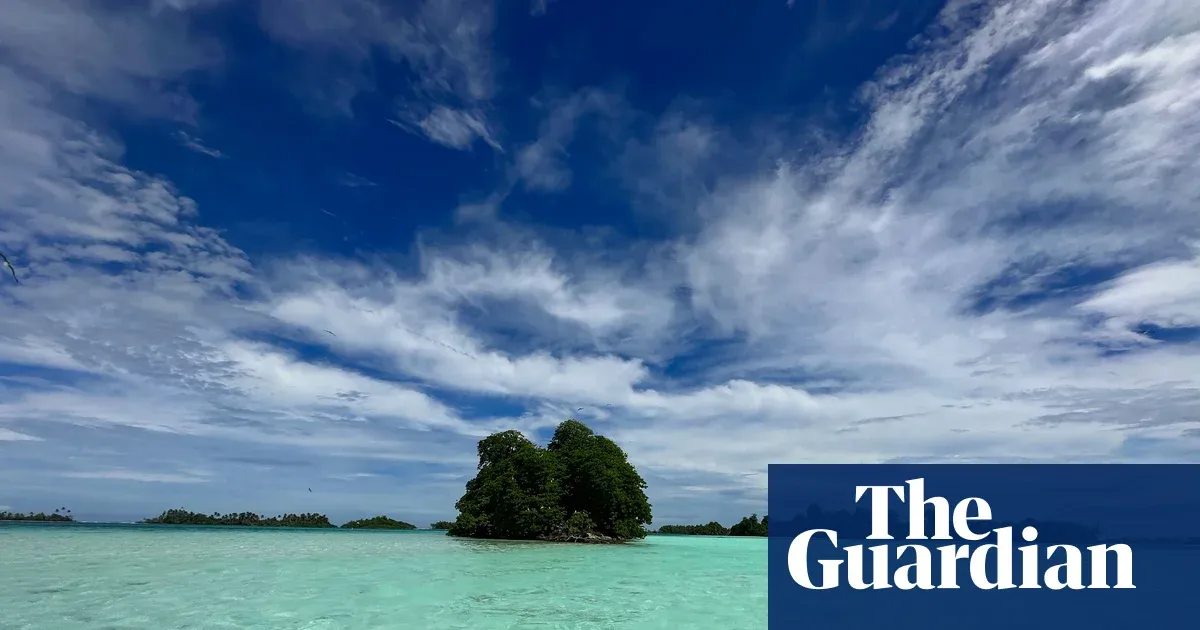
Dr Toby Kiers, an evolutionary biologist and founder of the Society for the Protection of Underground Networks, maps underground fungal networks, including research from remote Palmyra Atoll. Her findings and recognition, including a MacArthur fellowship and a Tyler Prize for Environmental Achievement, push fungi from scientific footnote to central environmental infrastructure.
Scientists have long talked about flora and fauna as the visible backbone of the planet’s health. In a new Guardian podcast, Dr Toby Kiers flips that default. She argues that fungi are a second, largely unseen force doing essential work underground, and she’s spent her career charting those vital underground systems.
Kiers, an evolutionary biologist and founder of the Society for the Protection of Underground Networks, describes research mapping fungal networks on the remote Palmyra Atoll in the Pacific Ocean. The study’s scale is hard to ignore: subterranean fungi networks measure more than 100 quadrillion km in length. The point is not just spectacle. It is that the planet’s resilience can hinge on systems most people never think to look for, because they do not look like trees or animals.
This is the moment where the story becomes more than “cool science.” In ecosystems, what is out of sight often becomes out of mind, even when it drives outcomes. Fungi are a classic example. They operate below ground, across complex soil environments, and they connect living things through networks that are not part of the everyday mental model. Kiers’ work, as described in the podcast, is designed to make those networks visible, measurable, and therefore harder to ignore in decisions about environmental management.
Kiers’ influence comes not only from the research itself, but from the credibility it has earned. Her work has garnered numerous awards, including a MacArthur fellowship and a Tyler Prize for Environmental Achievement, sometimes called the “green” Nobel. That kind of recognition matters in executive rooms and boardrooms because it signals institutional weight. When leading researchers frame an issue in terms of ecosystems and planetary health, it can shift how funders, policymakers, and corporate stakeholders treat the topic. The fungi conversation is not happening in isolation. It is piggybacking on established trust in major scientific and philanthropic platforms.
The Palmyra Atoll case is also strategically important. The podcast describes Kiers mapping fungal networks on a remote Pacific location, which implies the research is not just theoretical or confined to one convenient site. For leaders who manage environmental risk, this is a reminder that “baseline” ecological processes can be global, and sometimes measurable through scientific mapping even in far-flung places. When underground networks are vast, as the study suggests with more than 100 quadrillion km, it raises the stakes for how we think about land use, conservation priorities, and the long-term effects of disturbance.
Now zoom out to the regulatory and governance angle. Environmental policy often prioritizes what is easiest to monitor: forests above ground, visible species counts, measurable pollutants, and clear habitat boundaries. Underground systems are harder to track, and the science can be more technical to translate into standards. That does not mean regulators ignore fungi. It means fungi need to be translated into decision-relevant terms: what they do, how vulnerable they are, and how disruption cascades through ecosystems.
Kiers’ underlying thesis in the podcast is that fungi have an often invisible role in protecting the planet. When an “invisible” component of ecosystem health becomes quantifiable, it can create pressure for better measurement. That can affect everything from how environmental impact assessments are structured to how conservation programs define what “protecting nature” actually covers. It can also influence how corporate sustainability teams design strategies, since soil health and ecosystem function are increasingly discussed in broader ESG frameworks.
For executives and boards, the second-order implication is simple but uncomfortable: if the planet’s protective systems include underground fungal networks, then environmental stewardship cannot be limited to what can be photographed from the surface. The research scale described in the podcast, subterranean fungal networks spanning more than 100 quadrillion km, underlines that the infrastructure of resilience may be both massive and mostly unseen. If you treat ecosystem protection as surface-level compliance, you risk missing the systems that actually buffer the shock of drought, land degradation, and ecological stress. In other words, fungi are not just biology. They are a management problem waiting for attention.
This story's Key Insights and Take-aways are locked.
Create a free account to unlock Executive Actions for one credit.
Register to UnlockAlways free for Executives Club members. Join the Club
More in Science

Alaska's 1,580-foot tsunami had warning signs. Scientists just found them.
Rapid glacier retreat, heavy rainfall, and thousands of tiny tremors preceded Alaska's 1,580-foot tsunami, a warning for every coastal community in a warming world.

The rare mutation that lets high-risk brains dodge Alzheimer's
Scientists found a natural defense against protein buildup, opening a new path to preventive treatments.

3,000 steps a day may halve Alzheimer's decline, study finds
New research links a modest daily walk to less tau buildup and nearly half the cognitive and functional decline, even for those with early signs.