
Dubai adds 1,253 greenfield FDI projects and $8.83bn in 2025, fifth straight crown
A record 7% global share, 38,918 jobs, and top rankings across AI, manufacturing, and logistics reshape what “hot” investment looks like.
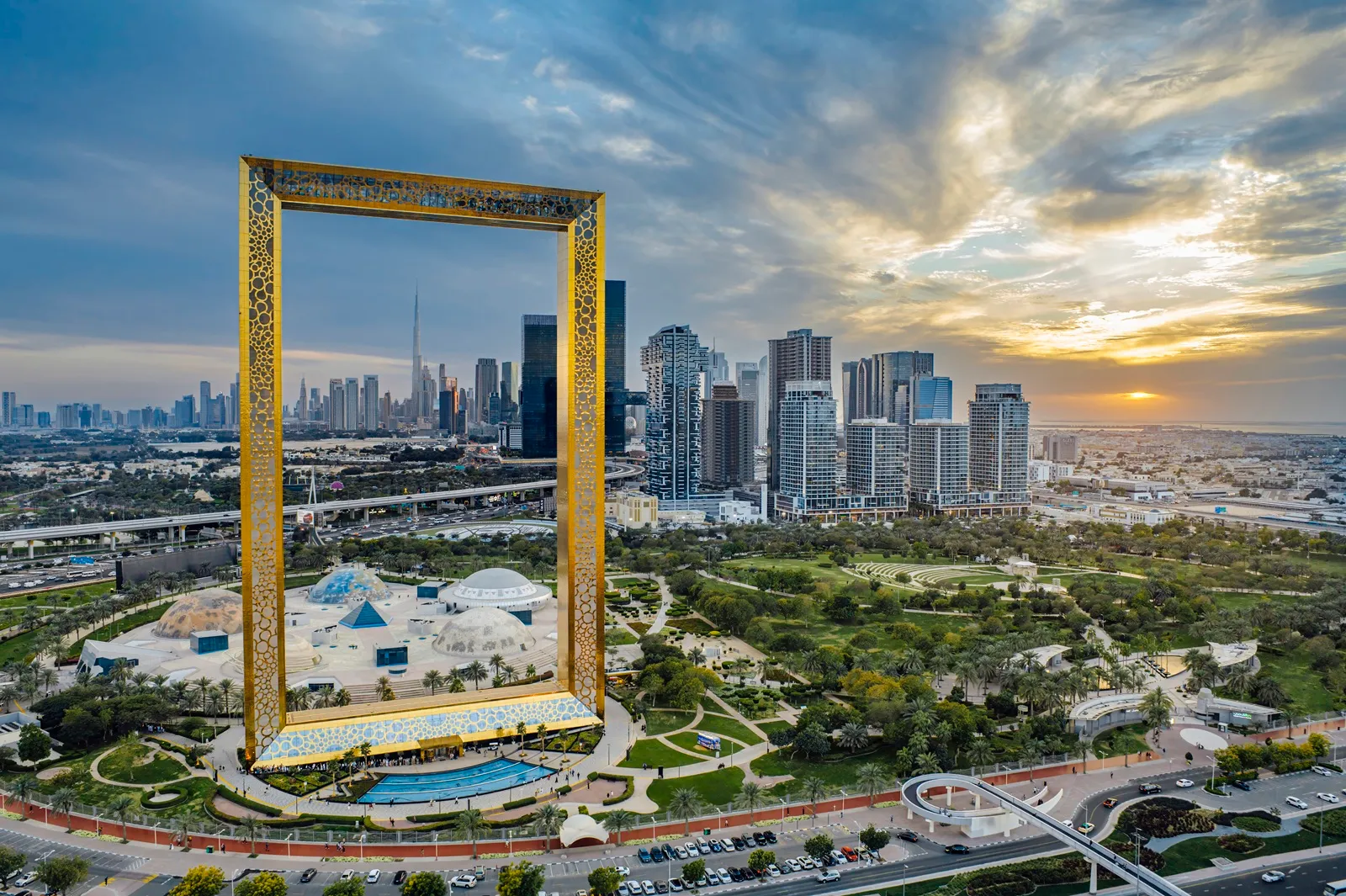
Dubai retained the world’s top destination status for greenfield FDI projects for the fifth consecutive year, with 1,253 projects announced in 2025 and $8.83bn in greenfield FDI capital. For decision-makers, the numbers come with clear sector signals and policy context tied to Dubai Economic Agenda D33 and new incentives.
Dubai just made the case that “attracting investment” is still a competitive sport. For the fifth consecutive year, the emirate topped the world for greenfield foreign direct investment (FDI) projects, landing 1,253 announced projects in 2025, up 10.5% from 2024. It also pulled in AED32.43bn (about $8.83bn) in greenfield FDI capital during 2025, according to data published by Financial Times Ltd’s fDi Markets database.
The stakes here are not just bragging rights. Dubai’s 2025 result included a record 7% share of global greenfield FDI projects, the highest in its history, and it translated into real momentum on the ground. The same fDi Markets database data shows 38,918 jobs created, an 18.8% increase from 32,754 jobs in 2024. That matters for executives because job creation is often where policy intentions turn into operating consequences: hiring demand, supplier ecosystems, and demand for infrastructure and services.
The push is explicitly tied to Dubai Economic Agenda, D33, which aims to double the size of Dubai’s economy by 2033. In comments attributed to Sheikh Hamdan bin Mohammed bin Rashid Al Maktoum, Crown Prince of Dubai, Deputy Prime Minister, Minister of Defence, and Chairman of The Executive Council of Dubai, the message was that this leadership reflects “confidence the world places” in Dubai’s economy, institutions, and vision. He framed the approach as a long-term strategy built on openness, connectivity, strategic partnerships, and creating the conditions for businesses to succeed, adding that Dubai’s competitiveness comes from anticipating change, adapting quickly, and turning global shifts into growth pathways.
If you’re a founder, CFO, investor, or board member, the more interesting part is that the story is not only “more projects,” it is “more types of projects.” The report says Dubai maintained leadership in several categories. It retained global leadership in headquarters greenfield FDI projects for the fourth consecutive year. It also ranked first globally in artificial intelligence-related greenfield FDI projects for the fourth consecutive year. Then there were first-time or breakout signals: Dubai ranked No.1 globally in manufacturing FDI projects for the very first time. And on the logistics side, it secured the top global ranking in transportation and warehousing projects.
There is also a breadth point that tends to be missed in headline summaries. The report notes Dubai was the only destination city worldwide to attract more than 10 greenfield FDI projects across multiple strategic sectors, signaling not just scale but the ability to sustain investment momentum across both traditional and future-focused industries. For decision-makers, that reduces the risk of overexposure to a single thesis. When an investment narrative depends only on one sector, it becomes fragile. A spread across headquarters, AI, manufacturing, and logistics suggests Dubai is positioning as a platform that can absorb multiple industrial waves.
Policy and capital position help explain why those signals might stick. According to the report, Dubai’s annual GDP reached AED937bn ($255.1bn) in 2025, reflecting 5.4% growth, with growth accelerating in the fourth quarter to 6.4%, despite continued volatility in global markets. Officials also pointed to the environment being built for deeper operational presence, not short-term positioning. The CEO of the city’s Economic Development Corporation (DEDC), the economic development arm of the Department of Economy and Tourism (DET), Hadi Badri, said the scale and quality of FDI inflows reflect sustained global confidence in Dubai’s long-term growth trajectory, and he highlighted the diversity of flows across headquarters and high-value manufacturing to AI, FinTech, logistics, and creative industries.
On the incentive front, Dubai also highlighted a recently announced AED2.5bn ($680.6m) economic incentive package. The package includes fee deferrals, customs grace periods, and streamlined residency permit processes designed to support business growth, talent attraction, and long-term investment. If you’re mapping how investment pipelines are built, these details are not window dressing. They directly affect working capital timing (fee deferrals), onboarding speed (residency permit processes), and friction at the border (customs grace periods), which can determine whether expansions start on schedule or slip.
Finally, the report frames investor geography as another strategic lever. It says Dubai FDI Monitor data showed continued investment confidence from North America, Europe, Asia, and the GCC, and officials said geographic diversity reinforces Dubai’s role as a bridge between East and West, supported by connectivity, trade facilitation reforms, and a continuously modernised regulatory environment. In plain terms: diversified investor origin reduces dependence on any single macro region and can stabilize deal flow when conditions shift.
The bigger strategic takeaway for peers is simple: Dubai is treating FDI like an operating system, not a one-off campaign. When a city can pair record project volumes and capital inflows with category leadership across AI, manufacturing, and logistics, plus incentives aimed at execution and talent, it becomes harder for competing jurisdictions to outbid on paperwork alone. For boards and investment committees, the message is that “where capital goes” is increasingly about the full bundle: numbers, sector depth, regulatory friction, and the practical ability to turn announcements into jobs.
This story's Key Insights and Take-aways are locked.
Create a free account to unlock Executive Actions for one credit.
Register to UnlockAlways free for Executives Club members. Join the Club
More in Business

SpaceX sells $25B in debt under two weeks after IPO, despite $90B in orders
The satellite and rocket company’s quick $25 billion borrowing move signals how it plans to finance scale after going public.
Accenture’s $4.18bn play fails as AI fears spark a 20% worst-ever stock plunge
On Thursday, Accenture hit its biggest one-day drop on record after forecasting worries that AI could hollow out consulting.

SpaceX stock jumps 3% after it overtakes Amazon’s market cap
CNBC says SpaceX’s shares surge following its IPO Friday, forcing investors to reprice what “space” and “AI” are worth.