
Dutch navy tests Royal Net unmanned “Defender 1” off Den Helder to keep people away
Capt Sjoerd Feenstra leads a five-week mission proving how AI-driven unmanned systems reshape sea defenses.
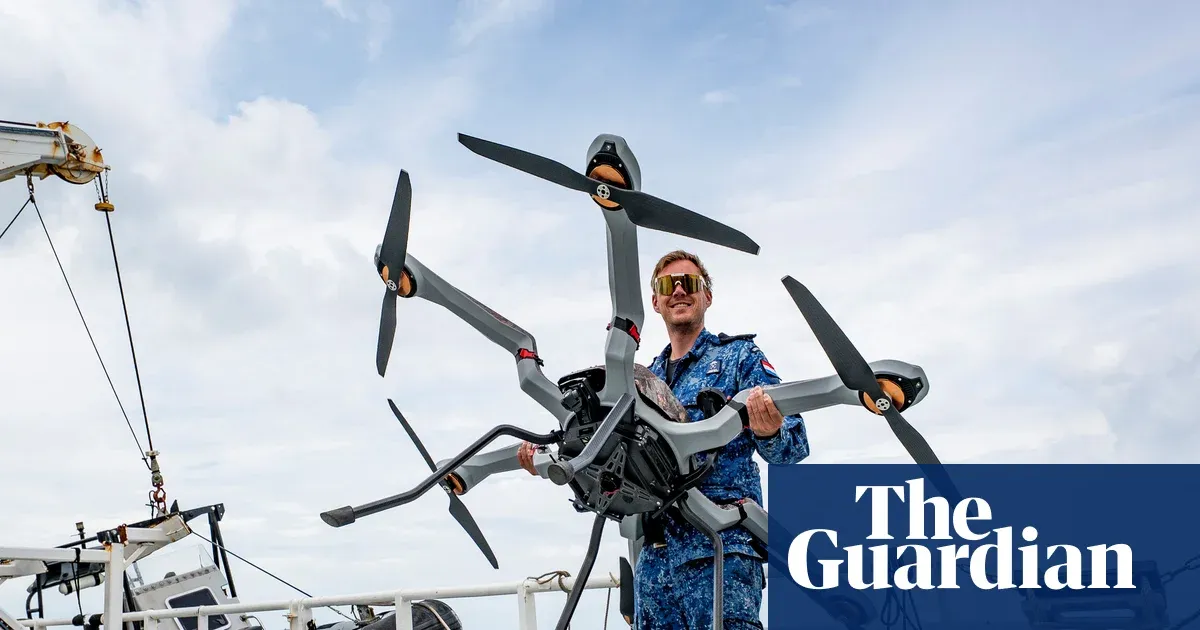
Capt Sjoerd Feenstra, head of the expertise centre for unmanned systems, is leading a five-week mission off Den Helder to test unmanned operating limits for the Royal Netherlands Navy. The result is a practical blueprint for decision-makers trying to move defense capabilities forward while minimizing personnel exposure.
On each side of the target ship, two black unmanned vessels keep a watchful distance. The Royal Netherlands Navy calls them Defender 1 and Defender 2, and the key detail is not just that they are unmanned, but that their paths are controlled by a computer system with no one onboard.
Capt Sjoerd Feenstra, head of the expertise centre for unmanned systems, is leading a five-week mission off the coast of Den Helder in the north of the Netherlands to test the limits of systems that operate without the human touch. In plain English, the experiment is about whether autonomy can safely handle the “eyes and ears” job during complex maritime scenarios, not just the low-drama, clean-room demos.
This matters because armed forces are under constant pressure to do two things that often fight each other: expand capability and reduce risk to personnel. The Dutch framing, echoed in Feenstra’s focus, is explicitly about “keeping people out of danger zones.” That incentive shape is familiar across defense tech, but the way it shows up here is concrete: rather than sending crews to physically surveil and maneuver near a target, the navy can use unmanned systems to maintain separation, track, and respond while the humans stay elsewhere.
The vessels being controlled by a computer system also points to why this is more than a platform story. In modern defense environments, autonomy is not a single switch you flip. It is a stack of decisions, from navigation and collision avoidance to sensor interpretation and control loops that must work under maritime uncertainty like weather, interference, and moving targets. A five-week test window is not “a year-long program” either, which signals the navy is trying to find operational boundaries quickly. That is a board-level issue because it changes how fast leaders can plan procurement, training, and integration with existing command-and-control systems.
There is also an institutional angle. Feenstra leads an expertise centre for unmanned systems, which suggests the Netherlands is trying to build internal competence rather than rely entirely on vendors. When militaries create specialist centers, they usually want repeatable results: test protocols that can be reused, lessons that can be rolled into procurement decisions, and an internal understanding of where unmanned systems succeed and where they fail. Defender 1 and Defender 2 are essentially testbeds for that learning cycle, the practical “future of the Royal Netherlands Navy” that Feenstra describes.
If you zoom out, this fits into a broader market and policy direction that executives outside defense are also watching. Uncrewed systems are increasingly seen as a future baseline across armed forces, not a niche supplement. But the path from “promising” to “deployable” is where governance lives. Regulators and policymakers are often focused on safety, operational accountability, and rules of engagement, meaning autonomy is scrutinized in terms of how command authority is maintained, how risk is managed, and how systems behave when conditions diverge from expectations. Even when the source does not spell out regulatory details, the testing approach itself signals the kind of evidence that compliance-minded stakeholders look for: controlled trials, measured boundaries, and documented performance.
Second-order implications land hardest for decision-makers with limited appetite for long, uncertain development cycles. If unmanned systems truly can operate effectively without onboard humans, the defense value proposition shifts from “labor replacement” to “risk reduction and operational persistence.” More missions can be conducted without escalating personnel exposure, and assets can remain on station longer. For boards and finance teams, that can change lifecycle assumptions, including how budgets are allocated across sensors, autonomy software, communications infrastructure, and training for operators who supervise systems rather than physically pilot them.
There is also a human capital shift hidden inside the technology. If the “eyes and ears” are unmanned and paths are computer-controlled, the relevant expertise moves toward system supervision, mission planning, and interpretation of autonomous behavior. That affects procurement too: it is not enough to buy hulls or drones, leaders need to budget for software validation, integration testing, and the processes that translate test learnings into standard operating procedures.
Bottom line: the Dutch navy is using Defender 1 and Defender 2 as a real-world proving ground under Capt Sjoerd Feenstra for autonomy at sea, with a five-week mission off Den Helder designed to test the limits of unmanned operation. If this kind of system works as intended, it accelerates a future where sea defense can expand without scaling frontline exposure, which is exactly the kind of strategic trade-off many defense leaders are racing to solve.
This story's Key Insights and Take-aways are locked.
Create a free account to unlock Executive Actions for one credit.
Register to UnlockAlways free for Executives Club members. Join the Club
More in Technology

Google quietly links your phone number to every Android account on your SIM
Adding a SIM now ties your phone number to all Google accounts - and future accounts inherit it. Here's the security and privacy stakes.

Hijacker AI 'Skynet mode' runs 100,000 attack steps against exposed models
Symantec caught a criminal AI agent that borrows other models, steals data, and mines crypto; the only relief is no confirmed victims yet.

Nvidia's AI-financier shift faces its first big test as neoclouds stumble
A rout in neocloud stocks is forcing investors to weigh Nvidia's hidden exposure as both supplier and lender to the AI buildout.