

Electricians question data center buildouts as Big Tech money meets growing public backlash
Behind the concrete and contracts, some workers are starting to ask whether the projects are worth it.

The WIRED piece describes a wave of Big Tech data center buildouts funded with large sums, alongside rising national opposition to those facilities. It highlights that, as resistance spreads, some workers in the space are beginning to question whether building these sites is actually worth their effort.
Big Tech is spending heavily on data center buildouts, and the WIRED reporting points to a new pressure point: national opposition to the facilities is growing, and some workers are starting to question whether it’s worth it. In other words, the story is no longer just about capital allocation and capacity planning. It’s also about trust, legitimacy, and whether the people doing the physical work see the mission the way leadership does.
That tension matters because data centers are not abstract. They are roads, excavation, substations, cooling systems, and teams showing up to build and maintain infrastructure that powers cloud services, streaming, AI workloads, and corporate networks. When those projects face sustained resistance in communities, the conflict can move from headlines to job sites. The WIRED source frames this as a moment where some workers are beginning to challenge the value of the work as opposition ramps up.
To understand why this is showing up with electricians and other skilled trades, you have to look at how data center buildouts actually happen. Large operators typically rely on contractors and subcontractors to deliver construction and ongoing operations. Those workers often experience delays, changing requirements, and heightened security or compliance steps when projects run into community opposition. Over time, that environment can make the incentives feel less like a clean “build and get paid” proposition and more like an ongoing trade-off between professional obligations and reputational risk.
On the funding side, Big Tech’s investment appetite is straightforward: demand for compute and storage keeps climbing, and companies need power, cooling, and network connectivity at scale. Data centers are where that demand becomes physical reality. But national opposition introduces another constraint that capital markets do not automatically price in. Even if a project is technically feasible, it can become socially and politically costly. That can translate into permitting friction, longer timelines, reputational blowback, and tougher public narratives that executives have to manage alongside procurement and engineering.
There is also a feedback loop between optics and execution. When the public storyline shifts from “infrastructure that supports modern life” to “facilities that strain communities,” leadership has to respond. Some companies may try to reframe benefits like jobs, reliability, and local economic activity. Others may invest in mitigation steps. But on the ground, the workers are often living the consequences of whatever strategy is chosen. If opposition leads to protests, disruptions, or heightened sensitivities around construction sites, a worker’s lived experience of the project can start to diverge from the corporate messaging.
For decision-makers, the operational takeaway is blunt: labor sentiment and community sentiment can intertwine. A board or executive team might think the key risks are cost overruns, grid constraints, or contracting timelines. WIRED is signaling an additional risk channel, one that shows up through people. If skilled workers begin to question whether these buildouts are worth it, it can affect recruiting, retention, and willingness to take on extra effort during contentious phases of development.
Second-order implications are even more important. Data center buildouts are not one-and-done projects. They require long-term operations, upgrades, and maintenance. The same contractors and worker ecosystems that deliver initial construction often continue into ongoing support. If opposition becomes normalized in particular regions, the talent pipeline and partner network could shift. That might not show up in a quarterly earnings call immediately, but it can surface later as operational friction, higher costs, or slower execution.
The strategic stake for executives is that “capacity growth” is now inseparable from “social license.” WIRED’s framing is not that Big Tech should stop investing, or that every worker will refuse to build. It is that the equation has changed. As national opposition grows, workers are beginning to question the value of the work. If you are leading a company planning data center expansion, that is a signal to treat community dynamics and labor sentiment as core execution variables, not side quests.
This story's Key Insights and Take-aways are locked.
Create a free account to unlock Executive Actions for one credit.
Register to UnlockAlways free for Executives Club members. Join the Club
More in Technology

iPhone Duo screens crack above hinge - Apple confirms issue, iFixit tears it down
Within hours of launch, new foldables broke at the crease. Apple is replacing units, and teardown expert Shahram Mokhtari is inside the hinge.
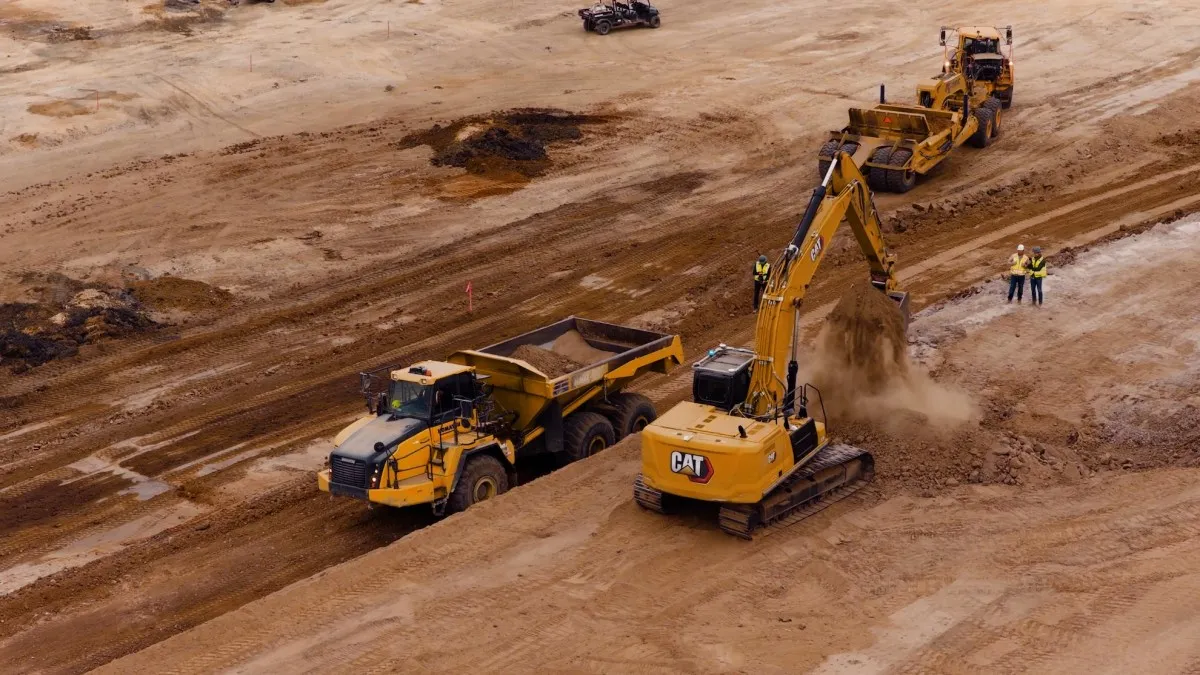
Self-driving excavator startup Bedrock digs up $600M, now worth $4.1B
Bedrock Robotics banks $600M to automate excavators, valuing the startup at $4.1B.

Microsoft offers buyouts to 60,000 as AI efficiency push reshapes its workforce
The voluntary buyout offer is the clearest sign yet that Microsoft will trim headcount even as it accelerates AI infrastructure spending.