
Elon Musk backs UBI for AI job losses. NYT spent a year with recipients
The Times' year-long look at universal basic income tests the tech world's favorite safety net against the AI disruption it is meant to soften.

Elon Musk and other tech leaders have promoted universal basic income as a buffer against AI-driven job losses, and The New York Times spent more than a year following UBI recipients. For decision-makers, the reporting is a real-world check on whether a guaranteed cash floor can hold up as AI reshapes work.
For more than a year, The New York Times followed recipients of universal basic income programs, the cash-transfer experiments that Elon Musk and other tech leaders have promoted as a backstop against AI-fueled job losses. The reporting puts a human face on the tech industry's favorite answer to the disruption it is itself accelerating, and it arrives just as generative AI begins to touch white-collar work at scale. Musk has repeatedly said that some form of universal income will become necessary when AI displaces workers, and his endorsement has helped push UBI from academic fringe to boardroom talking point. The Times' year-long observation of recipients tests that theory against lived experience, not just hypotheticals.
The stakes are immediate for any executive planning around AI. If UBI becomes policy, it will reshape labor costs, consumer spending, and the tax base that companies operate within. If it stays a pilot, the experiments still offer a preview of how governments might respond to automation-driven unemployment. The Times' reporting follows people actually receiving regular cash payments, which is the core mechanism of UBI: no work requirement, no means-testing beyond income, no strings attached. That design is what makes UBI distinct from traditional welfare, and it is also what makes it politically charged. The question the reporting circles is whether a guaranteed income can genuinely cushion the blow of AI-driven job losses, or whether it simply papers over a deeper structural shift.
UBI is not a new idea. Philosophers and economists have debated it for centuries, and the modern version gained traction in Silicon Valley as a response to the fear that automation would hollow out the labor market. Pilot programs have run in places like Stockton, California, Finland, Kenya, and several U.S. cities, typically giving recipients between $500 and $1,000 per month. Historically, the results have been mixed: some studies show modest reductions in work hours, others show gains in entrepreneurship and mental health, and nearly all show improved financial stability. But the pilots are small, short-term, and often underfunded, which makes it hard to extrapolate to a national program. The Times' year-long follow-up adds a layer of qualitative evidence that spreadsheets cannot capture, showing how recipients actually navigate rent, healthcare, and job searches when cash arrives predictably.
The timing matters because AI job-loss forecasts are becoming more concrete. Economists and consulting firms have projected that millions of jobs could be automated in the coming decade, with clerical, customer service, and even entry-level analytical roles at the highest risk. Unlike previous waves of automation that hit manufacturing, this one is aimed squarely at the knowledge economy where many of the readers of this briefing work. That is why UBI has moved from a curiosity to a serious policy option in places like California and the European Union, and why Musk's advocacy carries weight. He is not just a tech founder; he runs companies that are actively building AI and robotics, which gives his endorsement a self-interested edge that critics are quick to point out.
For executives, the reporting is a reminder that the social contract around work is being rewritten in real time. If UBI gains traction, it will likely be funded through higher taxes on corporations and high earners, which would directly affect margins and shareholder returns. Companies that automate aggressively may face public pressure to contribute to the safety net, either through taxes or through voluntary programs like reskilling funds. At the same time, UBI could be a tailwind for consumer spending, because cash transfers tend to be spent quickly on housing, food, and services. A board that ignores UBI is ignoring a potential shift in the operating environment, not just a philosophical debate.
The New York Times' decision to follow recipients for over a year also signals that UBI is being treated as a serious policy experiment, not a Silicon Valley fantasy. The reporting will likely inform how policymakers, investors, and business leaders talk about AI's social costs. For CEOs, the strategic takeaway is to track these experiments as leading indicators. If UBI pilots expand and show positive outcomes, the political case for a national program strengthens, and the tax and regulatory landscape could change faster than most companies expect. If the pilots reveal problems, the burden shifts back to companies to demonstrate that AI creates more jobs than it destroys.
Either way, the conversation has moved from whether AI will displace workers to what happens to those workers after the displacement. UBI is one answer, but it is not the only one. Retraining, portable benefits, and job guarantees are all on the table, and the private sector will have a voice in which approach wins. The Times' year-long look at UBI recipients is a useful stress test for all of those options, because it grounds the debate in the reality of people's lives. For a founder or operator building an AI-powered business, the smartest move is to watch this space closely, because the political response to AI job losses will shape the cost of labor, the level of taxation, and the social license to automate for years to come.
This story's Key Insights and Take-aways are locked.
Create a free account to unlock Executive Actions for one credit.
Register to UnlockAlways free for Executives Club members. Join the Club
More in Technology

Cop fired after sharing Flock login with ICE husband: 983 searches
A Savannah officer's shared credential let an ICE agent run hundreds of plate searches on Hispanic drivers, exposing a surveillance backdoor.
Elizabeth Holmes doc 'You Can See Everything' posts second-biggest doc debut ever
The true-crime draw shows fraud narratives still sell - a signal for media execs and a caution for founders.
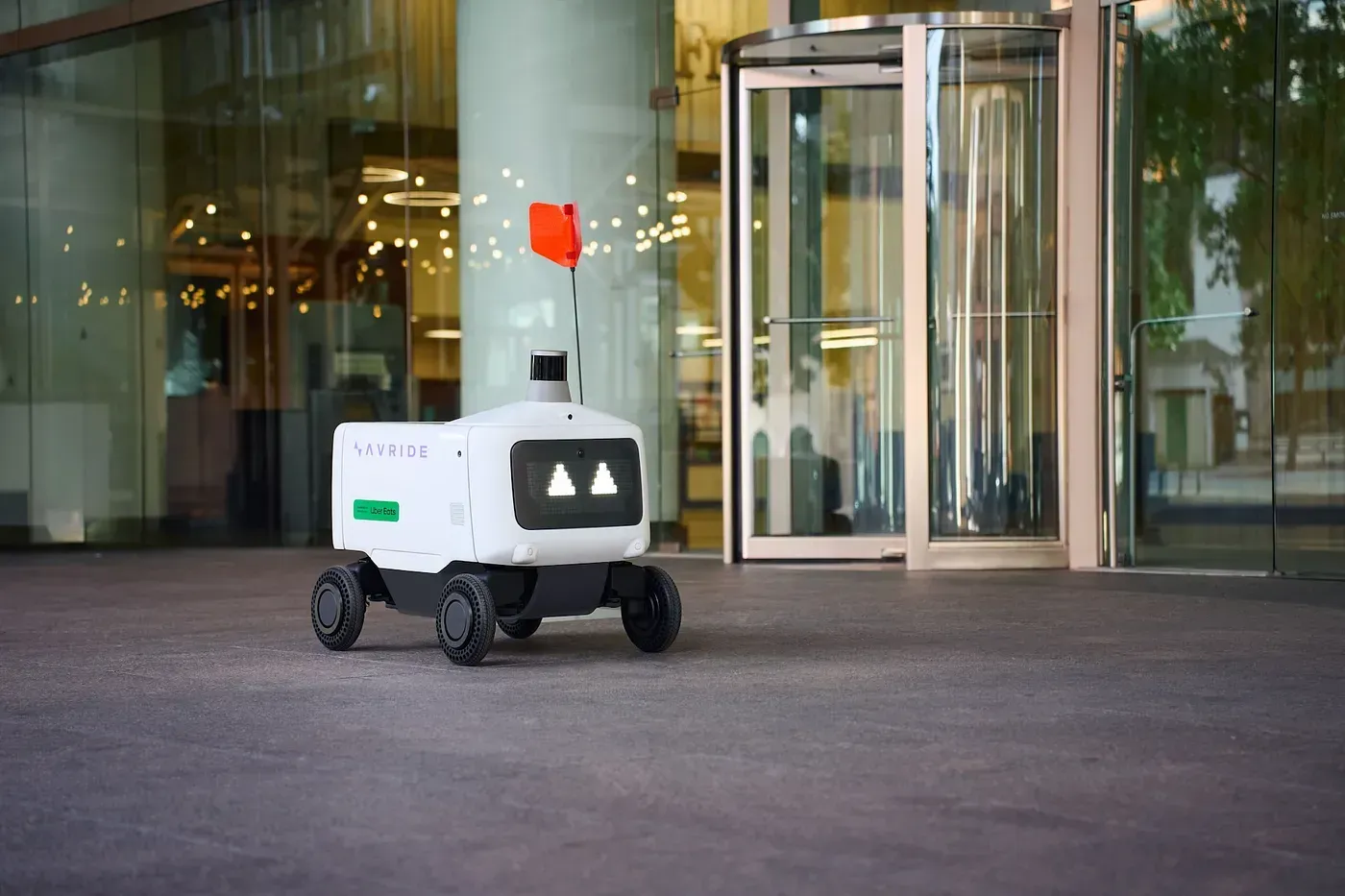
She blocked an Uber delivery robot to save jobs. Police arrested her.
Carolyn Marvin's disorderly conduct arrest turns a sidewalk standoff into a test case for how cities police the automation-versus-workforce debate.