
Elon Musk is no longer a trillionaire after Tuesday’s global tech rout hits SpaceX
A market slump knocked down Elon Musk’s wealth and raises fresh questions for boards tied to volatile tech cycles.
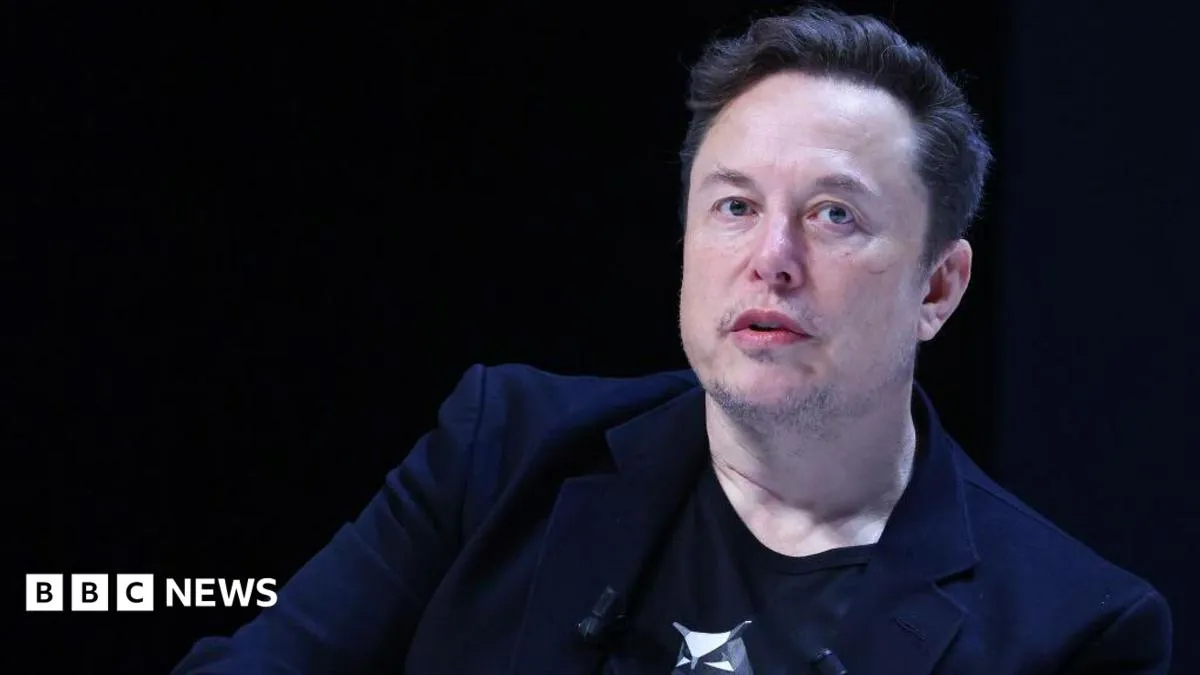
Elon Musk lost his trillionaire status on Tuesday after a brutal global tech rout erased billions from his wealth. For decision-makers, it is another reminder that even dominant tech founders can get repriced overnight when markets freeze.
Elon Musk lost his trillionaire status on Tuesday, as a brutal global tech rout erased billions from his wealth. The headline number matters less than the mechanism. In a risk-off environment, valuations that were built on growth expectations get cut fast, and the “paper wealth” that once looked sticky turns into something far more fragile.
For executives, the key detail is timing and contagion. Musk’s wealth is heavily linked to technology and high-volatility growth assets, and when global tech sentiment turns, those assets tend to move together. Tuesday’s selloff was not a subtle drift. It was a rout, the kind that shrinks market confidence across the board and forces investors to trim exposure at the same moment. That is why a single day can decide whether someone stays in a rare financial club.
There is also a second layer here: SpaceX is part of the broader tech and capital story, even when the company itself is not the one being “traded” in the same way as public equities. In practice, market routs tend to spill over into funding conditions, partner behavior, and the cost of capital for companies operating in expensive, long-horizon industries like aerospace. When investors de-risk, they can become more selective about who gets funded, what milestones matter, and how quickly they expect progress. The consequence is not necessarily an immediate operational failure. It is a potential shift in how capital markets price uncertainty.
For boards and senior operators, this is a governance and incentives issue disguised as a market headline. Founder-driven companies often have a tight loop between equity valuations and personal wealth. When that wealth drops, it can change optics for leadership credibility, even if the underlying business performance has not changed. Investors and employees watch those signals. So do lenders and strategic partners. In routs, perceptions compress into a single data point: the market cap and the billionaire ranking. That compression is what can influence negotiations, fundraising momentum, and internal morale.
Regulatory framing matters too, even when the trigger is purely market-driven. Aerospace, launch systems, and related technology are subject to evolving oversight and licensing environments across jurisdictions. In normal conditions, regulators and governments can be slow-moving but predictable. During market stress, however, political and public attention can intensify, and companies may face heightened scrutiny about risk, timelines, and spending priorities. None of that is implied by the wealth change alone. But decision-makers should recognize that market volatility can increase the operational noise around companies in regulated, strategic sectors.
There is also the global “tech rout” angle, which signals how synchronized the market may be. When investors treat tech as one basket, they tend to sell across many names, not because each company suddenly became worse on fundamentals, but because macro conditions change the discount rate and liquidity preferences. That is why the loss of trillionaire status can happen even if a company like SpaceX has not “failed” in the way the word implies. It happens because markets reprice future potential quickly, and those repricings propagate through portfolios.
The strategic stakes extend beyond Musk personally. For other executives and board members at high-growth, high-uncertainty firms, the message is blunt: valuation regimes can reverse in days. If your strategy assumes continuous access to favorable capital, you need a plan for what happens when the market turns risk-off. If your company ties employee incentives to equity values, you need to manage expectations during volatility. If your leadership team is founder-centric, you need to communicate clearly that market price is not the same thing as operational reality.
Tuesday’s development is a clean example of the second-order effect executives should plan for: a rout can erase billions and change status rankings, even when the underlying businesses continue operating. The market can move faster than internal dashboards. In that gap, governance has to be ready. Because the next time global tech sentiment snaps the other way, the question will not be whether your company is performing. It will be whether your leadership can stay steady while the market recalculates what it thinks the future is worth.
This story's Key Insights and Take-aways are locked.
Create a free account to unlock Executive Actions for one credit.
Register to UnlockAlways free for Executives Club members. Join the Club
More in Business

SpaceX sells $25B in debt under two weeks after IPO, despite $90B in orders
The satellite and rocket company’s quick $25 billion borrowing move signals how it plans to finance scale after going public.

Accenture’s $4.18bn play fails as AI fears spark a 20% worst-ever stock plunge
On Thursday, Accenture hit its biggest one-day drop on record after forecasting worries that AI could hollow out consulting.

SpaceX stock jumps 3% after it overtakes Amazon’s market cap
CNBC says SpaceX’s shares surge following its IPO Friday, forcing investors to reprice what “space” and “AI” are worth.