

Elon Musk’s Grok Imagine will ship a “historically accurate” Odyssey movie before year-end
Aiming for Homer-true AI filmmaking, Musk also keeps poking Christopher Nolan’s casting choices.
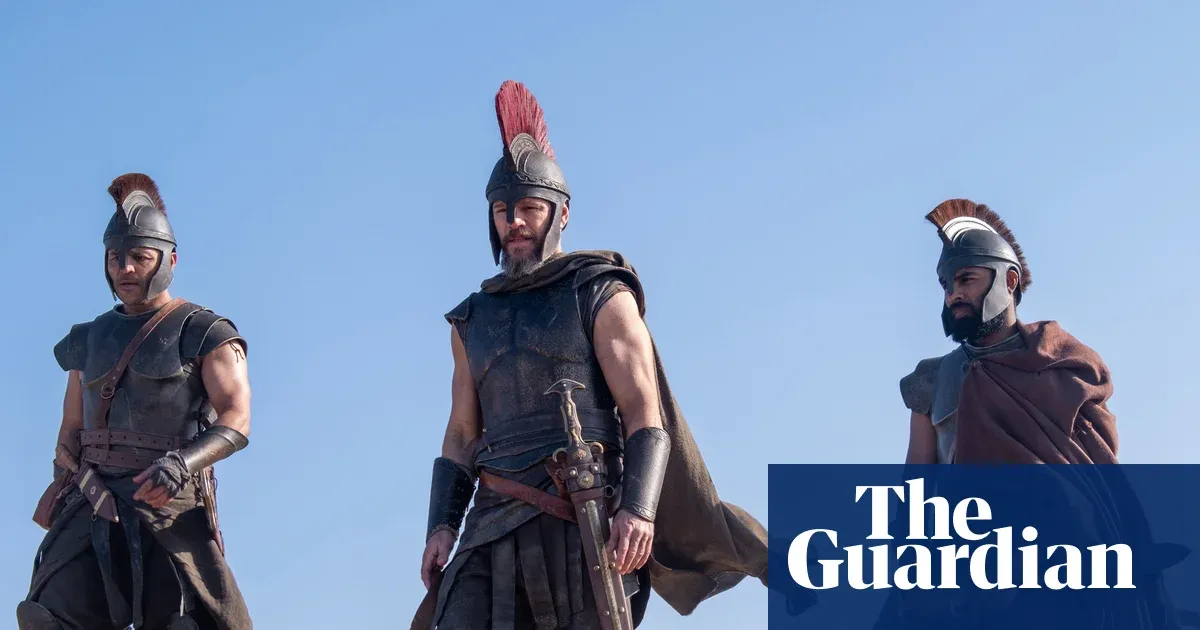
Elon Musk says Grok Imagine will produce a full-length, “historically accurate” AI adaptation of Homer’s Odyssey before this year ends. For decision-makers, it signals how fast synthetic media is moving from novelty to product and how public disputes over “accuracy” could become a distribution strategy.
Elon Musk says his AI platform Grok Imagine will make a full-length movie adaptation of Homer’s The Odyssey that is “historically accurate” and “true to the art of Homer” before this year ends. In a post on X, he set a specific promise and attached a clip showing what he claims was generated through the system, including a scene between Odysseus and the nymph Calypso.
Musk’s framing matters: this is not “inspired by” content, at least according to his marketing language. He told followers that Grok Imagine will deliver a historically accurate Odyssey, and he even linked to a post containing a three-minute clip of footage described as generated from Grok Imagine. The payoff the reader should expect is straightforward. Musk is positioning Grok Imagine as an AI filmmaking tool that can handle adaptation claims, not just short-form demos.
If you are trying to understand why executives should care, watch the pattern. Musk has repeatedly criticized Christopher Nolan’s blockbuster adaptation of The Odyssey (the Guardian notes he has regularly criticized Nolan’s blockbuster over its casting choices). Now Musk is taking that same cultural flashpoint and turning it into product positioning. The stated goal is historical accuracy. The immediate audience signal is that Grok Imagine will not only generate images and scenes, it will try to win legitimacy by aligning with a specific standard of “truth” to the source material.
This is where it gets interesting from a boardroom perspective: debates about adaptation are turning into a competitive axis in synthetic media. In traditional entertainment, “historical accuracy” is usually negotiated through writers’ rooms, historians, and production teams. With AI generation, accuracy claims can become a differentiator that is easy to market and hard to verify from the outside. Musk is essentially betting that the market will treat his standard as credible because he says it is. For decision-makers, the strategic question becomes: if legitimacy can be asserted faster than it can be audited, then speed and narrative control become part of the competitive moat.
There is also a compliance and regulatory gravity shift hiding behind the hype. Synthetic film content is increasingly scrutinized around rights, provenance, and the disclosure of AI involvement. Even when a project is aimed at literature like Homer’s Odyssey, real-world production involves training data, asset sourcing, and claims about what is “historically accurate.” Regulators in many jurisdictions are still working out how to handle deepfakes, generative media attribution, and consumer deception. Musk’s public commitment to an “AI-generated film” that is “historically accurate” could invite extra attention, because accuracy is exactly the kind of claim that can trigger consumer protection scrutiny if audiences feel misled.
Meanwhile, the economics are moving fast. A “full-length movie” aspiration is a step up from the typical AI content lifecycle of short clips and concept trailers. Full-length output changes how companies think about compute costs, rendering pipelines, iterative revision, and release logistics. A three-minute clip is one thing. A feature-length film forces operational questions: how consistently the system maintains style and continuity, how production teams correct errors, and how quickly the model can generate assets without producing content that is off-brand, off-script, or legally risky.
And then there is the reputational and partnership angle. Musk’s public disagreements with mainstream Hollywood figures, like Nolan, are not just commentary. They are a brand posture. If Grok Imagine’s Odyssey lands as “true to the art of Homer,” Musk gains a cultural win that can attract both users and talent ecosystems interested in alternative production models. If it misses, the same “accuracy” promise becomes a vulnerability. Either way, the moment is a live test of whether synthetic media can earn trust with audiences, or whether it stays trapped as spectacle.
Peers watching this will notice the underlying move: Musk is using a classic story, Homer’s Odyssey, to turn AI generation into a claim about authenticity. That is a high-stakes bet in entertainment technology because authenticity is what converts novelty into market adoption. Decision-makers in AI media, content platforms, and investor circles should treat this as a signpost. When a high-profile founder ties a product roadmap to “historical accuracy,” the conversation will quickly expand beyond capability to credibility, compliance, and consumer perception. The companies that figure out how to ship fast and still handle the legitimacy problem will set the pace for everyone else.
This story's Key Insights and Take-aways are locked.
Create a free account to unlock Executive Actions for one credit.
Register to UnlockAlways free for Executives Club members. Join the Club
More in Technology

Nvidia's $89B data center quarter: the 9 companies cashing in
The AI buildout is minting fortunes beyond GPUs, and memory, cloud, and cooling suppliers are riding the same wave.

Google quietly links your phone number to every Android account on your SIM
Adding a SIM now ties your phone number to all Google accounts - and future accounts inherit it. Here's the security and privacy stakes.

Hijacker AI 'Skynet mode' runs 100,000 attack steps against exposed models
Symantec caught a criminal AI agent that borrows other models, steals data, and mines crypto; the only relief is no confirmed victims yet.