
Elon Musk says he's had AI 'psychosis' half a dozen times this year
Musk's confession turns AI psychosis into a leadership credential, but the real risk is for executives who mistake hype for strategy.
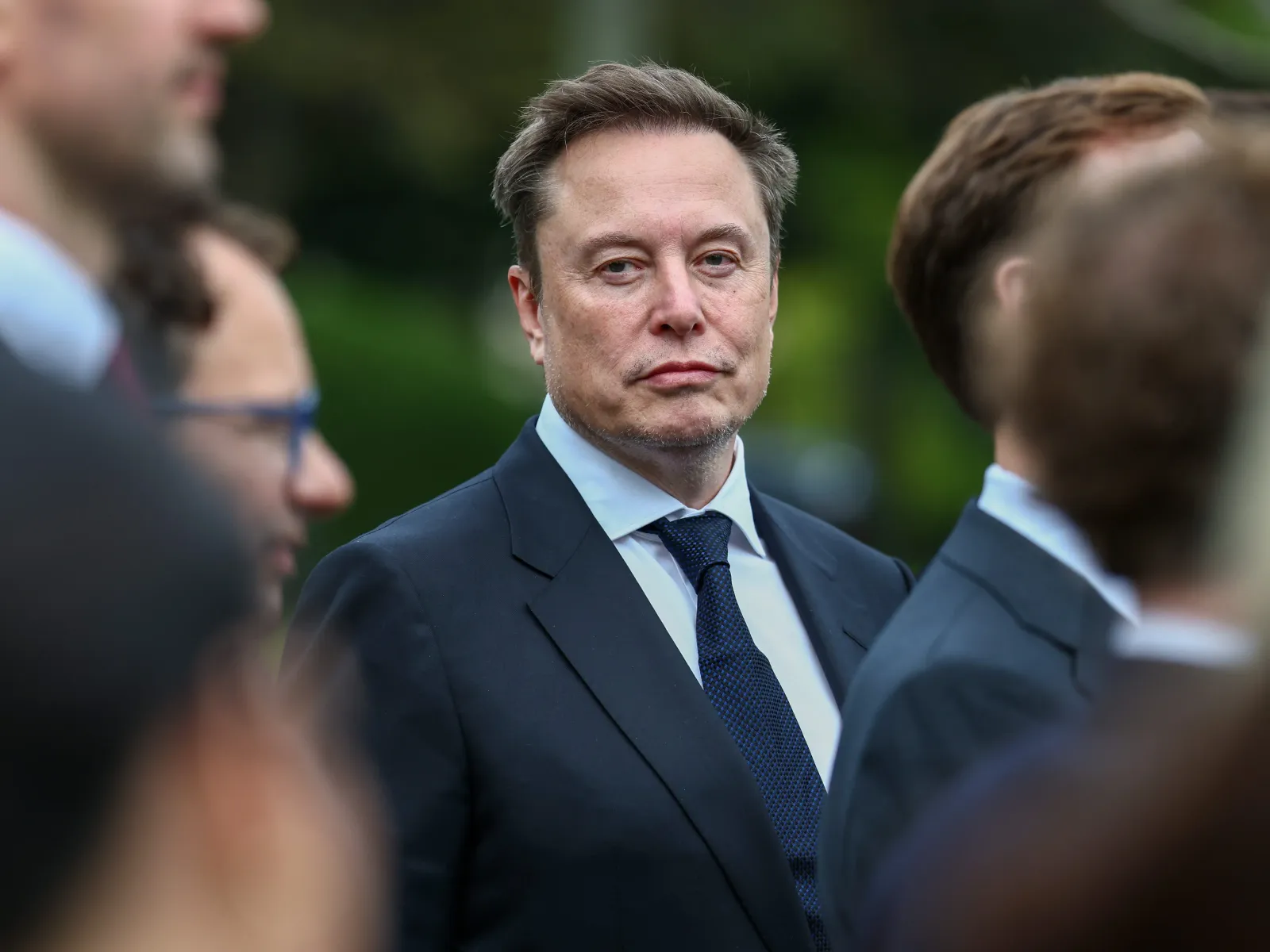
Elon Musk, CEO of Tesla and xAI, said at the X Takeover event that he has experienced 'AI or SI psychosis' about half a dozen times in the past year. For decision-makers, the admission underscores how even the most powerful tech leaders are grappling with AI's psychological and strategic fallout, making it critical to separate genuine insight from hype.
Elon Musk, the CEO of Tesla and SpaceX, admitted over the weekend that he has experienced what he calls 'AI or SI psychosis' roughly half a dozen times in the past year. Speaking at the X Takeover event on Saturday, Musk struck an unusually reflective tone, saying, 'I've got a little bit of cyber psychosis. Maybe a lot actually.' The confession is striking not just because it comes from one of the most influential figures in tech, but because it turns a term once used as an insult into a badge of honor.
AI psychosis is not a clinical term, and it lacks a fixed definition. It is often used to describe how repeated AI use can deepen a user's delusions, and it has been thrown as an insult at techies who have gone all-in on AI. But in recent months, the phrase has been reclaimed. At a May party, attendees chanted 'One, two, three - AI PSYCHOSIS!' Venture capitalist Marc Andreessen championed 'AIPAAS' - AI Psychosis As A Service - and called the opposite 'AI cope.' Y Combinator CEO Garry Tan joked in March, 'I have cyber psychosis, but I think a third of the CEOs that I know have it as well.' Some psychiatrists also consider it a mental health condition when AI negatively impacts pre-existing vulnerabilities, adding a clinical edge to the meme.
Musk's own 'psychosis' was tied to his belief that AI could grasp aesthetics. 'You're like, "Wow, AI can do good taste? That's wild,"' he said. The remark reflects a deeper tension: even as AI capabilities accelerate, the people building and deploying it are struggling to process what it means. For executives, the episode is a reminder that the AI boom is as much a psychological phenomenon as a technological one. The term 'super intelligence' - which President Donald Trump has used to rebrand artificial intelligence - adds another layer of political and cultural weight to the conversation.
The fact that Musk has experienced this 'half a dozen times' in a year suggests that even the most seasoned tech leaders are not immune to the disorienting pace of AI development. It also highlights how the industry's language is shifting. Andreessen's framework of 'AI Euphoria, AI Psychosis, and AI Psychosis Psychosis' has become a shorthand for the emotional cycles of the AI era. Musk himself responded to that post in April with a simple 'Yeah,' signaling his familiarity with the concept long before his Saturday admission.
For boards and CEOs, the takeaway is not to dismiss AI psychosis as a joke. The term may be used playfully, but it points to a real risk: decision-makers who over-index on AI hype can make strategic errors, from overpaying for AI startups to deploying tools that create more problems than they solve. Palantir CTO Shyam Sankar recently referenced AI researchers who had taken up smoking because they expect AI to cure cancer - an example of what he called Silicon Valley's 'mass psychosis.' That kind of thinking, when it infects corporate strategy, can lead to reckless bets.
At the same time, the rebranding of AI psychosis as a badge of honor reveals a cultural shift. In Silicon Valley, admitting you are 'psychotic' about AI is now a way to signal that you are deeply engaged with the technology, not that you are losing your grip. For executives outside the bubble, this creates a tricky calibration: how do you stay ahead of the AI curve without falling into the trap of irrational exuberance? The answer, as Musk's own admission suggests, is to acknowledge the psychological pull of the technology while keeping your strategic feet on the ground.
Musk's comments also carry a specific weight because of his dual role as a leading AI investor and a vocal critic of AI risks. He has repeatedly warned about the dangers of artificial intelligence, even as he builds his own AI company, xAI. That contradiction is not lost on observers. By admitting to 'cyber psychosis,' Musk is effectively saying that he, too, feels the destabilizing effects of the technology he is helping to create. It is a rare moment of vulnerability from a CEO who usually projects total confidence.
For the broader business community, the lesson is that AI is not just a tool; it is a force that reshapes how leaders think, feel, and decide. The term 'AI psychosis' may be a meme, but the underlying phenomenon is real. Executives who ignore it risk being blindsided by their own enthusiasm. The smartest approach is to embrace AI's potential while maintaining the discipline to question every assumption it generates. As Musk's half-dozen episodes show, even the most powerful minds in tech are not immune to the fever.
This story's Key Insights and Take-aways are locked.
Create a free account to unlock Executive Actions for one credit.
Register to UnlockAlways free for Executives Club members. Join the Club
More in Business

Elon Musk unveils a flying car, and SpaceX helped build it
The Tesla CEO's showcase at a SpaceX facility signals a future where road and rocket engineering converge.

Apple's $2,000 iPhone Duo opens preorders, taking on Samsung and Google
Apple's first foldable hits the market at a premium price, reshaping a category Samsung and Google have led.

Pope Leo XIV, first American pope, diagnosed with lung cancer
The 71-year-old Chicago-born pontiff underwent successful surgery on his right lung, and his diagnosis raises new questions about his AI-focused papacy and the Vatican's future.