

Elon Musk took a $61M Morgan Stanley mortgage on 5 California properties. Here’s why
For ultrawealthy buyers like Musk and Mark Zuckerberg, mortgages can be a liquidity and tax-optimization tool, not a cash-out tell.
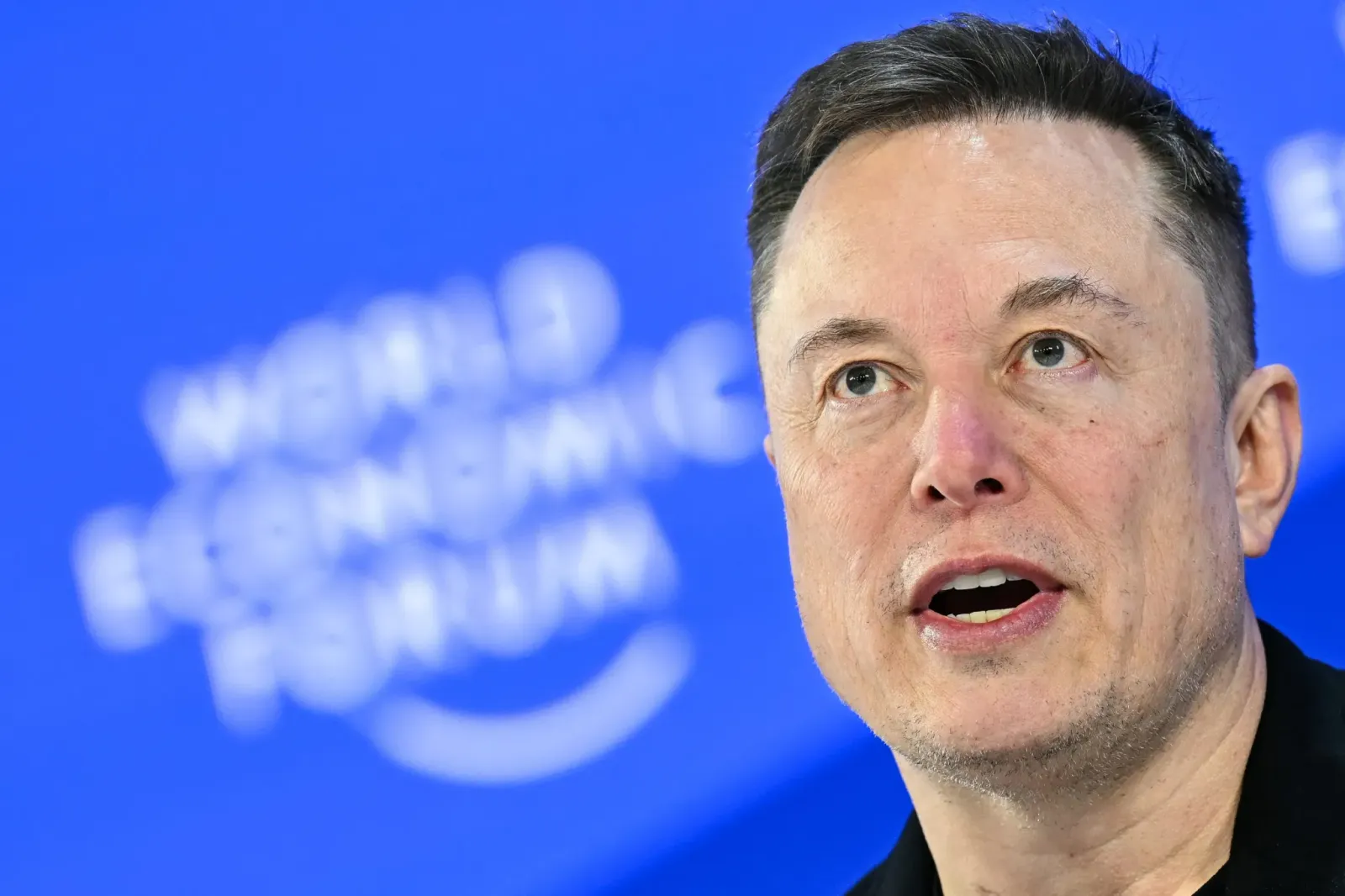
Elon Musk, Tesla CEO and the world’s richest man, took out several mega mortgages, including a $61 million mortgage from Morgan Stanley on five properties in California, reported by the Los Angeles Times. Financial experts argue the move can be strategic because ultrarich wealth is often tied up in investments, and low-rate debt plus tax and inflation dynamics can make borrowing rational.
Elon Musk is the world’s richest man, on track to become the first-ever trillionaire (or may already be one), and yet he did something most average Americans know all too well: he took out a mortgage. The latest example, reported by the Los Angeles Times, is a $61 million mortgage from Morgan Stanley used on five properties in California. If that number makes you blink twice, you’re not alone. With a net worth reported at $703 billion, “Why borrow tens of millions to buy real estate?” is a fair question.
The answer from financial experts is basically this: for ultrahigh-net-worth individuals, mortgages are often less about the cost of the loan and more about optimizing where capital sits. Miltiadis Kastanis, executive director of sales at Compass, told Fortune that ultrarich buyers tend to think differently about liquidity and leverage. Rather than locking money into a single property, they often prefer to keep wealth deployed in investments, businesses, or even art. In other words, the mortgage is a way to fund the purchase while leaving their portfolio working.
This isn’t just Musk behaving like a caricature of “Billionaire Logic.” Mark Zuckerberg, the Meta CEO and the world’s seventh-richest man, used mortgages in a way that fits the same playbook. In 2012, Zuckerberg refinanced his Palo Alto home with a 30-year, 1.05% adjustable-rate mortgage, according to CNBC. With an interest rate that low, the opportunity cost of keeping cash tied up in a home can be higher than the mortgage payment itself. And Kastanis framed the decision in terms of expected returns: if investments are likely to yield a greater return than the interest paid on the mortgage, financing the property can make more sense. It’s “optimizing where their money is placed,” not chasing a feeling.
There’s also the tax angle, which matters more the bigger your balance sheet gets. Mortgage interest can be tax deductible on loans up to $750,000 for those who itemize when filing their taxes. Zuckerberg’s mortgage was more than that limit, but Fortune notes he can likely deduct at least part of the interest, reducing borrowing costs. Islay Robinson, founder and CEO of mortgage brokerage Enness Global, told Fortune that mortgages can enable tax optimization in some jurisdictions because interest payments may be deductible. Robinson also added a second macro reason: in high-inflation environments, the value of money erodes over time, making it advantageous to borrow now and repay later.
This becomes even more powerful when you look at how wealth is often structured. Many ultrawealthy families do not want to sell appreciated assets just to buy a house. Instead, they use securities-based lending, borrowing against stocks or other assets without selling them and triggering capital gains taxes. Fortune quotes J.P. Morgan explaining the logic from the lender side: rather than selling public market investments to raise money, borrowing against assets can help clients stay invested, defer taxes, and free up money for other opportunities. The mechanics are straightforward at a high level: borrowed money is not treated as taxable income under U.S. law, so consumption can be financed with loans rather than income.
Analysts often describe the broader strategy as “buy, borrow, die”: accumulate appreciating investments, borrow against them to fund consumption, and ultimately pass those assets to heirs with a stepped-up basis that largely eliminates the accumulated capital gains tax. The takeaway for decision-makers is not that everyone should mimic billionaires. It’s that the mortgage, the portfolio, and the tax code are part of one system. That systems thinking is the common thread, whether it’s Musk using mega mortgages or Zuckerberg locking in ultra-low rates in the 2010s.
And yes, celebrities do it too, which signals how ingrained the strategy is among wealthy buyers. Fortune reports that Paris Hilton took out a mortgage on the $63 million mansion she bought from Mark Wahlberg in Beverly Hills. Hilton is estimated to be worth between $300 million and $400 million. Fortune also notes that she and her husband, Carter Reum, reportedly took out the loan after they had already bought the 12-bed, 20-bath home, showing a $43.75 million mortgage with JPMorgan Chase at an interest rate of 5.25%. Evan Harlow, a real estate agent at Maui Elite Property, previously told Fortune that it can surprise people, but it is common for the mega-wealthy to take out mortgages even when they could write a check.
For executives and board members, the second-order implication is that ultrawealthy liquidity management can be counterintuitive to “cash is king” instincts. When large balances sit in investments, the rational goal is often maintaining flexibility, minimizing taxable events, and choosing debt terms that improve portfolio efficiency. As Harlow put it, the average buyer should not copy the exact approach, but understand the principle: sometimes the smartest financial move is keeping money flexible and working for you, not paying everything off immediately. In practice, the Musk-and-Zuckerberg pattern is a reminder that in high-net-worth finance, borrowing can be less a sign of need and more a lever for control.
This story's Key Insights and Take-aways are locked.
Create a free account to unlock Executive Actions for one credit.
Register to UnlockAlways free for Executives Club members. Join the Club
More in Business

Anthropic’s Levant Alpöge cracks the Jacobian conjecture after 87 years
A Harvard valedictorian used Claude to hit a 1939 breakthrough, but the missing “why” is the real problem.

Uber buys Delivery Hero for nearly $15B, vaulting to top food delivery outside China
The deal doubles Uber's dual-services footprint and pushes a ride-and-eats bundling play into 50 more markets.

Epic and Google drop settlement bid, forcing rival Android app stores by July 22
Google told the court it is ready to carry third-party app stores starting Wednesday, July 22.