

Elon Musk tried to scale Tesla robotaxi fast, while tempering safety expectations
On Tesla's earnings call, Musk framed rapid Robotaxi scaling alongside “not harm anyone” guardrails, and the gap with reality tightened.
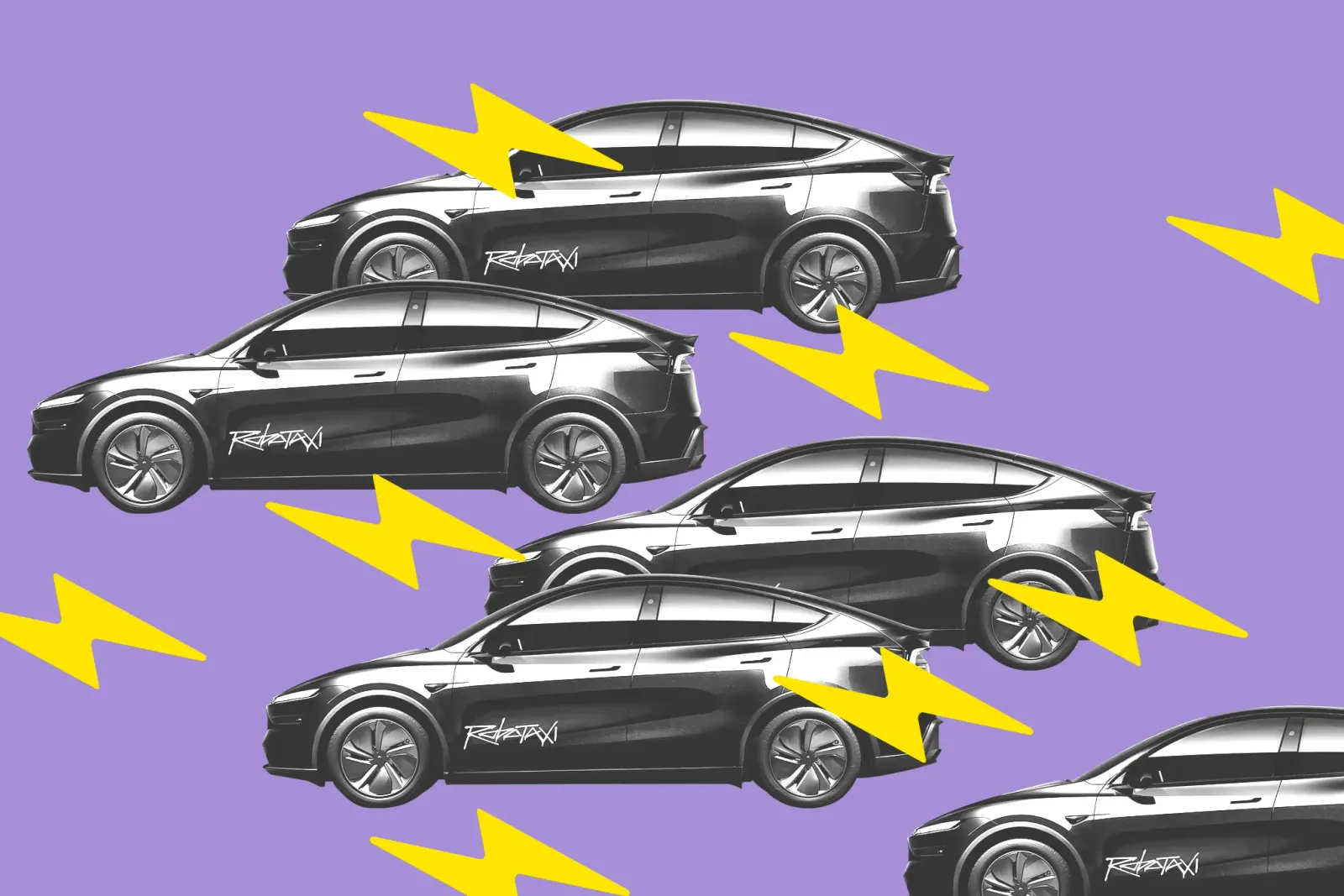
Elon Musk, Tesla CEO, used an earnings call to describe the company's robotaxi scaling progress, including new cities, more miles driven, and more unsupervised experiences. For decision-makers, the implication is clear: investor excitement and regulatory scrutiny are now colliding with operational risk in the real world.
Tesla CEO Elon Musk used an earnings call yesterday to describe how quickly the company is trying to scale its Robotaxi program. He said “We’re going as fast as humanly possible in scaling Robotaxi,” but also tried to put a safety boundary around that speed. He paired the growth message with an explicit expectation that Tesla should “not harm anyone at all,” and he added, ideally, “do not even run over a pet.”
The key thing here is not that Musk is talking about safety. It is that he is talking about it while pushing maximum scaling. In the call, Musk pointed to tangible momentum: new cities are being added, more miles are being driven, and more people are experiencing Tesla’s unsupervised vehicles. The Verge reports that Musk’s usual bullishness seemed less intense on the call, as he sought to temper expectations about the program’s future.
That “tempering” matters because robotaxis live at the intersection of three forces that rarely move at the same pace: engineering readiness, public trust, and regulator comfort. Tesla can add cities and rack up miles, but every new location comes with different local rules, different political sensitivity, and different tolerance for how quickly a system should be deployed. The more Tesla frames its robotaxi service as unsupervised, the more the program starts to look less like a tech demo and more like a public safety service. That is a fundamentally different risk profile.
On top of that, the incentive structure for a public company makes the messaging problem hard. Tesla’s earnings calls are watched closely by investors who are trying to translate technical progress into business outcomes. When executives sound too optimistic, markets can punish them later if timelines slip or incidents emerge. When executives sound too cautious, markets can interpret it as a stall. Musk’s choice to say “as fast as humanly possible” while emphasizing “do not harm anyone at all” looks like an attempt to thread the needle, encouraging belief in scaling while pre-emptively setting expectations about what safety would require.
This is also why the “ideally do not even run over a pet” line lands harder than it sounds. It is memorable, but it is also a signal. Robotaxi deployments are not just measured by whether accidents happen; they are measured by whether the company can persuade regulators, municipalities, and the public that the system is prepared for the messiness of everyday life. Pets, pedestrians, cyclists, and unpredictable road behavior are exactly the kinds of edge cases that turn engineering claims into societal debates. Musk’s language suggests Tesla is aware that the bar is not theoretical.
Meanwhile, the operational math of scaling is brutal. Adding a city is not just a software toggle. It typically requires integrating maps and road conditions, tuning behavior to local driving patterns, and validating performance under real conditions. Even if Tesla is making progress, the fact that Musk highlighted “more miles” and “more people” experiencing unsupervised vehicles implies the program is still in an expansion-and-validation phase, not a steady-state global rollout. That expansion phase is when companies learn the most and also face the greatest exposure.
Second-order implications follow for boards and other executives. When a company is scaling a high-risk autonomy service, oversight cannot stay purely technical. Boards and senior leaders usually need to connect engineering milestones to safety governance: what metrics determine readiness, how incidents are handled, what reporting looks like, and how communication with regulators is managed. Musk’s apparent effort to temper expectations suggests there is awareness that the market can misread aggressive scaling signals. If the story gets ahead of the system, trust can collapse quickly.
For other companies watching Tesla's Robotaxi narrative, the lesson is not “go faster” or “slow down.” The lesson is that public automation rollouts are a continuous negotiation between progress and restraint. Musk is projecting momentum by citing new cities, more miles, and more unsupervised experiences. At the same time, he is building a rhetorical safety perimeter around those numbers. The strategic stakes for decision-makers are straightforward: in autonomy, the product is not just the vehicle. The product is the confidence people, regulators, and markets have that it will behave safely at scale.
This story's Key Insights and Take-aways are locked.
Create a free account to unlock Executive Actions for one credit.
Register to UnlockAlways free for Executives Club members. Join the Club
More in Business

Anthropic’s Levant Alpöge cracks the Jacobian conjecture after 87 years
A Harvard valedictorian used Claude to hit a 1939 breakthrough, but the missing “why” is the real problem.

Uber buys Delivery Hero for nearly $15B, vaulting to top food delivery outside China
The deal doubles Uber's dual-services footprint and pushes a ride-and-eats bundling play into 50 more markets.

Epic and Google drop settlement bid, forcing rival Android app stores by July 22
Google told the court it is ready to carry third-party app stores starting Wednesday, July 22.