

Emirates names its first Emirati female captains
Hanan Mohammed Jawad and Bakhita Al Mheiri reached captain in 2026, a signal that Emirates can turn cadet pipelines into top cockpit leadership.
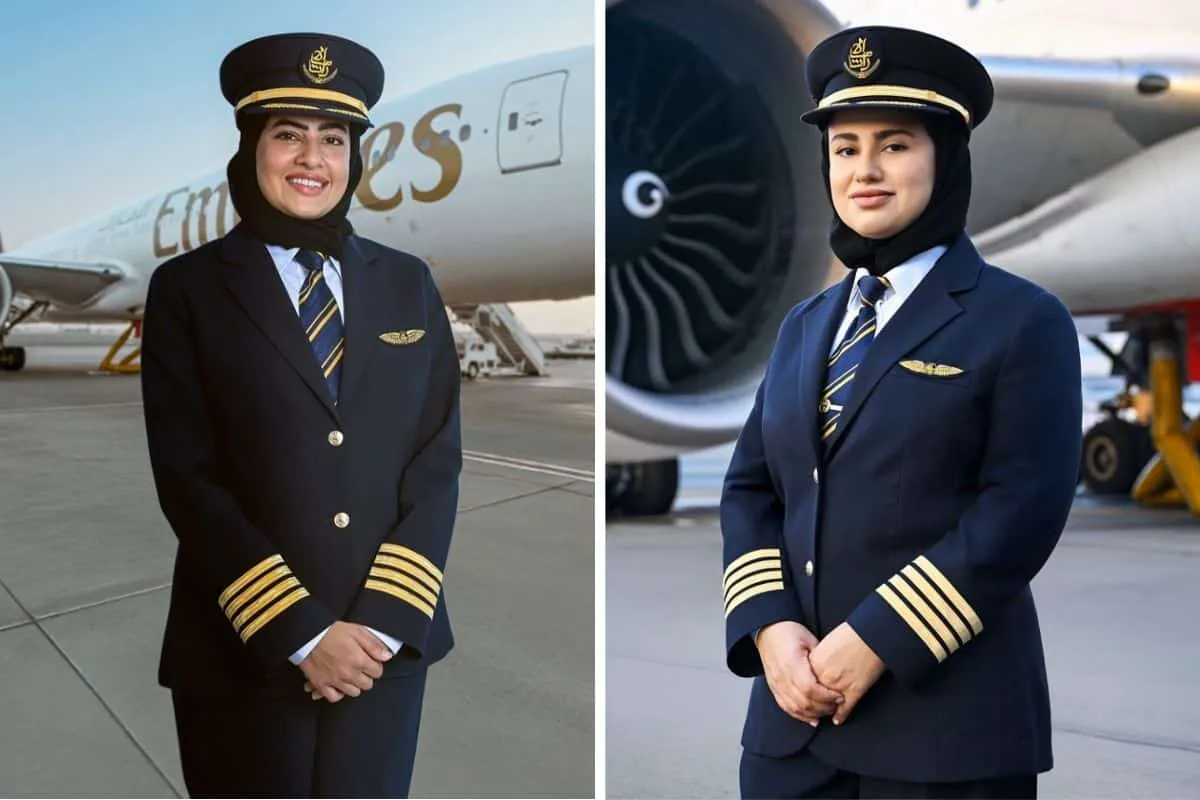
Emirates promoted Hanan Mohammed Jawad and Bakhita Al Mheiri to captain, making them the airline’s first Emirati female captains. The move matters because it shows how a long-running cadet pipeline can translate into leadership depth, national talent development, and a stronger bench for future pilot needs.
Emirates has promoted Hanan Mohammed Jawad and Bakhita Al Mheiri to captain, and that makes them the airline’s first Emirati female captains. The milestone landed in 2026, when both pilots officially received their fourth stripe and took command of Boeing 777 aircraft. In plain English: this is not a symbolic title or a one-off photo op. It is the moment they moved into one of the most senior operational roles in the airline, after years of training, flying, and progression inside Emirates.
That matters because aviation is built on long pipelines, not quick promotions. Emirates said both pilots came up through the Emirates Group’s National Cadet Pilot Programme, a fully funded initiative launched in 1993. The program has already produced Emirati pilots who became captains, training pilots, and senior leaders across Emirates and the wider UAE aviation industry. For decision-makers, the message is pretty direct: if you want long-term control over a skilled workforce, you do not just hire at the top. You build from the bottom and keep the ladder intact for decades.
Hanan Mohammed Jawad joined Emirates in 2008 through the airline’s cadet pilot programme. Emirates said her career was driven by ambition, passion, and a lifelong goal of becoming a pilot, and that she advanced with support from training and fleet management teams. She now has 9,253 flying hours, a number that does a lot of work on its own. Hours like that are the real currency of cockpit credibility. They show repetition, judgment, and the kind of operational experience airlines need before handing someone the captain’s stripes on a wide-body jet like the Boeing 777.
Her comments explain why the promotion lands with more than ceremonial weight. Hanan said: “When I was 14, I saw the UAE’s first female pilot on TV and was struck by her confidence and presence. From that point on, all I wanted was to become a pilot.” She added: “Receiving my fourth stripe is a proud milestone, but I don’t see it as the destination. This is just the beginning, I don’t believe the sky is the limit. The path to command is built over time, and my years as a First Officer prepared me for this moment.” She also described how her personal habits changed along the way, saying she has moved from intense gym training to practices that build focus and calm, including yoga, aerial yoga, Pilates, and reformer. Her point was simple: the job demands clarity, discipline, and presence, and her routine now reflects that.
Bakhita Al Mheiri’s path tells a similar story, but with a different emphasis. She began her Emirates career as a cadet pilot in 2011 and said she was inspired by Emirati women already working in aviation. Emirates said she, too, advanced through the airline before being promoted to captain this year. In her own words, the journey was shaped by mentorship: “My journey at Emirates has been deeply influenced by the mentorship and guidance I received from exceptional training captains and leaders throughout my flying and command journey. Their experience, professionalism, and willingness to share knowledge and experience not only strengthened my technical and leadership skills but also shaped me personally by teaching me the value of responsibility, discipline, and continuous learning.” That is not just a nice sentiment. In a business where training is expensive and mistakes are unacceptable, structured mentorship is part of the operating model.
Bakhita also made the succession angle explicit. She said one of the most meaningful lessons from her journey was “the importance of passing knowledge and experience forward.” She added that, with the opportunity and responsibility she has been given as a captain, she hopes to carry forward the same values and mentorship she received, and to support younger generations starting their own flying journey so they can contribute to the future and success of the UAE. That is the quiet strategic layer here. Emirates is not just celebrating individual achievement. It is reinforcing a system where today’s cadets can become tomorrow’s captains, and tomorrow’s captains can help train the next wave.
The airline’s leadership framed the promotion in the same way. Capt Hassan Alhammadi, Emirates’ Divisional Senior Vice President Flight Operations, said: “At Emirates, we have always committed to developing our UAE Nationals as part of professional workforce. The cadet pilot programme remains vital in providing a path to young men and women to pursue professions as commercial pilots at Emirates, supporting our future pilot requirements. We are immensely proud of Hanan and Bakhita for becoming Emirates’ first Emirati female captains, a well-deserved achievement that reflects years of dedication, professionalism, and hard work, and underscores the airline’s ability to nurture Emirati talent from entry level through to the highest leadership roles.” That is a useful reminder for other airlines, and for any company trying to build internal leadership benches: talent programs only matter if they create visible outcomes at the top.
There is also a broader industry and national angle. Emirates said the cadet pilot programme was launched in 1993 and is fully funded. Cadets train at Emirates Flight Training Academy and the airline’s pilot training centre, moving through theoretical and practical work designed to prepare them for commercial aviation careers. In a sector where pilot supply is always a strategic issue, that kind of investment is not cheap, but it can pay off in resilience, loyalty, and succession depth. For peers watching from the outside, the lesson is less about aviation glamour and more about workforce design: when a company can link recruitment, training, promotion, and leadership development in one system, the result is not just staffing. It is institutional continuity. And in an industry where safety, expertise, and trust are the whole game, that is the real story behind two new captain stripes.
This story's Key Insights and Take-aways are locked.
Create a free account to unlock Executive Actions for one credit.
Register to UnlockAlways free for Executives Club members. Join the Club
More in Business

Anthropic’s Levant Alpöge cracks the Jacobian conjecture after 87 years
A Harvard valedictorian used Claude to hit a 1939 breakthrough, but the missing “why” is the real problem.

Uber buys Delivery Hero for nearly $15B, vaulting to top food delivery outside China
The deal doubles Uber's dual-services footprint and pushes a ride-and-eats bundling play into 50 more markets.

Epic and Google drop settlement bid, forcing rival Android app stores by July 22
Google told the court it is ready to carry third-party app stores starting Wednesday, July 22.