
England hit its warmest June on record, Met Office data shows record-shattering heat
The UK’s temperature story now forces planners, insurers, and utilities to treat 1865-era baselines as outdated.
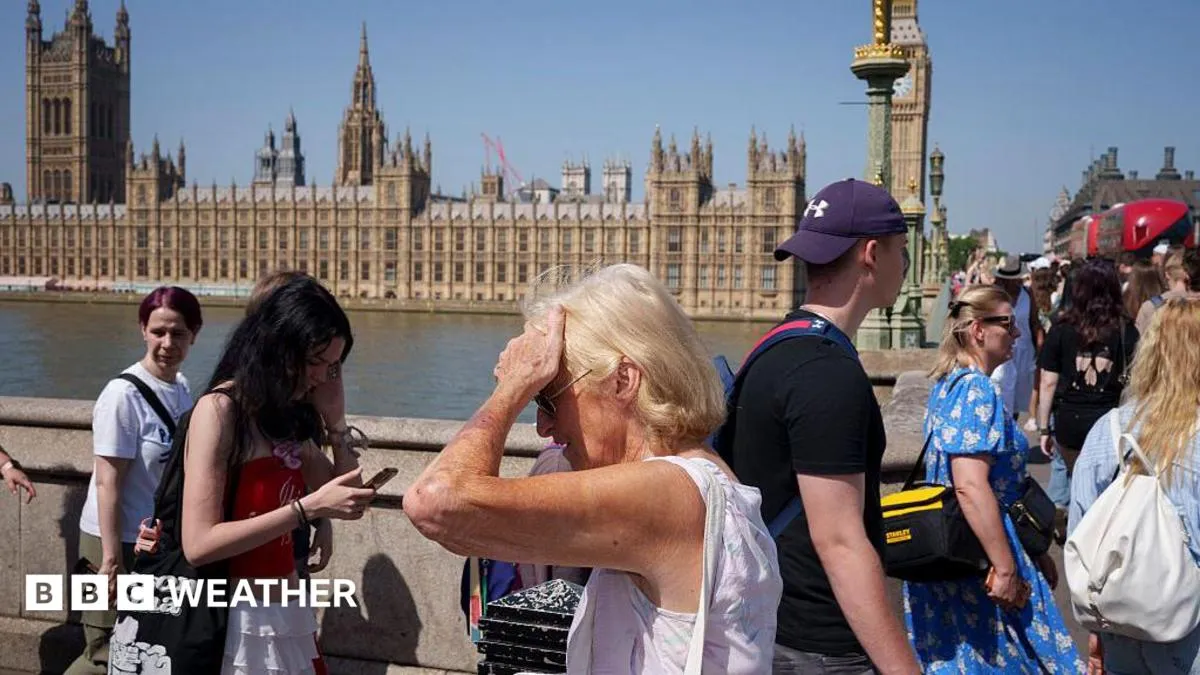
The Met Office has released data showing England experienced its warmest June since records began in 1865. The whole of the UK also logged its second warmest June on record, reshaping risk assumptions for decision-makers.
England just logged its warmest June since records began in 1865, and the whole UK landed the second warmest June ever, according to data released by the Met Office. This is not a “warm day” headline. It is a climate-scale signal dressed as a calendar month, and it matters because it changes what “normal” looks like for planning, pricing, and operations.
In practical terms, the Met Office’s numbers mean that if you manage anything exposed to weather, you are working off an older risk map than the one the climate is drawing now. For England, June is at the top of the historical list since 1865. For the UK overall, it is second place, which still places it firmly in the extreme tail of past experience. In risk management, “second warmest” can matter as much as “warmest,” because extreme months cluster outcomes: heat stress, demand spikes, and knock-on impacts across health, infrastructure, and energy.
The immediate question for executives is how much of the month’s heat should be treated as a one-off versus a new baseline. The source is explicit about what the Met Office has measured: warmest for England since 1865, and second warmest for the whole of the UK. That leaves less room for comfort than many teams want, because a record streak does not just reflect current conditions. It compresses historical variability. Models calibrated on older temperature ranges can understate how often high heat arrives, and how quickly it does.
There is also a regulatory and governance angle. UK weather and climate data from institutions like the Met Office do not stay in scientific reports. They feed how insurers set assumptions, how infrastructure operators plan resilience, and how regulators think about service continuity. Even when there is no single rule that says “use last month’s record as your actuarial baseline,” the direction is the same: evidence of sustained extremes increases scrutiny. Boards that oversee risk, duty of care, and contingency plans tend to face hard questions when the factual record keeps shifting.
Then comes the operational reality: when June turns exceptionally warm, it stresses systems that are designed for “typical summers,” not “record since 1865.” Electricity demand can move sharply with cooling needs. Water systems can face different stress patterns. Transport and construction schedules can change. Health and safety planning becomes more complicated for employers with outdoor labor. And for utilities and facilities managers, a record month often signals that maintenance backlogs, supply chains, and staffing plans built for average conditions may not hold up when the weather refuses to cooperate.
For capital allocation teams, the second-order effects are equally uncomfortable. When temperature extremes become more frequent, the cost of inaction rises. Insurance pricing can tighten. Contract terms can shift. Capital expenditure forecasts can look different if resilience upgrades become more urgent. Even where no new numbers are released beyond the headline record, the market reaction can still be real, because stakeholders update expectations based on the direction of credible data from official sources.
If you are a CFO, COO, or board member at a weather-exposed company, the strategic stakes are straightforward: what you treat as “rare” is being re-labeled as “within recent history.” The Met Office data tells you the label has changed for June. In similar roles across the UK, that should trigger a review of how assumptions translate into decisions: scenario ranges, event frequency, and the triggers used for contingency plans. Records are supposed to be milestones. When you hit them, you learn what your organization was betting on was not actually the highest-impact scenario it could face.
This story's Key Insights and Take-aways are locked.
Create a free account to unlock Executive Actions for one credit.
Register to UnlockAlways free for Executives Club members. Join the Club
More in Science

Alaska's 1,580-foot tsunami had warning signs. Scientists just found them.
Rapid glacier retreat, heavy rainfall, and thousands of tiny tremors preceded Alaska's 1,580-foot tsunami, a warning for every coastal community in a warming world.

The rare mutation that lets high-risk brains dodge Alzheimer's
Scientists found a natural defense against protein buildup, opening a new path to preventive treatments.

3,000 steps a day may halve Alzheimer's decline, study finds
New research links a modest daily walk to less tau buildup and nearly half the cognitive and functional decline, even for those with early signs.