
Enhanced Games stage a $50 million doping circus in Las Vegas on May 24
Libertarian-backed performance drugs meet FDA-only “protocols,” and the fight is really over norms.
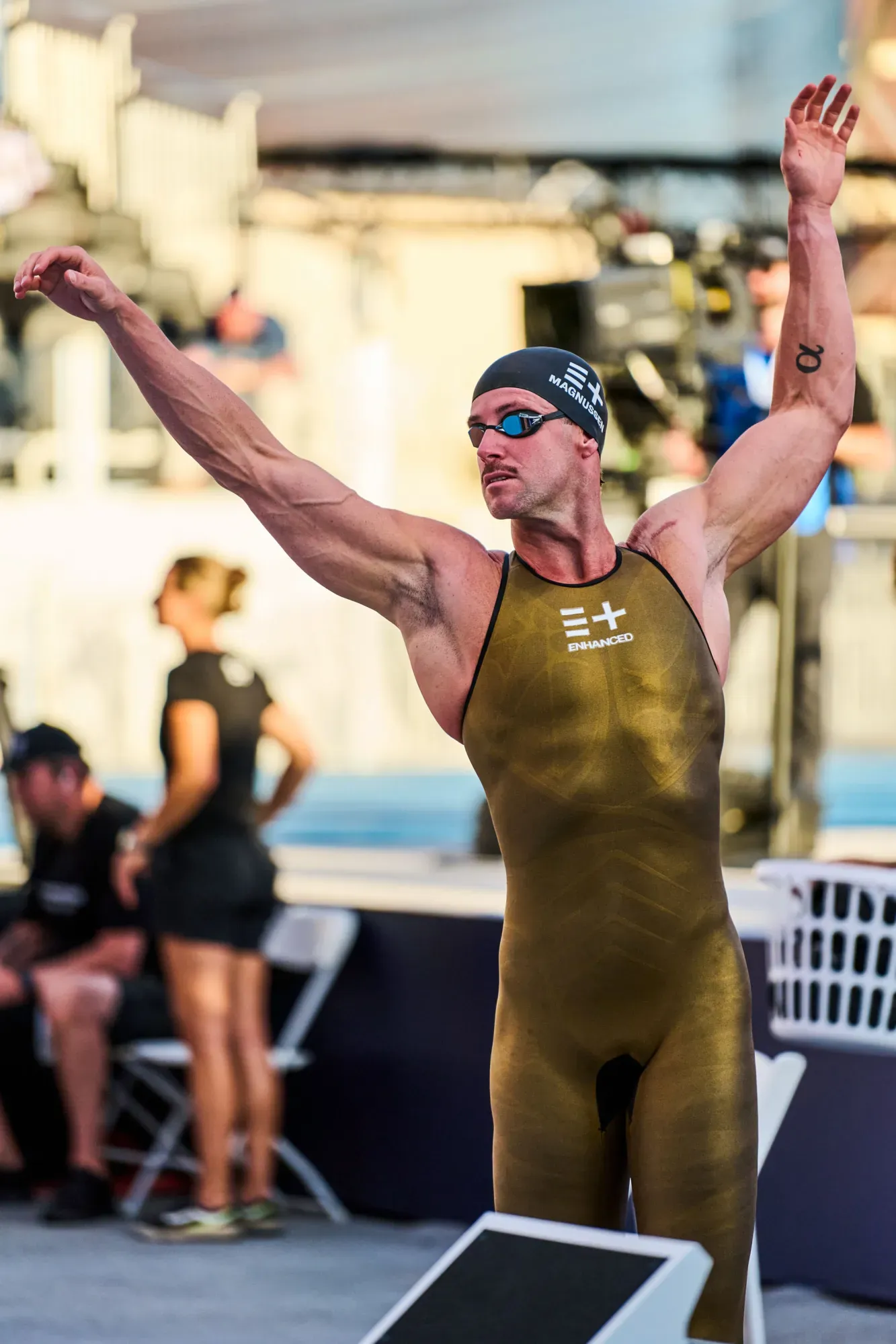
On May 24, Enhanced Games held its inaugural competition in Las Vegas, where athletes were encouraged to use performance-enhancing drugs under a protocol limited to FDA-approved drugs. The event exposed how today’s longevity and biohacking capital will test sports, regulators, and culture all at once.
Testosterone, EPO, growth hormone, meldonium, modafinil, mixed amphetamine salts, clomiphene, anastrozole, levothyroxine, liothyronine. Patches, capsules, creams, pills. A “galaxy of steroids, metabolic modulators, and synthetic hormones” was on full display at the inaugural Enhanced Games on Sunday, May 24, inside a $50 million arena built in a casino parking lot in Las Vegas.
Enhanced Games billed itself as a break from old rules. The founders say they are challenging dated sporting norms and building a world where people can live better and longer lives. Critics say it is an embarrassment, glamorizes dangerous substances, and puts lives at risk. The question for executives is not whether the event is morally messy. It is what it signals: a major investor-backed company is trying to normalize drug-enhanced performance by shifting the “taboo” from sports into the realm of personal choice and medical guardrails.
The venue looked like spectacle made for modern screens. The open-air arena was compact, bright blue, and set up for multiple sports: a six-lane, 100-meter track down one side, a four-lane Olympic-length swimming pool down the other, plus a weightlifting platform and stage at the front. The golden Trump Hotel loomed in the background, and the atmosphere had the loud, hype-machine feeling of an NFL game, complete with too-loud music and crowd work on the big screen, including a “flex cam” that gave well-muscled athletes a stage to unveil their biceps.
Between events, Enhanced’s advertising flashed prominently for its performance products, positioned as injectable peptides and daily supplement powders with names like “Stronger” and “Longer.” That matters, because it ties the spectacle directly to commercial intent. This was not a one-off stunt with no business model. Enhanced is the company behind the event, and the day’s design leaned into the loop where training plus drugs equals content, content equals sales, and sales equals momentum.
But the day’s results also undercut the simplest narrative that “everything goes, so performance will explode.” By 4 p.m., only one weightlifter had even attempted a world-record lift. Two had pulled out injured. Some athletes competed without taking drugs because the money on offer shaped behavior, and as the competition progressed, some non-enhanced competitors did better than enhanced ones: Hunter Amstrong, a 25-year-old American swimmer and triple Olympic medalist, won the backstroke by more than a second. In the men’s 100-meter sprint, Fred Kerley, the non-enhanced US athlete, romped to an easy victory.
You could feel the contradiction in real time, especially in how participants talked. Kerley’s post-race quote was blunt: “Man, they gotta do better than that. They need to train a little harder, get on that shit a little bit more.” At the bar, bodybuilders swapped before-and-after photos and talked about their “stacks,” while VCs and finance bros traded LinkedIn details. Lukas Lakutsin, a 6-foot-10, 354-pound Russian bodybuilder who was milling around the entrance to the VIP suites, initially told the author he did not use performance-enhancing drugs, except testosterone replacement therapy. He said he “needs to do this to stay strong.” Another influencer, Jeremy Sigal, claimed he was “proudly natural” and leaned into his marketing credibility, even while the event around him was built for drug-enabled competition.
Underneath the chaos is the regulatory line Enhanced claims it will not cross. The “protocol” for Enhanced athletes includes only FDA-approved drugs. Enhanced’s team may make recommendations, but individuals have the final say on what they want to take, if anything. That structure is a critical business and compliance choice. It is designed to convert an open-ended taboo into something closer to clinical discretion. And by narrowing the permissible substances to FDA-approved options, Enhanced is trying to frame the debate as medical governance rather than outright “cheating.”
That reframing is also why Enhanced feels less like a sports league and more like a culture war with spreadsheets. The author describes how the games captured Silicon Valley biohackers, alt-right looksmaxxers, “Make America Healthy Again” boosters, and longevity-obsessed scientists all trying to remake reality in their own image. For them, the Enhanced Games offered a glimpse of a future where medical advances push the human race to new heights, and where they never have to get old.
Enhanced’s corporate origin story is part of the stakes. The author tracked Enhanced from a “crazy idea scribbled on a napkin” to a public company valued at $1.2 billion. In December 2022, Australian entrepreneur Aron D’Souza flew to Miami to spend New Year’s Eve with Peter Thiel, who helped orchestrate a lawsuit that bankrupted Gawker after it outed him as gay. D’Souza’s disruptive idea was inspired by gym culture where steroid use is an open secret, contrasted with a sports establishment where it is, at least on paper, an inviolable taboo. The organization’s Discord included memes aimed at the International Olympic Committee.
By spring of 2024, the company had moved from oddball pitch to operational build. D’Souza said Thiel introduced him to Christian Angermayer, a German biotech billionaire. Angermayer is known for funding clinical trials of psychedelics through Atai Life Sciences and helping bring them into the medical mainstream for depression and anxiety, and he told the author he wants to redefine medicine, shifting it from treating disease to preventing it and actively enhancing health. Angermayer brought people into key roles by early 2024, including Michael Sagner, an anti-aging expert and private doctor who works with many of Hollywood’s leading men, and Max Martin, described as an Instagram looksmaxxing influencer who started an enhancement program when he was 27. Sagner would head up Enhanced’s medical commission, and Martin was tasked with making sure the games actually happened. Enhanced began trading on the New York Stock Exchange in early May with an initial value of $1.2 billion.
The tensions did not fade. The author reports that power struggles emerged as D’Souza’s freewheeling style clashed with the “more sensible image” Sagner and others wanted. D’Souza was described as abrasive and as sometimes ignoring scientific facts in favor of outrageous statements, but the more outrageous he got, the more attention the idea received.
So what does it mean for decision-makers who are not in the doping business? It means you are watching a company try to create a new market category where “allowed drugs” plus “personal choice” equals legitimacy. If Enhanced normalizes that pathway, it could change how investors evaluate longevity and performance tech, how sponsors treat athlete integrity, and how regulators and leagues respond when the fight shifts from bans to medical frameworks. Today it is a circus in a casino parking lot. Tomorrow it could be a template for how fast capital will pressure institutions to bend.
This story's Key Insights and Take-aways are locked.
Create a free account to unlock Executive Actions for one credit.
Register to UnlockAlways free for Executives Club members. Join the Club
More in Business

Anthropic’s Levant Alpöge cracks the Jacobian conjecture after 87 years
A Harvard valedictorian used Claude to hit a 1939 breakthrough, but the missing “why” is the real problem.

Uber buys Delivery Hero for nearly $15B, vaulting to top food delivery outside China
The deal doubles Uber's dual-services footprint and pushes a ride-and-eats bundling play into 50 more markets.

Epic and Google drop settlement bid, forcing rival Android app stores by July 22
Google told the court it is ready to carry third-party app stores starting Wednesday, July 22.