
Erenshor raids land in a solo simulated MMO: 4 zones, 21 bosses, no real raid-night
The Planar March patch adds live raids to Erenshor, letting players assemble NPC teams and jump straight in.
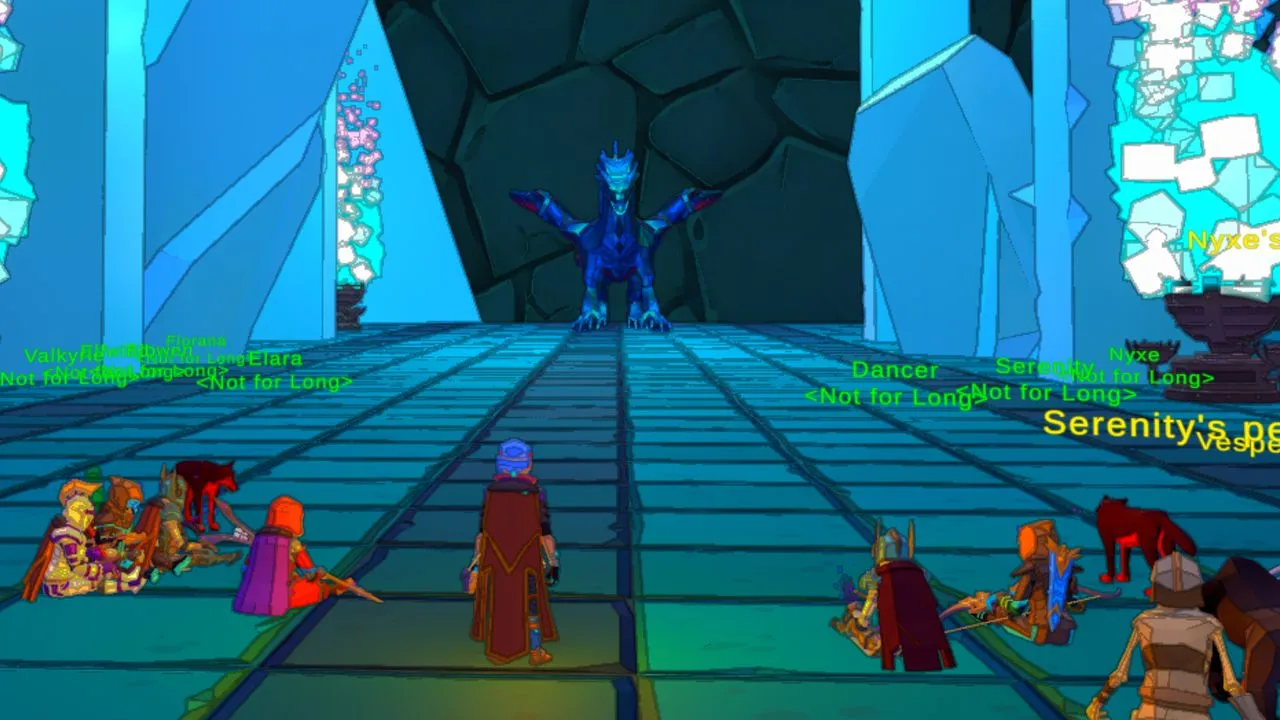
Erenshor, a solo “simulated MMO” built by Burgee Media developer Brian, has shipped raids via the Planar March patch. Decision-makers should notice what “raid night” looks like when schedules, coordination, and friction are designed out.
Erenshor just turned “raid night” into something you can do without convincing other humans. In the Planar March patch, raids are now live in the solo simulated MMO, with four raid zones and 21 new bosses to kill for loots. The key twist is that Erenshor’s world is populated by computer-controlled NPCs called simplayers, which means you can party up, form a guild, and then assemble “raid teams” from the guild menu.
The result is immediate and practical: raid teams automatically join when you start the instance. No extra waiting around for someone to “pay the pizza guy” so the party can convene. No trekking back to a capital city to repair broken gear. And for players who struggle to make time for traditional MMO schedules, the pitch is simple: get the raid structure without the social logistics tax.
This is the kind of design move that matters beyond one game, because it redefines where the engagement pressure comes from. In classic MMOs, raids are not just content, they are an operational system. They require coordination, class planning, and time alignment across multiple real players. Erenshor’s approach takes that whole operational layer and swaps it for simulation, so the player experience is more about executing mechanics than managing people. For anyone building or funding live games, that shift is worth sitting up for: you are basically redesigning the bottleneck.
Developer Brian of Burgee Media framed the implementation pressure in the game’s Steam community release blog. When raids were promised, he said he “had no idea how the heck I was going to implement it,” and described the feature hanging over his head like an intimidating shadow until he finally dove into it. He credited the community of testers, “all of your feedback,” and “a few really late nights” for getting raids to “here,” calling it “the biggest day for Erenshor since its launch.” That matters for how you interpret the rollout: raids were not a small toggle, they were a heavy systems addition that needed iteration, and then it shipped.
So what exactly is included? According to the PC Gamer report, the patch adds four raid zones and 21 new bosses. That is a meaningful content package, but the bigger story is the player workflow that arrives with it. Erenshor lets you create raid teams in the guild menu, and those teams automatically join when you start the instance. The mechanics are meant to remove the classic raid friction: the time spent organizing, moving, repairing, and waiting for others to be ready. If you have ever seen a raid night collapse because one person is late, this design tries to eliminate that failure mode.
There is, of course, a tradeoff question that comes up naturally: will simulated raids preserve the difficulty and sense of scale you typically get in online raids? PC Gamer flags this as a concern, especially around how you replicate the feel of “several dozen” real schedules and manual class coordination. The report grounds this in MMO history, noting that Erenshor is based on the pre-World of Warcraft style of MMOs. That historical reference matters because it signals expectations: those games often leaned hard into grinding and the willingness to die repeatedly while learning raids and fights.
From an audience and traction standpoint, Erenshor appears to have found demand for the simulated MMO concept. The article notes that on Steam, the game currently sits at a “very positive” rating with 94% of user reviews recommending the game. For executives and investors, that rating is not just a vanity number. It is a proxy for whether the market is rewarding the core idea: that people want the MMO loop, but also want less coordination overhead. If you are benchmarking live-service engagement strategies, simulated or asynchronous systems like this are suddenly part of the same conversation as scheduling-heavy co-op and raid content.
Zoom out and the second-order implication is clear. When you remove the dependency on synchronized human availability, you can potentially broaden the addressable audience and reduce churn driven by logistics. But you also take on a different challenge: you must make simulated encounters feel large, consequential, and still worth repeating. Erenshor is betting that it can deliver “glorious grinding and dying,” without the real-world wrangling. If it works, it becomes a template other solo-first or low-coordination games can emulate, and it shifts what players will expect from “raid-like” progression going forward.
For decision-makers tracking the business of games, Erenshor’s raids are a reminder that product execution is often about removing the wrong kind of friction. The Planar March patch did not just add bosses. It added an entire raid workflow that runs on rails, built around simplayers, guild menus, and instant instance starts. The strategic stakes are simple: can your next content drop deliver the adrenaline of competitive teamwork while you redesign the system so it does not require competitive calendar alignment? Erenshor is testing that answer right now.
This story's Key Insights and Take-aways are locked.
Create a free account to unlock Executive Actions for one credit.
Register to UnlockAlways free for Executives Club members. Join the Club
More in Entertainment

12TB Steam 'teraleak' goes beyond Valve: GTA 3, Mafia 2 prototypes exposed
A 12-terabyte dump of Steam data reveals prototypes and builds of third-party classics like GTA 3 and Mafia 2, plus unreleased Valve content, rewriting game history.

LinkedIn's romance problem: 1 in 4 workers say dating on it is fair game
A new survey shows a quarter of U.S. employees treat the professional network as fair game for romance, even as LinkedIn bans it and removes hundreds of thousands of offending posts.

Enhypen's first No. 1 album breaks K-pop's Billboard 200 streak
The K-pop group's 98,000-unit debut tops the chart while Dolly Parton's catalog reentry shows how death reshapes streaming.