
Eric Barone’s PC crashed mid-Stardew Valley, no backups, nearly canceled the game
The solo dev rebuilt from an old hard drive, and Stardew Valley survived its closest call.
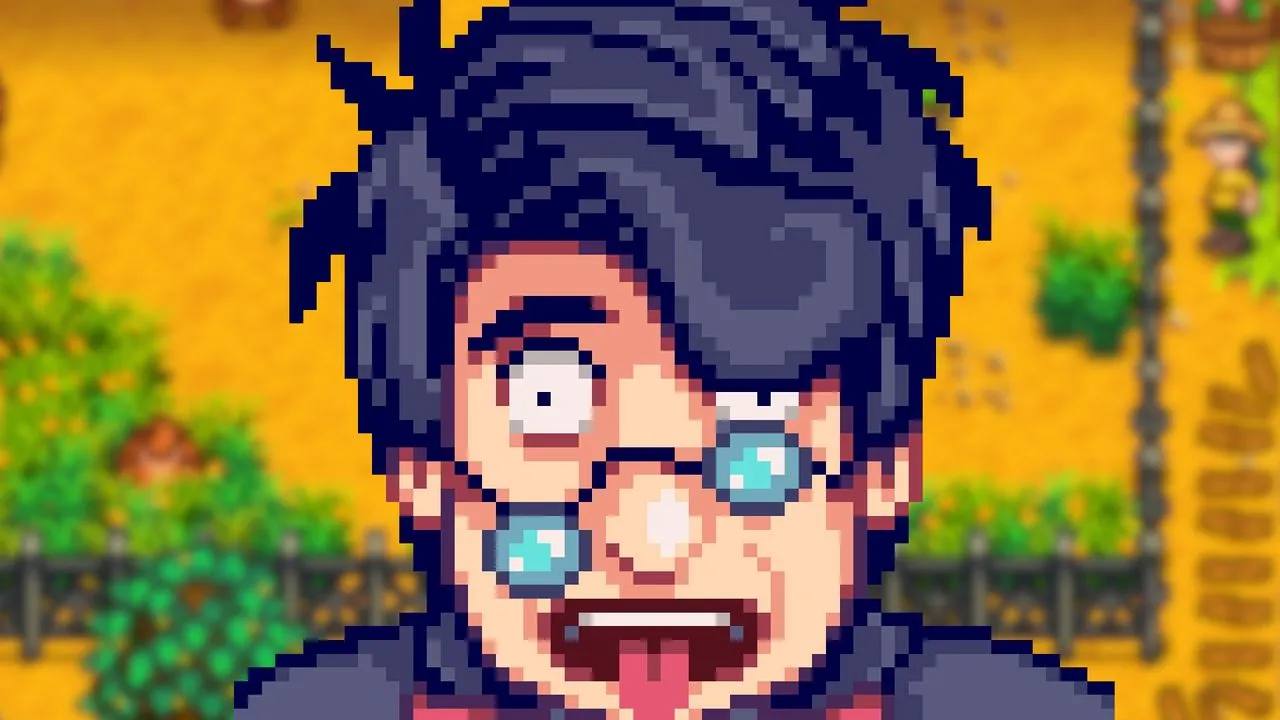
Eric Barone, aka ConcernedApe, told PC Gamer (republished 2016) that his PC died without backups about a year into Stardew Valley’s development, putting the project on the verge of cancellation. For decision-makers, the episode is a reminder that creative and operational risk can hinge on basic recovery discipline.
Stardew Valley is one of those games that feels like it has always existed, the cozy benchmark for “retro but comforting” across PC and consoles. But in a republished 2016 interview, Eric “ConcernedApe” Barone revealed the title almost didn’t make it past development, because his PC crashed unexpectedly about a year into making the game, and he didn’t have backups.
Barone said he thought it was over for Stardew Valley when the machine failed. The crucial part is what happened next: he was able to restore the project from the old hard drive and build a new rig, ultimately continuing development. “In retrospect, it feels crazy that it all worked out,” he told PC Gamer, framing the survival as less like a planned contingency and more like a fortunate recovery from a situation where, by his own account, the odds were not great.
To understand why this moment matters beyond game trivia, zoom out to what Stardew Valley actually changed. Explicitly inspired by the early Harvest Moon games, Stardew Valley grew into a cultural and commercial phenomenon after its 2016 release, eventually taking on its own identity and inspiring countless other indie cozy, retro-styled games. The article’s key point is not just that it became popular, but that the entire category of “cute and cuddly” indie comfort games looks different because of one dev’s scramble to keep the underlying project files alive.
Now, here’s where the business lesson lands for operators and boards: early-stage software creation often looks “small” until it doesn’t. Barone described the development as “the most indie development you could imagine,” with “no professional style at all,” figuring things out as he went, and using “the scrappiest code you could imagine.” He even said he’s “almost embarrassed to have other people look at my code.” In other words, the project was structurally fragile in ways that are common in indie development, where time, budget, and manpower are limited, and where process maturity is usually a luxury.
That fragility is exactly what makes the recovery story consequential. If Barone had not been able to restore from the old hard drive, the franchise that now sets the standard for cozy farming sims would have been canceled before it became a reference point. The article is blunt about the stakes: a “pixelated grave” scenario before the game was ever born. That is the industry’s version of a business continuity nightmare, and it can happen even to the most talented builders, because the failure mode is not about vision. It is about basic operational resilience, at the moment when the work-in-progress is most valuable.
The source also frames Barone’s mindset, and that matters for how teams decide what to invest in as they scale. He didn’t present this near-miss as a marketing anecdote. He presented it as a retrospective disbelief that the whole thing worked out despite sloppy conditions. That suggests the recovery was not merely luck. It implies a follow-through discipline, at least on the technical side: restore the project, replace the machine, then keep going. Even in a scrappy indie setup, there is a difference between “it crashed” and “we got it back,” and Barone’s account is about that hinge.
Second-order implications show up when you connect this to his next project, Haunted Chocolatier. The article says his follow-up appears to be built using the foundation laid down by Stardew Valley, and with a small team helping him put everything together, fans can expect a smoother development process while they wait for the darker, sweeter sequel. Barone also admitted Haunted Chocolatier is “taking a long time,” but he characterized the delay as deliberate: going “over every last detail” to make a game he is satisfied with.
For executives and investors, the underlying pattern is clear. When a founder survives a catastrophic failure early on, later timelines can still be long, but the risk profile can shift. A small team, stronger process, and less “scrappiest code you could imagine” can convert a survival story into a repeatable production engine. At the same time, quality pressure can extend schedules. Barone’s comments support that tension: slower, more detailed work can be a strategic choice, especially when your first hit is so influential that expectations rise around every new release.
And while the article does not mention regulators, compliance, or filings, the operational takeaway still translates into regulated industries because the core hazard is identical. Data loss incidents, unrecoverable work, and missing backups are the kind of events that trigger downstream costs: missed launch windows, customer dissatisfaction, and expensive rebuilds. In games, the consequence is cultural and commercial. In many other sectors, it is also contractual and legal. The mechanics differ, but the decision problem does not.
So the real strategic stake is this: if Stardew Valley almost got canceled because of a PC crash without backups, what “quiet dependencies” are currently holding your roadmap together? Barone’s story is a reminder that the most important risk register entries are not always about external threats. Sometimes they are internal, unglamorous, and solvable with boring recovery plans, until the day the machine goes dark and you find out whether luck was doing work you thought was covered by process.
This story's Key Insights and Take-aways are locked.
Create a free account to unlock Executive Actions for one credit.
Register to UnlockAlways free for Executives Club members. Join the Club
More in Entertainment
12TB Steam 'teraleak' goes beyond Valve: GTA 3, Mafia 2 prototypes exposed
A 12-terabyte dump of Steam data reveals prototypes and builds of third-party classics like GTA 3 and Mafia 2, plus unreleased Valve content, rewriting game history.

LinkedIn's romance problem: 1 in 4 workers say dating on it is fair game
A new survey shows a quarter of U.S. employees treat the professional network as fair game for romance, even as LinkedIn bans it and removes hundreds of thousands of offending posts.

Enhypen's first No. 1 album breaks K-pop's Billboard 200 streak
The K-pop group's 98,000-unit debut tops the chart while Dolly Parton's catalog reentry shows how death reshapes streaming.