

Ethiopia fights fears of renewed Tigray war as clashes erupt between TPLF and federal army
The contested north is seeing fresh clashes, and prior devastation makes “mediated” optimism feel dangerously thin.
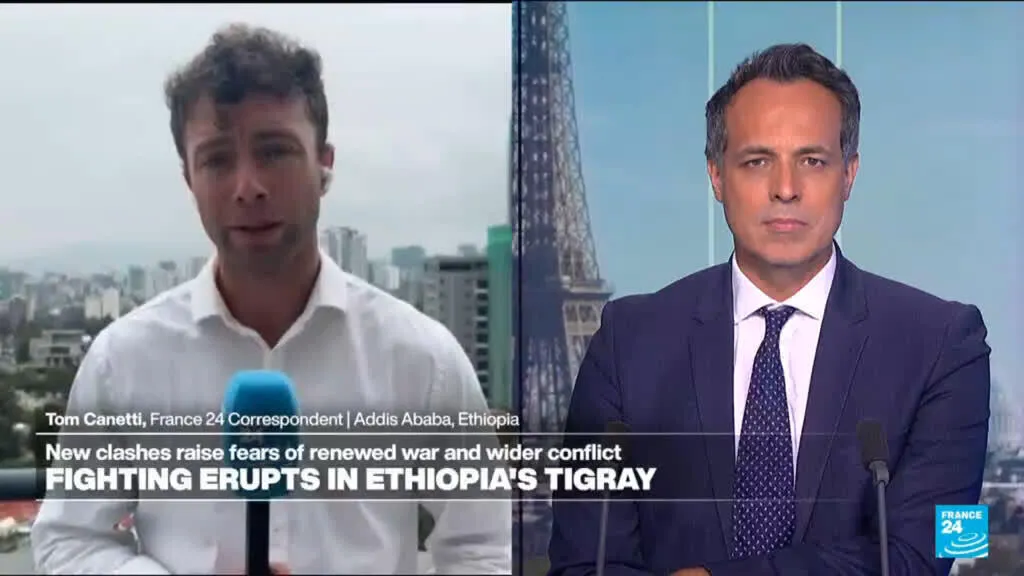
Clashes are erupting in northern Ethiopia between Tigray's TPLF and the Ethiopian federal army in a contested area. With fears of renewed war after 2020-2022 conflict left 600,000 dead, US and African Union mediation has not prevented the worst.
Clashes between Tigray's TPLF and the Ethiopian federal army are unfolding in a contested area of northern Ethiopia, reigniting fears of a renewed war. This matters now because the last Tigray conflict, which took place between 2020 and 2022, left 600,000 dead, and the region has not yet recovered.
In other words, this is not “another incident.” It is a recurrence risk on top of unresolved trauma, and it arrives despite mediation attempts from the US and the African Union that have seemingly failed to prevent the worst. Ethiopia's northern frontier is where ceasefire language meets ground reality, and the ground is currently moving.
To understand why executives should care, think like a risk committee. When fighting resumes in a previously devastated region, the question is less about headline violence and more about second-order effects that show up later in ledgers, supply chains, and governance. Even when direct exposure is limited, instability in a key geographic corridor can ripple into logistics costs, insurance pricing, and the reliability of cross-border or domestic movement. And because the region has not recovered since 2020-2022, the baseline is fragile. In fragile systems, small shocks compound fast.
There is also a governance angle that should land with boards and compliance teams. Ethiopia's federal structure means the battlefield is not only military, it is political. Clashes between a regional actor, the TPLF, and the Ethiopian federal army signal that dispute resolution mechanisms are not currently producing a workable pause. That is exactly the kind of breakdown that turns mediation into a public confidence test. If diplomacy cannot halt escalation, counterparties start planning for duration, not interruption.
The mediation attempts from the US and African Union are a key detail here, because they point to a familiar constraint in conflict management. External mediators can provide frameworks and pressure, but they cannot command actors who still see strategic advantage in fighting. When those efforts “seemingly” fail, the practical takeaway is that escalation can proceed even while international stakeholders are still engaged. For decision-makers, that is a warning about timelines: assuming a quick diplomatic reset can be an expensive mistake.
Markets tend to price uncertainty, and uncertainty is expensive. For companies with government touchpoints, the immediate operational question becomes what changes in security conditions, movement permissions, and local administration. For investors and lenders, the question becomes how conflict risk affects country risk assessments, project finance assumptions, and the enforceability of contracts across jurisdictions.
This is where the 2020-2022 casualty figure is more than a grim statistic. The last Tigray war left 600,000 dead, and the region has not yet recovered, which implies ongoing humanitarian, economic, and institutional damage. In practical terms, regions that have not recovered often face reduced administrative capacity, weakened local market networks, and the kinds of stressors that can amplify recruitment incentives and retaliation cycles. When violence resumes after that kind of baseline damage, the path back to stability typically gets harder, not easier.
Executives at firms operating in or transacting with high-volatility environments should also track the messaging environment. Even if mediation continues, ground clashes create incentives for actors to demonstrate strength rather than compromise. That can freeze off-ramps that looked available earlier in the process. Boards should treat this as a governance issue as much as a security one, because escalation alters who can influence decisions, how quickly information changes, and how reliably leadership can execute contingency plans.
The strategic stakes are clear: with fighting erupting in a contested area of northern Ethiopia and mediation failing to prevent renewal, the risk is a return to a conflict cycle that previously produced 600,000 deaths and long recovery needs. For peers managing geopolitical exposure, the lesson is not to guess motives. It is to assume the worst can come back quickly, especially when the region has not recovered and the diplomatic brake has not held.
This story's Key Insights and Take-aways are locked.
Create a free account to unlock Executive Actions for one credit.
Register to UnlockAlways free for Executives Club members. Join the Club
More in Politics
Obama Defends Ilhan Omar After Agents Search Her Home in Trump Inquiry
The former president's intervention raises the stakes in a federal probe into immigration paperwork that has put a prominent progressive lawmaker in the crosshairs.

Blair-era minister: cut welfare to fund youth job support
Alan Milburn's call for welfare cuts to fund employment support opens a Labour fight over benefits and the Neet crisis.

Hot September CPI: energy costs surge, voters feel the squeeze before midterms
The latest inflation print lands as Trump campaigns for GOP control of Congress, putting cost-of-living worries at the center of the midterm fight.