
EU and UK carmakers ask for another Brexit EV tariff delay to hit 2027 rules
Industry says it cannot meet EU-UK trade rules of origin needed for tariff-free EV sales on January 1, 2027.
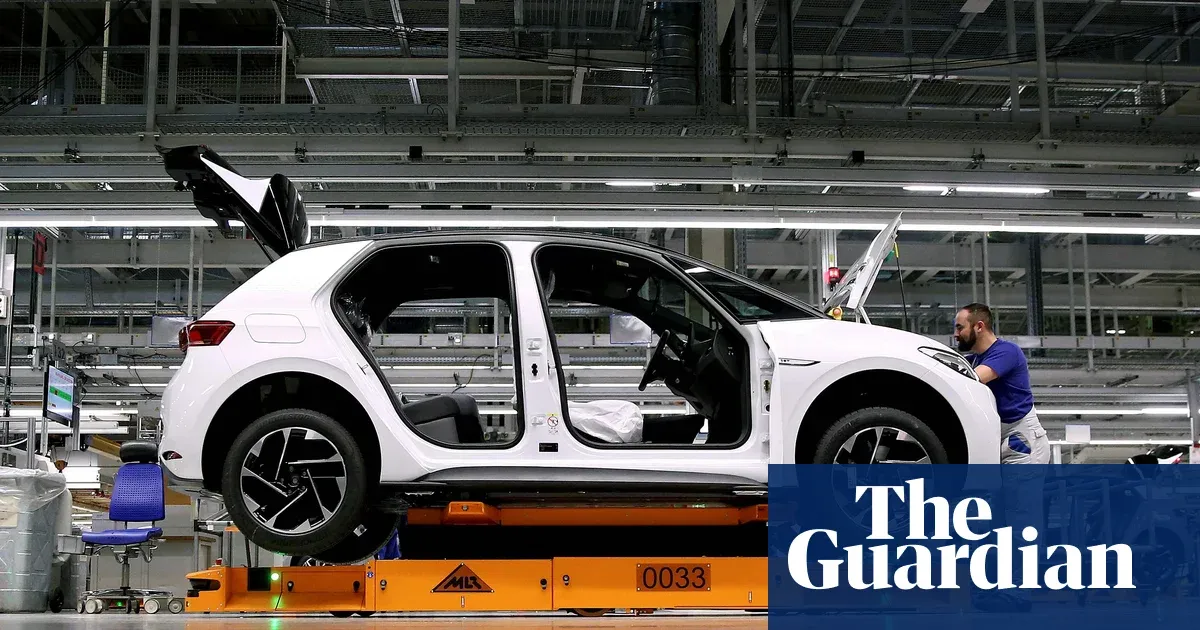
EU and UK car industries are urging the European Commission to adjust the Brexit trade deal and suspend electric-vehicle import tariffs for a second time. The consequence is looming uncertainty for manufacturers and investors trying to plan for tariff-free EV sales by January 1, 2027.
The EU and UK car industries are pressing the European Commission to suspend electric-vehicle import tariffs again, arguing they will not be able to meet the deal’s tariff-free conditions by January 1, 2027. In other words: even after a 2020 Brexit trade framework meant to drive outcomes like local battery making, the industry says the paperwork and manufacturing reality still do not line up.
The specific problem is the rules of origin embedded in the EU-UK Trade and Cooperation Agreement, which has applied since 2021. To qualify for tariff-free trade, EV-related products have to satisfy strict origin requirements about what gets made where. The car industries are telling regulators they cannot meet those conditions in time for tariff-free sales starting January 1, 2027, and that is why they want the Commission to adjust the trade deal and suspend the tariffs for a second time.
This is not just a nuisance request. Tariffs are a lever that directly reshapes pricing, demand, and manufacturing decisions. If EV imports become more expensive at the border, buyers feel it. If they do not, sellers can compete more aggressively. Either way, executives have to translate policy timelines into supply chain plans that take months, sometimes years, to execute. And when the deadline is January 1, 2027, that is not “someday” planning. That is planning today, with real capex and procurement commitments already in motion.
The backdrop matters. The original Brexit deal reached in 2020 included provisions intended to stimulate local battery making, a sign that negotiators were trying to turn trade rules into an industrial strategy. That ambition hits a familiar industrial wall: battery and EV supply chains are complex, capital intensive, and geographically sticky. Even when targets exist, meeting them depends on upstream factors like sourcing, production capacity, and the ability to qualify products under the exact trade criteria. The source says industry still cannot meet the targets the deal sought to drive.
So where does the second-order tension land for boards and senior leaders? On the one hand, tariff suspension is a way to reduce near-term friction for EV flows between the EU and UK. On the other hand, repeatedly adjusting timelines can create uncertainty about the long-term stability of the rules that manufacturers must design around. If the regulatory goalposts keep moving, executives must decide whether to invest in compliance and origin localization now, or wait for further relief that may arrive later.
The other key nuance is that this is fundamentally about “what qualifies,” not just “whether tariffs exist.” The rules of origin determine eligibility for tariff-free trade under the EU-UK Trade and Cooperation Agreement. Since the agreement has applied since 2021, the clock has already been running. The industries are now signaling that the period since application has still not been enough to restructure supply chains to satisfy the strict origin requirements by the January 1, 2027 cut-off.
For decision-makers, that means risk management is not limited to the border. It extends into contracts and forecasting. EV procurement agreements, component sourcing, and manufacturing routes may all be built around assumptions about tariffs or tariff-free access. If the Commission does not adjust the deal, companies may need to accelerate compliance or redesign products and sourcing to meet origin thresholds. If tariffs are suspended, companies can maintain sales momentum, but they still have to prepare for what happens when the temporary relief ends.
If you are sitting in a boardroom reading this as a governance issue, the strategic stake is clear: the Commission’s next move will effectively decide whether the EV market between the EU and UK gets treated as a stable cross-border flow or as a policy-dependent toll road. For executives overseeing manufacturing, finance teams modeling margins, and procurement leaders planning supply chains, the difference is the difference between a smooth ramp to tariff-free sales and a last-mile scramble to qualify under strict rules of origin.
In short, the industry’s request is a bid to prevent a cliff edge at January 1, 2027. The unresolved question for the Commission, and for everyone in the EV ecosystem watching closely, is whether the rules can be met as written, or whether the trade deal needs another adjustment to keep the market from stumbling into tariff pressure.
This story's Key Insights and Take-aways are locked.
Create a free account to unlock Executive Actions for one credit.
Register to UnlockAlways free for Executives Club members. Join the Club
More in Business

Anthropic’s Levant Alpöge cracks the Jacobian conjecture after 87 years
A Harvard valedictorian used Claude to hit a 1939 breakthrough, but the missing “why” is the real problem.

Uber buys Delivery Hero for nearly $15B, vaulting to top food delivery outside China
The deal doubles Uber's dual-services footprint and pushes a ride-and-eats bundling play into 50 more markets.

Epic and Google drop settlement bid, forcing rival Android app stores by July 22
Google told the court it is ready to carry third-party app stores starting Wednesday, July 22.