
EU clears $55B EA buyout backed by PIF, finding no competition concerns
The European Commission approves Saudi PIF's $55 billion acquisition of Electronic Arts and signals it sees no antitrust problem.
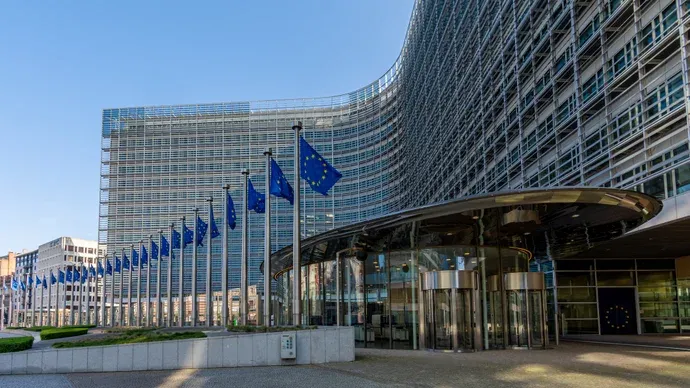
The EU Commission has approved the $55 billion acquisition of Electronic Arts led by Saudi Arabia's Public Investment Fund (PIF). The clearance removes a major regulatory hurdle and lets the deal move closer to completion for parties involved.
The European Commission just cleared a $55 billion acquisition of Electronic Arts, led by Saudi Arabia's Public Investment Fund (PIF), and it says the deal "would not raise competition concerns." Translation: the EU regulator is not seeing enough of a competitive risk to block the transaction.
For decision-makers, this matters because regulatory approval is often the gating item in large M&A. The Commission's approval signals that, at least on the competition front, the EA buyout is not triggering the kinds of market power fears that would force remedies or delay. In other words, the deal has the green light to progress without an EU antitrust fight taking the wheel.
To understand why the Commission's wording is important, you have to remember how these approvals usually work. When a deal is large enough, it tends to attract scrutiny not only because of the price tag, but because of what the buyer could control once it owns the target. In gaming, that can mean attention to how publishers compete for players and for distribution channels, how studios and franchises might be affected, and whether scale could make rivals less able to compete. The source doesn't provide additional detail beyond the approval and the Commission's statement about competition concerns, but the bottom line is still clear: the regulator considered the competitive impacts and concluded they were not concerning.
This is also where the buyer matters. PIF, a Saudi state-linked investment vehicle, is the lead in this acquisition. Large state-backed funds have become more common players in global assets over the past several years, and they can reshape negotiating dynamics because they may be able to move with long-term capital horizons. For EA, the deal introduces a new controlling owner with potentially different priorities than purely financial buyers or traditional corporate strategic acquirers. Even if the Commission is not worried about competition, the internal question becomes what the new owner will optimize for once it has the keys: growth, stability, market positioning, or a more controlled portfolio strategy.
At the same time, regulatory clearance changes what both sides can do next. Approvals are not just permission. They are momentum. Once the EU Commission clears a deal, boards and executives can shift from “will this pass?” to “how do we close and integrate?” That shift impacts staffing decisions, transaction planning, and communication strategy. It also affects leverage in the remaining steps of the process because the risk of a major regulatory reversal is reduced, even if other jurisdictions could still matter.
There is a wider market implication here too. Electronic Arts is a major name in the industry, and a deal of this magnitude is a signal to peers. When regulators clear a transaction without competition concerns, it can encourage other large consolidation efforts, especially among parties that can frame their cases as preserving competitive outcomes. It also raises the bar for anyone who expects the “competition concerns” argument to automatically stop big-game deals. If the Commission can clear a $55 billion acquisition in this context, future proposals may need to be even more rigorous about how they expect competition to hold up.
For executives and boards across gaming and adjacent media, the second-order lesson is about how regulatory language can de-risk decisions. A statement that a deal “would not raise competition concerns” reduces the probability of burdensome remedies and the chance of protracted uncertainty. That matters not only for the buyer and target, but for the entire ecosystem of studios, platform partners, and competitors watching how oversight is applied. When approvals come cleanly, the industry often moves faster, because capital and attention stop getting tied up in regulatory uncertainty and start shifting toward execution.
Still, the stakes remain high. A deal this large can change perceptions among players, partners, and investors, even if regulators are satisfied on competition. Once cleared, the market will look harder at how the new ownership group plans to run the company: what it emphasizes, how it funds development, and whether it uses scale to improve product pipelines or to streamline spending. The EU's approval does not answer those operational questions. It just clears the path for them to become the main event.
This story's Key Insights and Take-aways are locked.
Create a free account to unlock Executive Actions for one credit.
Register to UnlockAlways free for Executives Club members. Join the Club
More in Business

Anthropic’s Levant Alpöge cracks the Jacobian conjecture after 87 years
A Harvard valedictorian used Claude to hit a 1939 breakthrough, but the missing “why” is the real problem.

Uber buys Delivery Hero for nearly $15B, vaulting to top food delivery outside China
The deal doubles Uber's dual-services footprint and pushes a ride-and-eats bundling play into 50 more markets.

Epic and Google drop settlement bid, forcing rival Android app stores by July 22
Google told the court it is ready to carry third-party app stores starting Wednesday, July 22.