

EU quota, Beijing VAT rebate cut deliver double blow to China's EV exports
Analysts are slashing earnings forecasts as the twin measures collide with a domestic sales slump, pushing 50-odd EV makers toward a do-or-die moment.
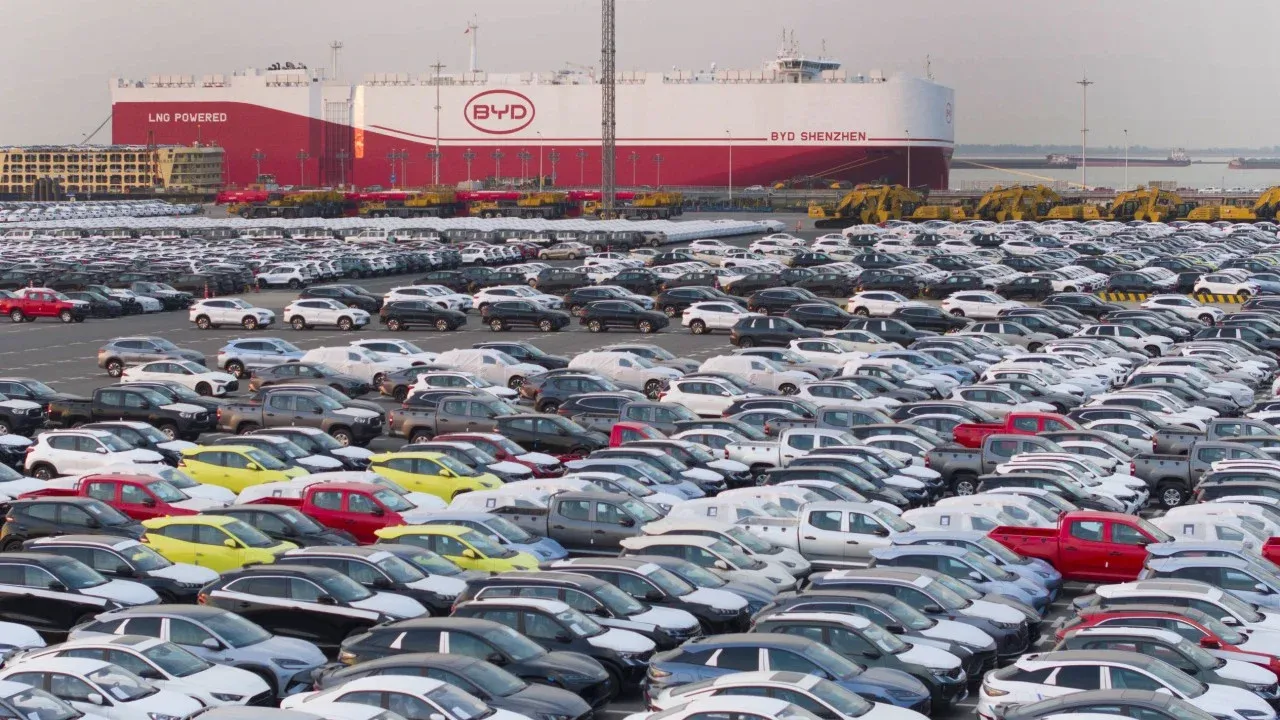
China's EV makers face a dual squeeze after Brussels imposed an export quota and Beijing cut VAT rebates, prompting analysts to revise down earnings forecasts. The measures, combined with a domestic sales decline, could force consolidation among the country's 50-odd EV makers.
China's EV makers are staring at a double whammy: the European Union has imposed an export quota on their vehicles, and Beijing has cut VAT rebates on EV exports. The twin measures, confirmed on Friday, have already prompted analysts to revise down earnings forecasts for the industry, according to industry officials. The timing could hardly be worse, with the new barriers landing just as China's domestic EV market is seeing a sales decline, removing a key growth valve for the country's 50-odd EV makers. Industry officials describe the combination as a "do-or-die moment" that will ramp up financial pressure across the board.
The EU's move is the latest escalation in a trade dispute that has been building for months. European regulators have grown increasingly concerned about the influx of lower-priced Chinese EVs, which they argue benefit from state support. The export quota effectively caps how many vehicles Chinese makers can ship into the bloc, forcing them to compete for limited slots or shift their strategy. For companies that have spent years building European distribution networks and brand recognition, the quota is a direct hit to their most profitable growth market.
Beijing's VAT rebate cut is a different kind of pressure. Export tax rebates have long been a quiet subsidy for Chinese manufacturers, effectively refunding taxes paid on goods sold abroad. By trimming that rebate, the government is signaling a shift in priorities - one that analysts say will squeeze margins on every vehicle exported. The cut raises the cost of selling overseas at a time when Chinese EV makers are already engaged in a fierce price war at home, leaving little room to absorb the hit.
The domestic picture adds another layer of complexity. China's EV market, once growing at breakneck speed, has cooled as consumer demand softens and competition intensifies. A wave of new models from both established automakers and startups has flooded showrooms, driving down prices and compressing margins. With the domestic market no longer providing the growth it once did, exports had become the safety valve for excess capacity. The new export barriers close that valve just when it is needed most.
The result is a wave of earnings forecast cuts. Analysts are revising down their numbers for the industry as they factor in lower export volumes and thinner margins. For the weakest players, the combination of reduced revenue and rising costs could be existential, accelerating the consolidation that many have long predicted. The industry has already seen a handful of startups collapse in recent years, and the new pressures are likely to claim more casualties.
For the stronger players, the double blow is a test of resilience. Companies with deeper pockets, more efficient supply chains, or established production bases in Europe are better positioned to weather the storm. Others may be forced to seek partnerships, pivot to alternative markets like Southeast Asia or the Middle East, or exit the industry altogether. The quota, in particular, could push more Chinese EV makers to build factories inside the EU, a move that would preserve market access but require significant capital and time.
The coming months will show how quickly the pressure translates into action. Watch for capacity cuts, merger talks, and a scramble for alternative export routes. For executives across the EV supply chain, the message is clear: the era of easy export growth is over, and the next phase will reward discipline, not ambition alone. The double blow from Brussels and Beijing is not just a trade story - it is a strategic reckoning for an industry that must now rethink how it competes on a global stage.
This story's Key Insights and Take-aways are locked.
Create a free account to unlock Executive Actions for one credit.
Register to UnlockAlways free for Executives Club members. Join the Club
More in Business

Elon Musk unveils a flying car, and SpaceX helped build it
The Tesla CEO's showcase at a SpaceX facility signals a future where road and rocket engineering converge.

Apple's $2,000 iPhone Duo opens preorders, taking on Samsung and Google
Apple's first foldable hits the market at a premium price, reshaping a category Samsung and Google have led.

Pope Leo XIV, first American pope, diagnosed with lung cancer
The 71-year-old Chicago-born pontiff underwent successful surgery on his right lung, and his diagnosis raises new questions about his AI-focused papacy and the Vatican's future.