
Europe’s extreme heat is forcing an AC tech reset, not a culture-war truce
As the continent cooks, environmentally friendlier air conditioning is moving from idea to necessity for regulators and investors.
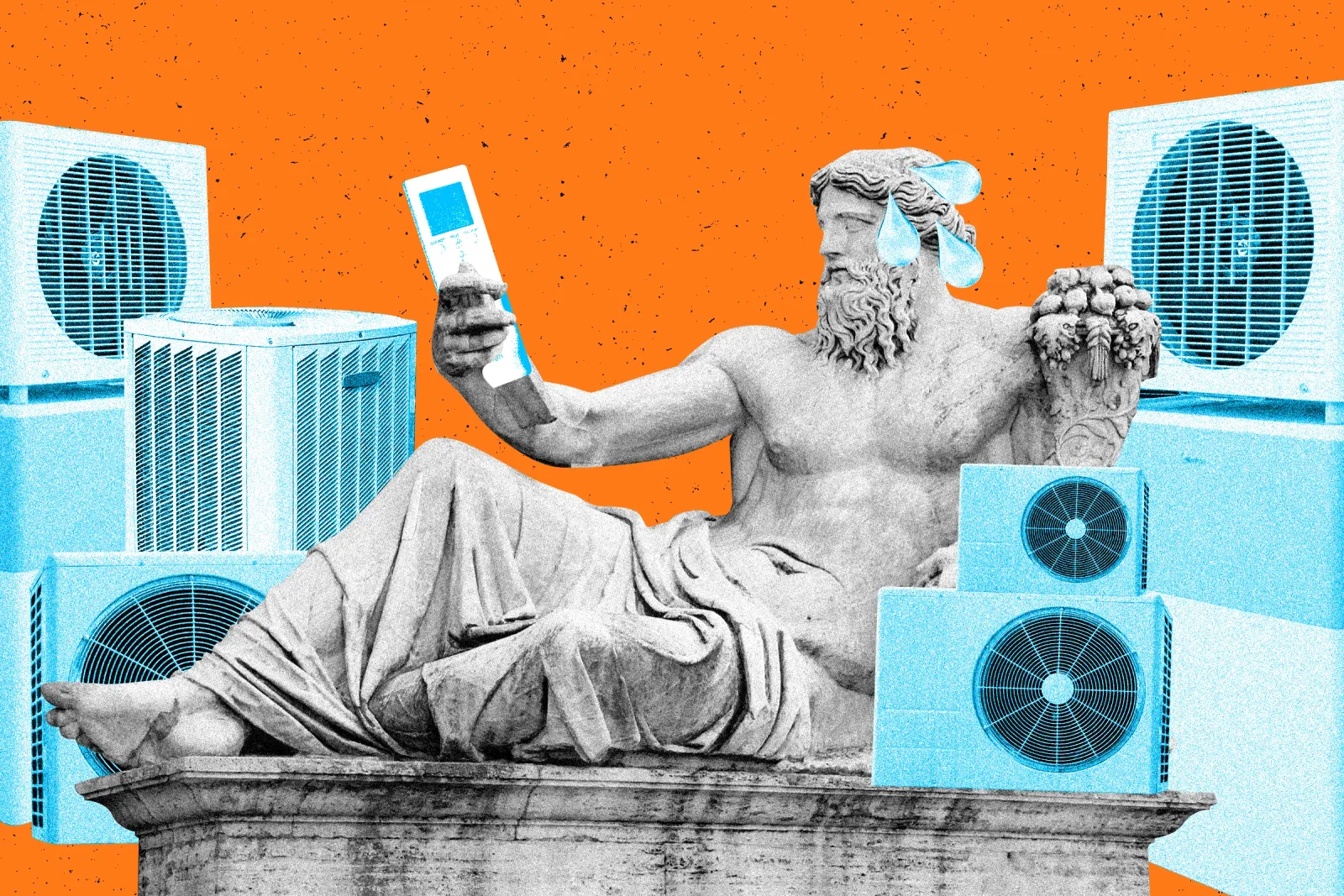
Europe is facing extreme heat as the norm, and WIRED frames the potential solution as advances in environmentally friendly air-conditioning technology. For decision-makers, the implication is clear: cooling demand will keep rising, and the pressure to decarbonize cooling will intensify.
Europe is sliding into a world where extreme heat is no longer an exception. WIRED’s core premise is blunt: as temperatures climb and heat risk becomes routine across the continent, the “AC culture wars” may be resolved by technology that makes air conditioning more environmentally friendly, instead of by endless back-and-forth over whether everyone should just suffer a little.
The reason this matters is that air conditioning is not just a comfort product anymore. In a hotter Europe, AC becomes infrastructure. And when you treat something like infrastructure, the conversation shifts from taste and identity to emissions, grid stability, public health, and policy. WIRED points to advances in environmentally friendly technology as the lever that could de-escalate the culture war by addressing the actual problem: the environmental cost of cooling at scale.
Here’s the key second-order dynamic executives should care about. Cooling demand does not wait for consensus. When heat intensifies, people and businesses respond quickly. That puts pressure on energy systems, building operators, landlords, retailers, hospitals, data centers, logistics facilities, and public authorities to deliver cooling reliably. If the environmental burden of today’s AC stack is too high, regulators and consumers will push for change anyway. So even if the current debate sounds ideological, the real driver is operational necessity.
This is also why “environmentally friendly” AC technology is such a different kind of bet than most climate-adjacent themes. It is not only about long-term decarbonization. It is about retrofits, procurement timelines, and replacement cycles that can happen on a multi-year horizon, which is much closer to how budgets actually work. In other words, the market won’t just be deciding whether greener AC is morally preferable. It will decide whether greener AC is the fastest path to compliance and continuity of operations as heat stress grows.
Regulation, as always, is the background conductor that turns ideals into requirements. While WIRED does not cite specific policies in the provided excerpt, the broader context is that European climate and energy policy has been tightening around emissions and efficiency. Cooling intersects with those priorities because AC uses electricity, and depending on the system design, it also links to refrigerants and leak rates. That means improvements in cooling can reduce emissions in two ways at once: by cutting energy demand and by using technology that is less harmful across the refrigeration lifecycle.
Then there is the “grid” angle, which is where boards and CFOs tend to get practical. More cooling at peak heat increases electricity demand right when systems are already under stress. That can mean higher costs, capacity constraints, and operational risk for anyone who depends on stable power. Environmentally friendly AC technology can therefore be reframed as risk management. If cooling becomes more efficient and better matched to grid conditions, it can reduce both emissions exposure and the operational friction that comes with surges in demand.
Finally, consider what it does to competitive advantage. If WIRED is right that tech advancements may solve the culture war, that suggests winners are not only the companies selling “cooling” but the ones enabling a lower-impact cooling ecosystem. That ecosystem includes building controls, installation and servicing, refrigerant management, and hardware that can meet performance needs without multiplying environmental drawbacks. For investors, this is a reminder that climate solutions often win when they are not asked to carry the entire moral weight of the debate. They win when they also deliver the thing people actually need, which in this case is reliable comfort and safety during extreme heat.
So the strategic stakes for executives are straightforward, even if the framing sounds philosophical. Europe is heating up. Cooling demand will keep rising. The question is whether the cooling industry upgrades its environmental footprint fast enough to avoid regulatory and reputational blowback, and to reduce operational stress across the economy. WIRED’s suggestion is that technology might let everyone move past the culture war, because the planet will still require cooling, just in a cleaner form.
This story's Key Insights and Take-aways are locked.
Create a free account to unlock Executive Actions for one credit.
Register to UnlockAlways free for Executives Club members. Join the Club
More in Technology

Google quietly links your phone number to every Android account on your SIM
Adding a SIM now ties your phone number to all Google accounts - and future accounts inherit it. Here's the security and privacy stakes.

Hijacker AI 'Skynet mode' runs 100,000 attack steps against exposed models
Symantec caught a criminal AI agent that borrows other models, steals data, and mines crypto; the only relief is no confirmed victims yet.

Nvidia's AI-financier shift faces its first big test as neoclouds stumble
A rout in neocloud stocks is forcing investors to weigh Nvidia's hidden exposure as both supplier and lender to the AI buildout.