
Evergrande founder gets life as China's new property rules rattle developers
Hui Ka-yan's sentence closes a debt saga, but unease persists for private developers as state-owned rivals circle.
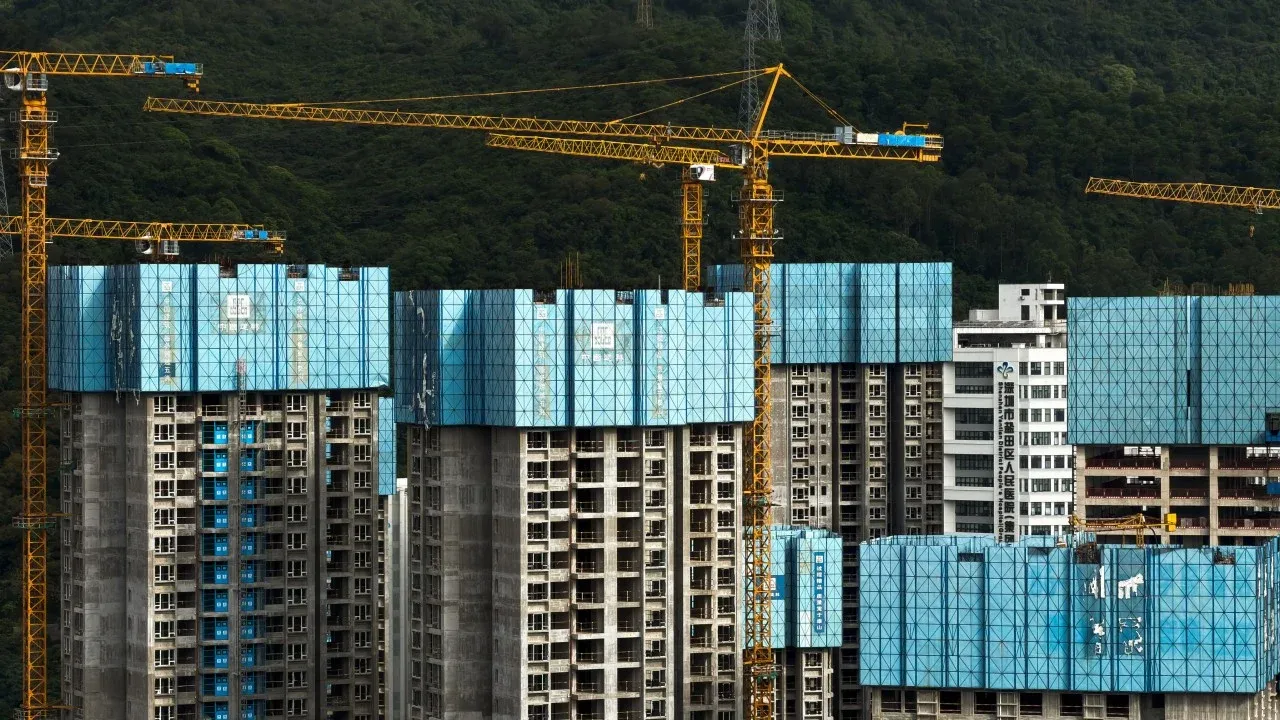
Hui Ka-yan, founder of Evergrande, has been handed a life sentence as China's new property rules spark fresh unease among developers with uneven debt-resolution progress. The consequence: better-capitalized state-owned enterprises are positioned to gain market share while weaker private players remain trapped in a sluggish market.
Hui Ka-yan, the founder of China Evergrande Group, has been sentenced to life in prison, closing one of the most dramatic chapters in the country's property crisis. The sentence lands just as Beijing's new regulatory rules are stirring fresh unease across the developer community, even as some of the industry's highest-profile debt cases have largely completed their risk-resolution processes. The convergence of a legal reckoning and shifting policy signals is a stark reminder that China's property sector is still working through the aftershocks of a collapse that once threatened the country's financial system.
Analysts point to a persistent challenge for troubled operators: escaping the vicious cycle of a sluggish property market. Even where risk resolution has been largely completed for some firms, the broader environment remains hostile. Sales are weak, financing conditions are tight, and the weight of unpaid debt continues to drag on balance sheets. The new rules cited in the report are adding a further layer of unease, complicating the path back to stability for developers that are still fighting for survival.
The Evergrande saga itself has become the symbol of that struggle. Hui Ka-yan, the founder who built the company into the world's most indebted developer, now faces life behind bars. His fall from grace is both a personal tragedy and a corporate warning: the era of aggressive expansion funded by ever-increasing leverage has ended, and the consequences are being enforced with legal severity.
For the wider market, the uneven pace of risk resolution is the key concern. Some developers have managed to restructure their obligations, with creditors accepting haircuts and projects being transferred to new owners. But many others remain stuck in a vicious cycle: they cannot sell enough homes to generate cash, yet they cannot easily refinance because their assets are tied up in unsold inventory and their credit has been damaged. The sluggish property market, a drag on China's economy for years, shows few signs of a rapid rebound.
The regulatory environment is adding to the pressure. The new rules, while intended to bring stability and discipline to a sector that has historically operated on high leverage and opaque financing, are creating fresh uncertainty for developers who are still adjusting to a post-boom reality. For those companies, compliance now means confronting the very business model that made them giants in the first place.
The result is a widening gap between haves and have-nots. Better-capitalized state-owned enterprises are proving more resilient, with cheaper funding access and government backing that private developers lack. Analysts expect these SOEs to gain market share as their weaker rivals falter, even as the overall earnings outlook remains cloudy. Land acquisitions, project approvals, and financing windows are all tilting in favor of state-linked players.
For boards and executives watching from the sidelines, the implications are direct. The two-tier market is not a temporary phenomenon; it is a structural reset. Private developers that have not already secured state partnerships or restructured their debt face the highest risk of further losses. The new rules are likely to accelerate consolidation, rewarding balance sheet strength and punishing those who still rely on rapid turnover and leverage.
The deeper message for decision-makers in the sector is that liquidity and state support, not size, will define the winners of the next cycle. Companies with access to cheap capital, a strong sales pipeline in prime cities, and conservative land-buying strategies are better positioned to absorb the shock. Meanwhile, those still dependent on speculative projects will continue to feel the pain of the market's slow recovery.
For boards and executives watching from the outside, the lesson is clear: China's property market is no longer a growth story, but a survival story. The companies that will thrive are those that can operate like utilities - steady, efficient, and state-connected - rather than like high-rolling financial engineers. The new rules are accelerating that shift, and the unease among developers is a sign that the transformation is not over.
In the end, the life sentence handed to Hui Ka-yan is more than a personal punishment. It is a regulatory warning to anyone still betting on the old model of property development. For the broader industry, the message is straightforward: adapt to a lower-leverage world or be left behind.
This story's Key Insights and Take-aways are locked.
Create a free account to unlock Executive Actions for one credit.
Register to UnlockAlways free for Executives Club members. Join the Club
More in Business

Tim Cook steps down as Apple CEO, stays on as chair with $45M equity
The 'Trump whisperer' keeps his White House and Beijing access as Apple navigates tariffs and a $4.6 trillion market cap.

Snowflake shares surge as AI data demand crushes estimates, lifting full-year forecast
Stocks jumped on stronger-than-expected guidance, signaling enterprise AI workloads are accelerating faster than Wall Street priced in.

Tim Cook's 15-year Apple CEO run ends: 3 lessons for any successor
After 15 years, Tim Cook hands Apple to John Ternus - here's how he turned a $350B company into a $4.6T juggernaut.