
Evil Dead Burn gets 79% on Rotten Tomatoes, critics call it franchise’s meanest by far
A standalone sequel from Sam Raimi lands in theaters July 10, 2026, with nonstop practical gore and dark themes.
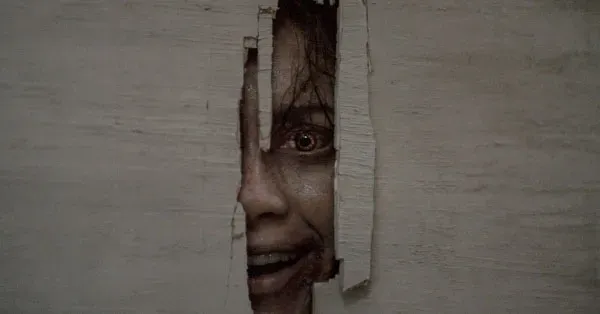
Evil Dead Burn, a standalone sequel produced by Sam Raimi and directed by Sébastien Vaniček, has earned mostly positive first reviews, with Rotten Tomatoes showing 79% approval. For decision-makers, the early consensus signals strong audience fit for brutal practical effects, but a potential ceiling if tone and “newness” don’t land.
Evil Dead Burn is landing in theaters July 10, 2026 with Rotten Tomatoes showing 79% approval, and the early reviews read like one consistent warning label: this is the nastiest stop in the franchise so far. Multiple critics frame it as more vicious and black-hearted than previous entries, even if some wish it carried more of the original Evil Dead mischief.
That “meanest of the bunch” idea is not just hyperbole in the coverage. Reviewers explicitly describe relentless intensity, “grossest moments,” and a practical-effects-heavy approach that spotlights makeup designer Jane O’Kane. In other words, the film is not trying to be polite about what it does. Instead, it doubles down on gore, throughput, and a haunted-house vibe that “doesn’t quit once it leaves the station.” If you are a studio, investor, or board member tracking what genre audiences will actually show up for, the takeaway is straightforward: this release is being positioned, by critics, as a high-frequency, high-splatter experience.
The film itself is a standalone sequel, produced by Sam Raimi, directed by Sébastien Vaniček, and starring Souheila Yacoub, Tandi Wright, Hunter Doohan, and Luciane Buchanan. That matters because Raimi is not stepping fully away. One of the recurring tensions in the reviews is that Raimi’s original Evil Dead tone was often goofy and mischievous, while Vaniček, according to critics, leans into something darker and more punishing.
In the reviews, the franchise comparison becomes part of the business subtext. Critics call Evil Dead Burn “another rock-solid entry” and a “sturdy entry,” with Fangoria describing it as continuing the successful track record of “finding promising rising filmmakers and turning them loose in their gruelingly horrific world.” That is a brand risk hedged with a pipeline model: you keep the recognizable IP alive while allowing a director to imprint their own style. But when critics say the movie doesn’t bring “that much new to the world,” you also learn something about ceiling risk. You can get critical approval for craft and violence, but you may limit expansion if audiences want evolution, not repetition.
A big part of the early consensus is that the film is not only about violence, it is about what violence does inside a home. Multiple reviews point directly to domestic abuse as a central theme, including how “silence begets complicity” that lets abuse “fester, take root, and become integral to the home itself.” Reviewers also cite xenophobic distrust of strangers contributing to a chilly vibe, specifically toward Alice from the start. For executives, this signals a positioning strategy that blends horror entertainment with emotional stakes. It can broaden appeal beyond pure gore fans, but it also increases the reputational scrutiny around how the film handles sensitive topics.
Then there is the rating and effects angle, which is where horror business meets regulatory reality. Michael Gingold of Fangoria is cited saying “one particular gory bit had to be trimmed to avoid an NC-17,” even though the R-rated release is still described as extreme. The practical-effects-heavy approach is also framed as satisfying, with Variety noting the tendency toward practical effects over CG and describing visceral, prosthetics-friendly moments. For decision-makers, that is a cost and compliance trade in plain English: practical makeup and effects can deliver authenticity and audience satisfaction, but the most extreme sequences still have to clear rating constraints, which can force edits and affect marketing messaging.
On craft, critics are broadly aligned, but not identical. The visuals are frequently praised for meshing prosthetics with effects supervised by Thierry Onillon, delivering “genuine jolts and serious gross-outs.” At the same time, one critique flags that supernatural forces become “a bit too CGI-centric compared to what you’d want” in an Evil Dead picture. In portfolio terms, that is a classic “mostly works” verdict: if you greenlight sequels or similar genre work, the general recipe is validating, but the audience experience can still hinge on how perfectly the film balances practical and digital.
Humor and pacing are the other fault line. Some reviews say it includes dark humor and that levity matters in a relentlessly nasty film, while another reviewer says only one gag, involving Grandma’s motorized stairlift, could be laugh-out-loud funny. Meanwhile, critics contrast Vaniček’s approach with Sam Raimi’s original “Three Stooges yuck-it-up-ness,” with one explicitly saying they missed the antic spirit, wicked mischief, and goofy comedy that defined Raimi’s originals. For boards and investors, this suggests an actionable risk factor: if the release marketing leans too hard on “comedy Evil Dead,” the film may not meet that expectation; if it leans on “brutal, black-hearted horror,” it appears to be closer to the early consensus.
Finally, the meta-implication for industry peers: Evil Dead Burn is in theaters July 10, 2026, and critics repeatedly describe it as full-throttle genre filmmaking with nonstop violence that remains “aggressively thematic.” That is the combination that tends to keep horror franchises sticky: gore that feels intentional, not random, and craft that makes the screen violence look engineered rather than cheap. But the same reviews also warn that “new to the world” innovation might be limited, and that some fans may miss the original franchise’s mischievous tone. If you are making calls on genre slates, this is the moment to notice the pattern: critics are rewarding execution and brutality, not necessarily novelty, and that is the kind of signal that can shape how audiences decide between “worth it” and “same, but meaner.”
This story's Key Insights and Take-aways are locked.
Create a free account to unlock Executive Actions for one credit.
Register to UnlockAlways free for Executives Club members. Join the Club
More in Entertainment

Russell Brand's accuser 'bewildered and confused' as he denies 7 sex charges
The criminal case against the comedian is a live test of how media companies manage talent risk when serious allegations go public.

'It's a Magic Trick': Ballet Experts Say Rosalía's SNL Pose Is Impossible
Three ballet experts tell Rolling Stone Rosalía's gravity-defying SNL stillness shouldn't be possible - and why the debate is now part of the show.

Activision CMO: GTA 6 Will Boost Call of Duty, Not Bury It
Activision's top marketer says Rockstar's blockbuster will drive players back to consoles and into Modern Warfare 4, even as the company admits its recent strategy failed.